
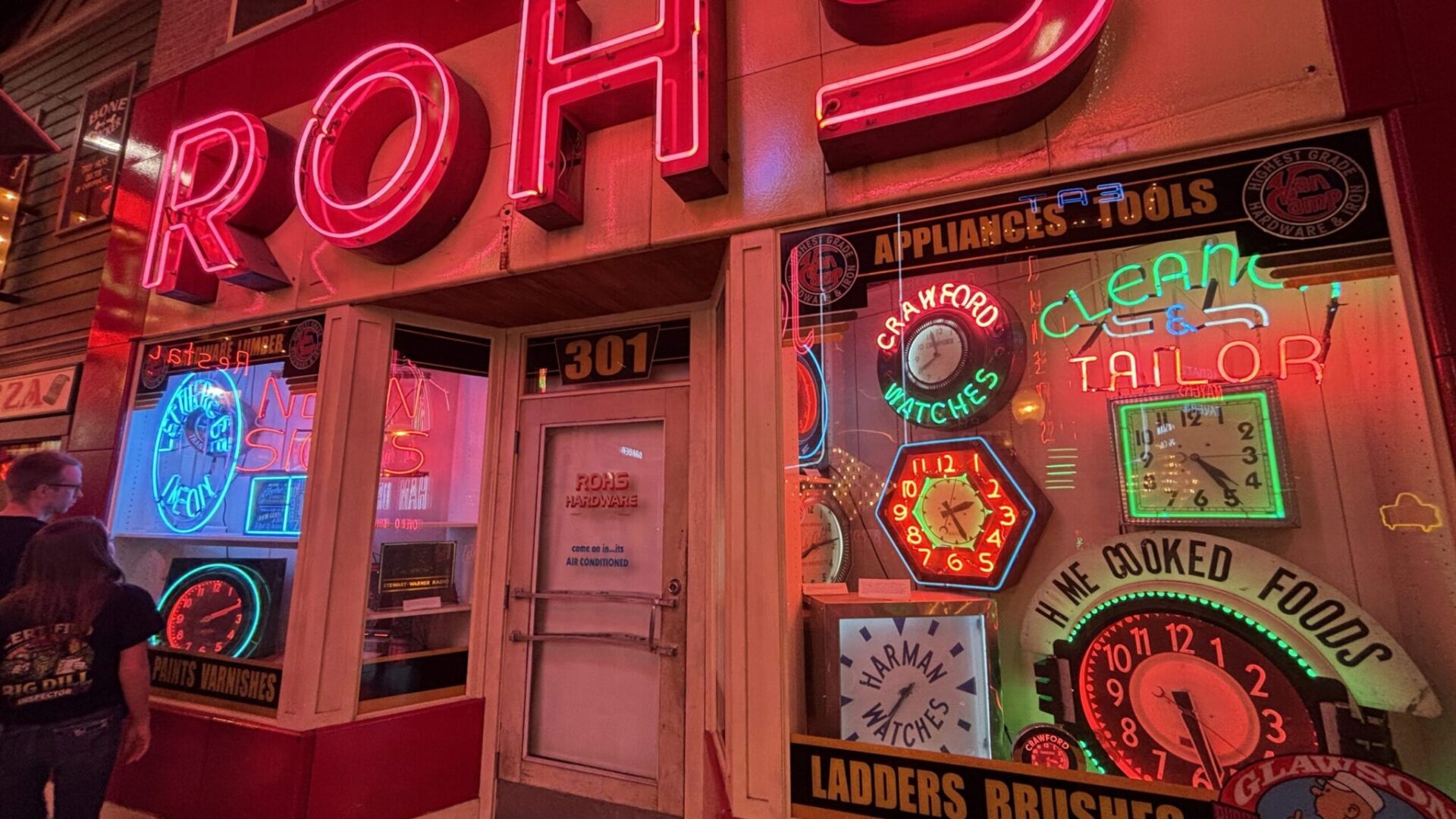

You know those places you don’t expect much from—and then they completely surprise you? That was the American Sign Museum.
What sounds like a niche stop quickly turns into a full-on nostalgic experience, where old neon, vintage storefronts, and decades of advertising history somehow make you feel like you’ve stepped into another era.
The Experience: It Starts Before You Even Walk In
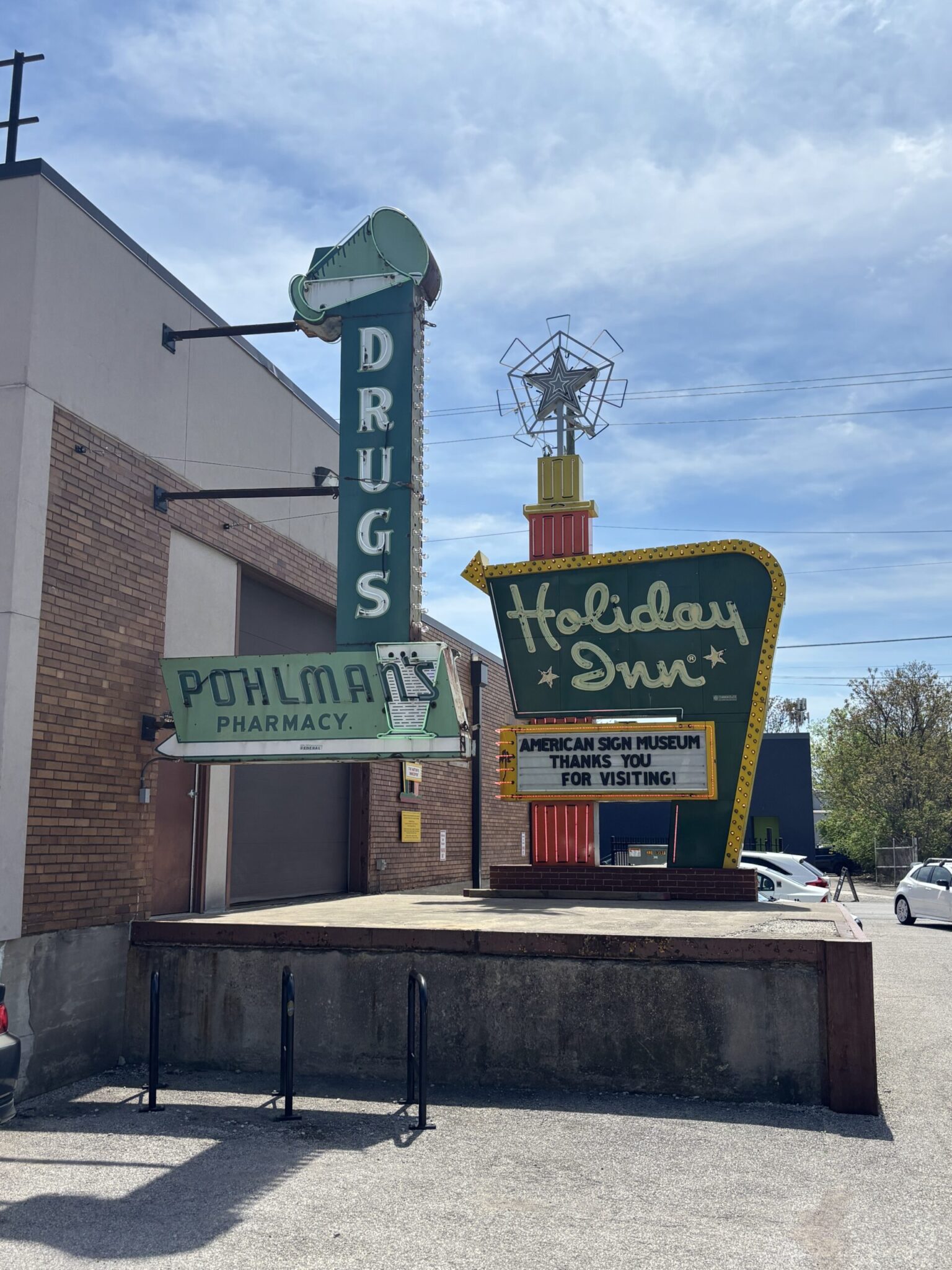
One of the coolest parts? The museum actually starts in the parking lot.
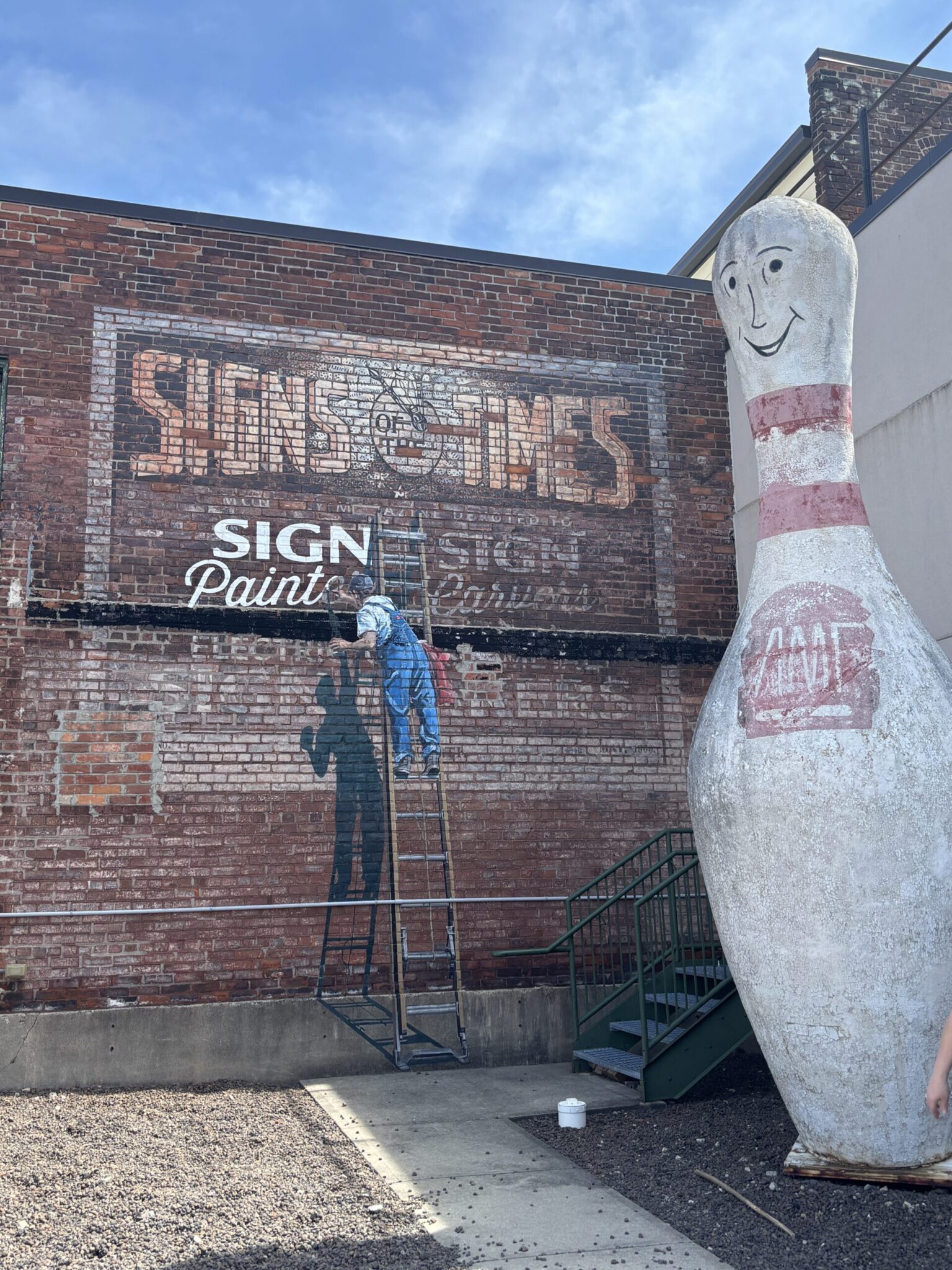
Before you even get out of the car, you’re already in it. The first thing you see from the street is a towering vintage Holiday Inn neon sign welcoming you in. Around the lot, the buildings themselves are covered in painted signage, setting the tone right away.
It doesn’t feel like you’re arriving at a museum—it feels like you’re stepping into a piece of history.

Stepping Inside: A Mix of Museum and Time Capsule
As you are walk in, you’re immediately greeted by signs from places like Polman’s Pharmacy, along with vintage hotel and hardware store signage. It’s a subtle introduction before things really open up.
To the right of the entrance is a small gift shop with shirts, stickers, toys, and other retro-style items—worth a quick look, but hard to resist if you’re into nostalgia.
When grabbing tickets, you will have a few options:
- Audio tour
- Group tour
- Self-guided tour
We went with the self-guided option, which gave us the freedom to move at our own pace. That said, we briefly crossed paths with a group tour, and they were getting some really detailed stories and background—so if you’re into deeper history, that might be worth considering.

More Than Neon: The History Behind the Signs
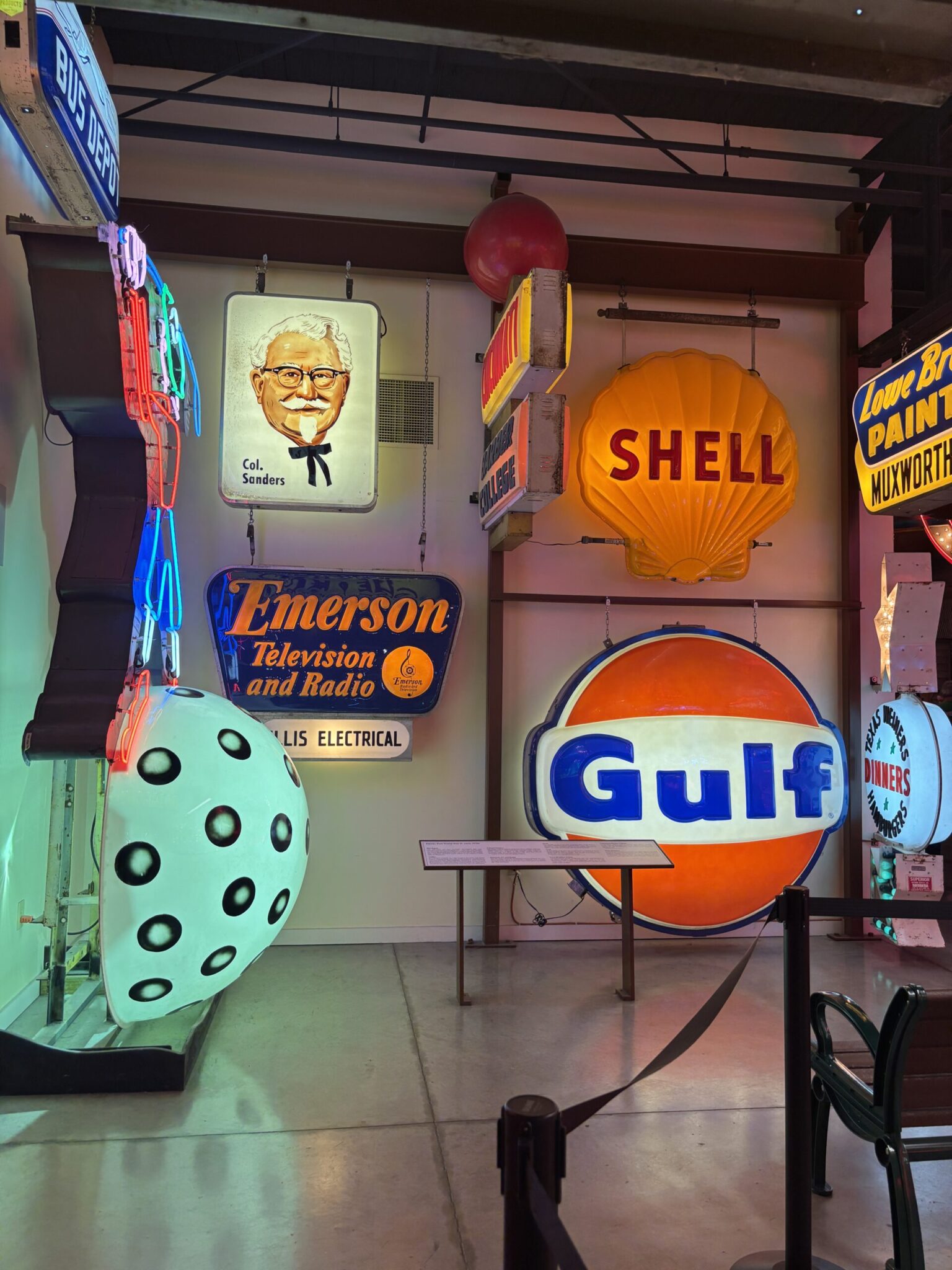
The museum covers over 100 years of sign-making history, and it’s more detailed than you might expect.
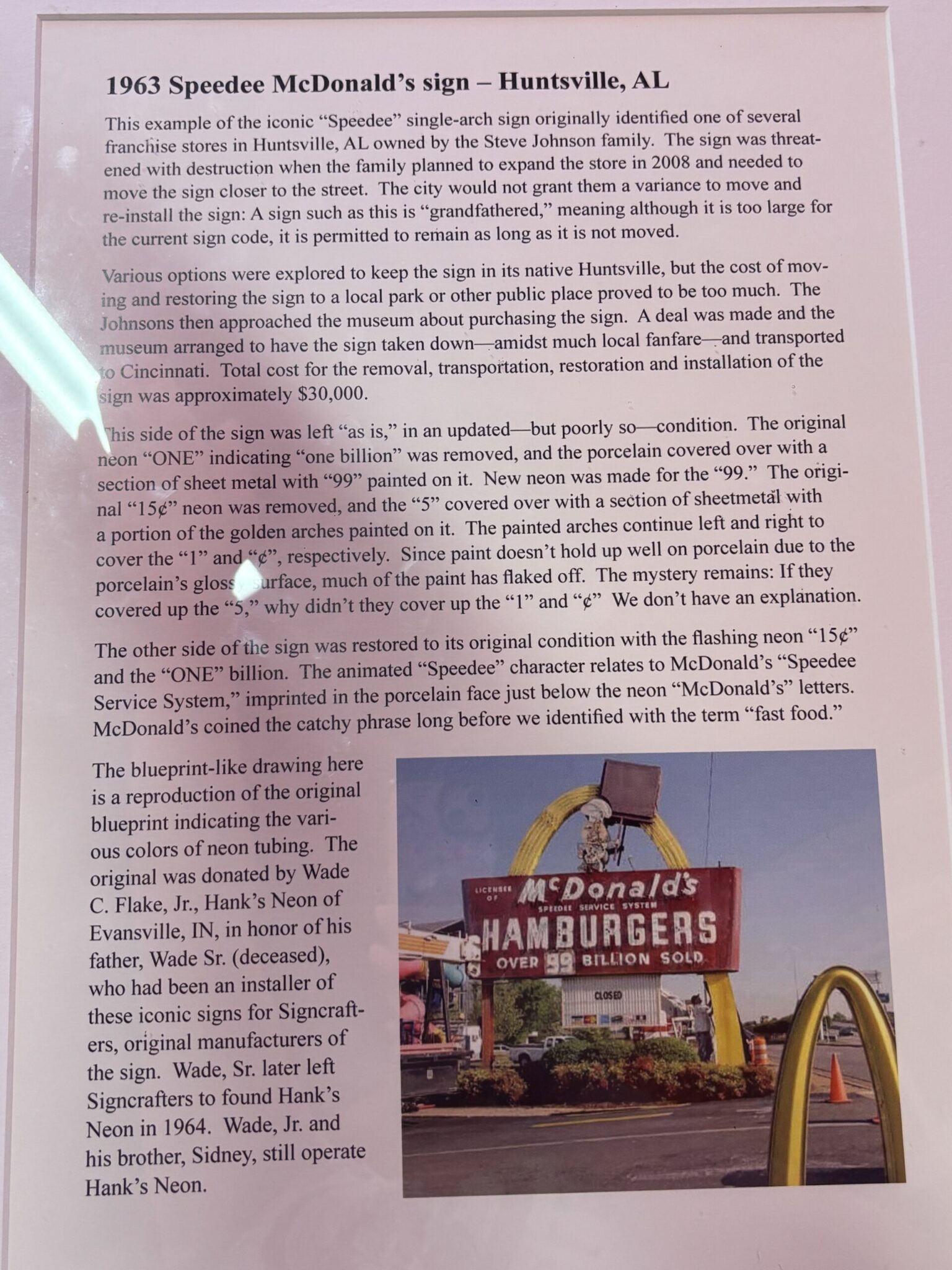
Along one long wall, you’ll find sign after sign with explanations of:
- Where it came from
- How it was used
- How it ended up in the museum
It’s not just about looking at cool signs—it actually teaches you how signage evolved over time, from painted walls and mirrors to the iconic neon displays.
Where It Really Comes to Life
Then you turn a corner—and everything changes.
This is where the museum goes from interesting to immersive.
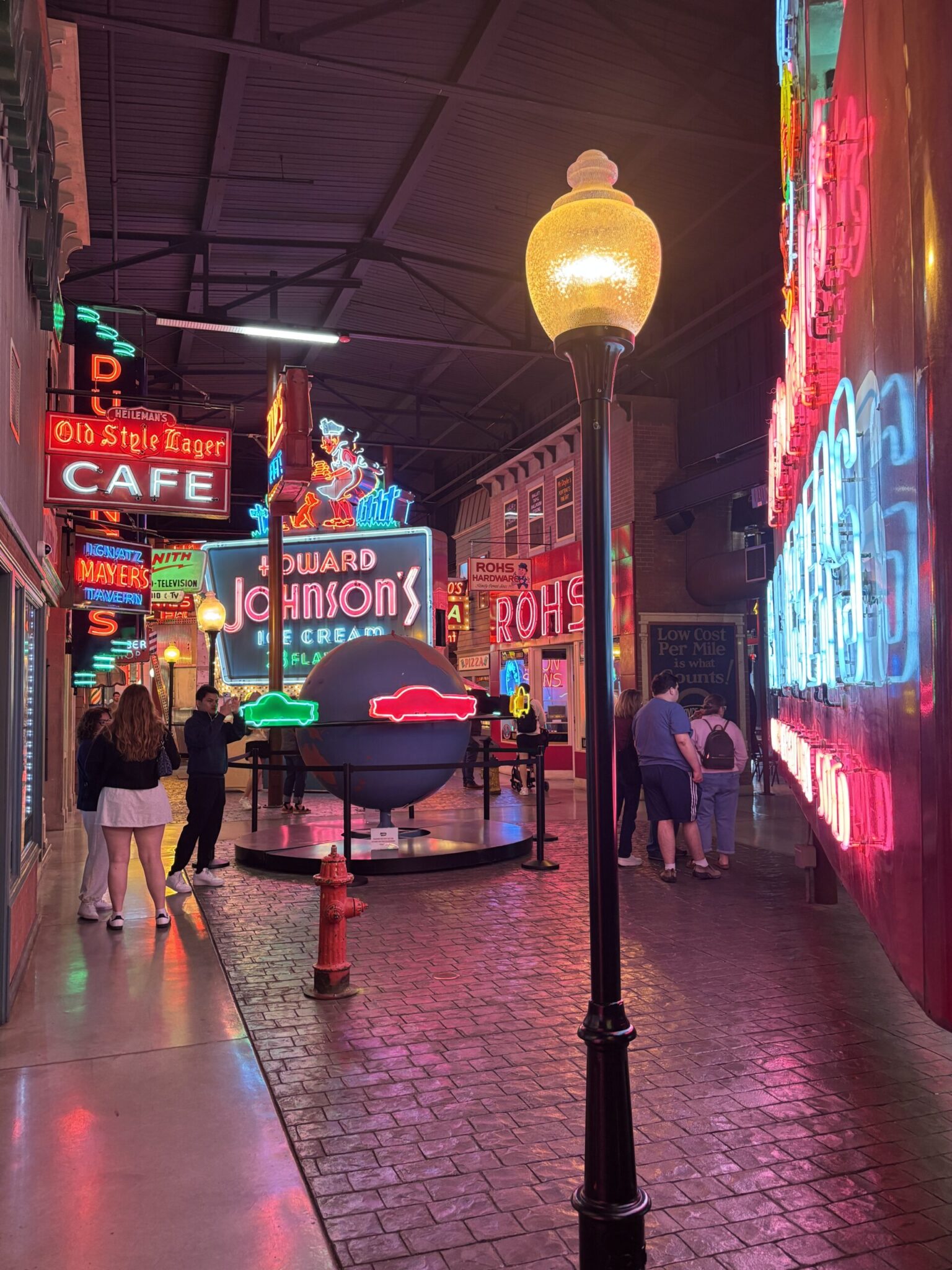
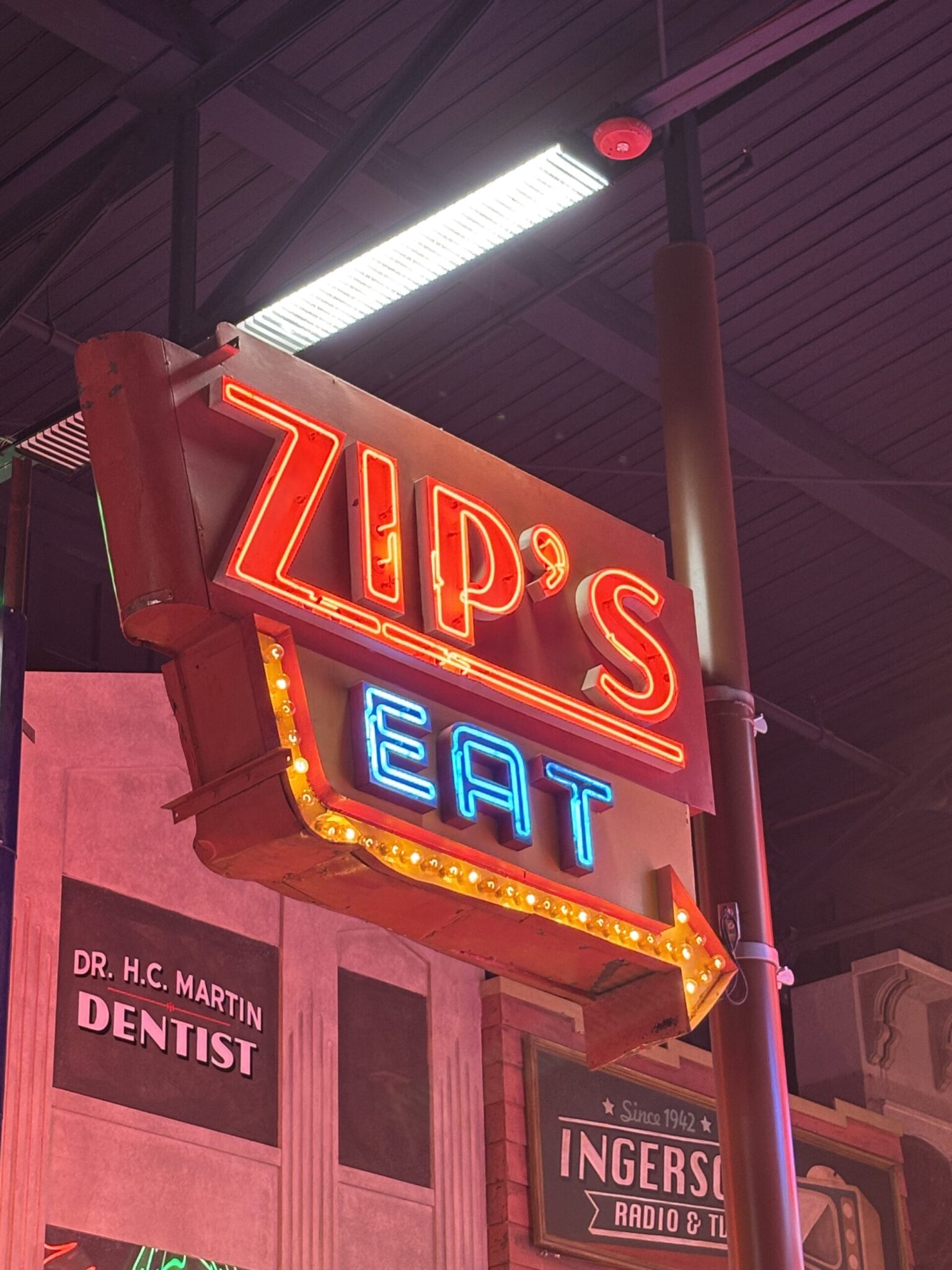
Instead of just displaying signs, they’ve built out full storefront-style setups, pairing signs with facades so it actually feels like you’re walking down an old street. It’s one of those moments where you slow down without realizing it, just taking everything in.
You’re still learning, but now it feels like you’re inside the history instead of just reading about it.

The Theater Experience: How Neon Is Made
One of the most interesting stops was the theater marquee area.
Inside, there’s a short film that walks through how neon signs are restored—especially the process of heating and bending glass tubes for the lights. It’s something you don’t really think about when looking at a sign, but seeing the craftsmanship behind it adds a whole new level of appreciation.
Special Exhibit: Back to the Drawing Board
During our visit, there was a special exhibit called “Back to the Drawing Board” running from 03/12/26–06/11/26.
This section focused on original blueprints and design drawings of signs, spanning from the 1920s through the 1970s. It gave a behind-the-scenes look at how these signs were actually planned before they ever lit up.
If you’re visiting during a special exhibit, definitely make time for it—it adds another layer to the experience.


What Stood Out
The Nostalgia Factor
Some signs just hit instantly—especially classics like old McDonald’s signage and Howard Johnson’s. Even if you’ve never seen the originals in person, they feel familiar.
The Variety
From gas and oil signs to small business storefronts, the range is bigger than expected. It’s not just neon—it’s the entire evolution of how businesses presented themselves.
Transcript
Ambient background noise. A section of the american sign museum that is modeled after a street with neon signs everywhere. There is a rotating blue windmill sign or Van de Kamp’s Bakery and a rotating Big Boy restaurant statue holding a giant hamburger. People walking around looking at all the indoor signs.
The Immersive Layout
The transition from wall displays to full storefront setups is what really makes this place memorable.
Practical Tips & Takeaways
- Don’t rush it
It’s easy to think this will be a quick stop, but there’s more to take in than expected. - Self-guided works well—but tours add depth
We liked moving at our own pace, but the group tours seemed to offer great insights. - Start outside and take your time
The parking lot and exterior displays are part of the experience—don’t skip them. - Catch the theater video
It’s one of the most informative parts of the museum. - Check for special exhibits before you go
They add variety and make each visit a little different.
Logistics
American Sign Museum is located just north of downtown Cincinnati and is easy to access by car. There’s on-site parking, and as mentioned—it’s part of the experience.
Tickets can be purchased on-site, and you can choose between self-guided, audio, or group tours depending on how in-depth you want your visit to be.
Final Thoughts: Is It Worth It?
Yes—and probably more than you expect.
What sounds like a niche museum turns into a surprisingly engaging mix of history, design, and nostalgia. It’s easy to enjoy casually, but there’s also enough depth to keep you interested the entire time.
If you’re in Cincinnati and looking for something different that isn’t overly crowded or overhyped, this is a solid stop.
And even if you’re not a “museum person,” this one might change your mind.