

When we were planning our time in Tokyo, one experience kept showing up on almost every “must-see” list: TeamLab Planets. After visiting, it’s easy to understand why. It’s not just a museum—it’s an immersive digital art experience where light, color, sound, and motion surround you from every direction.
Unlike traditional museums where you observe art from a distance, TeamLab invites you to walk through it, interact with it, and become part of it.
From glowing rooms filled with floating spheres to surreal digital landscapes filled with animals and flowing water, every space feels like stepping into a different world.
First Impressions
The moment we stepped inside, it felt like we had entered a completely different universe.
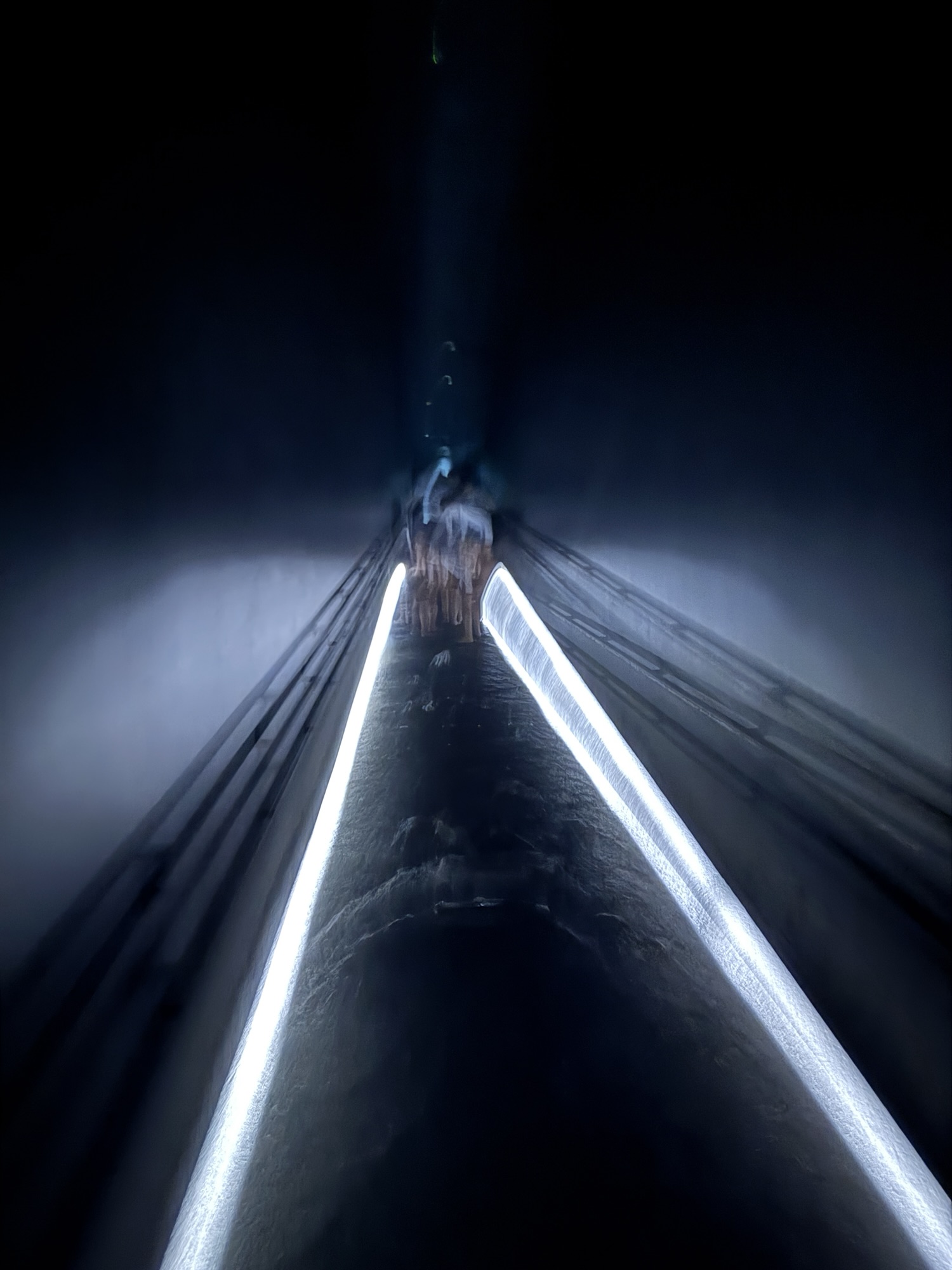
One of the first installations we walked through was a dark sloped corridor illuminated by glowing light strips stretching into the distance, water falling down the walkway. The lighting and reflections made the walkway feel almost endless, like you were walking through a portal into another dimension.
This was meant to clean your feet before entering the installations, but It immediately set the tone for the entire experience—mysterious, immersive, and visually stunning.
Rooms Filled With Light
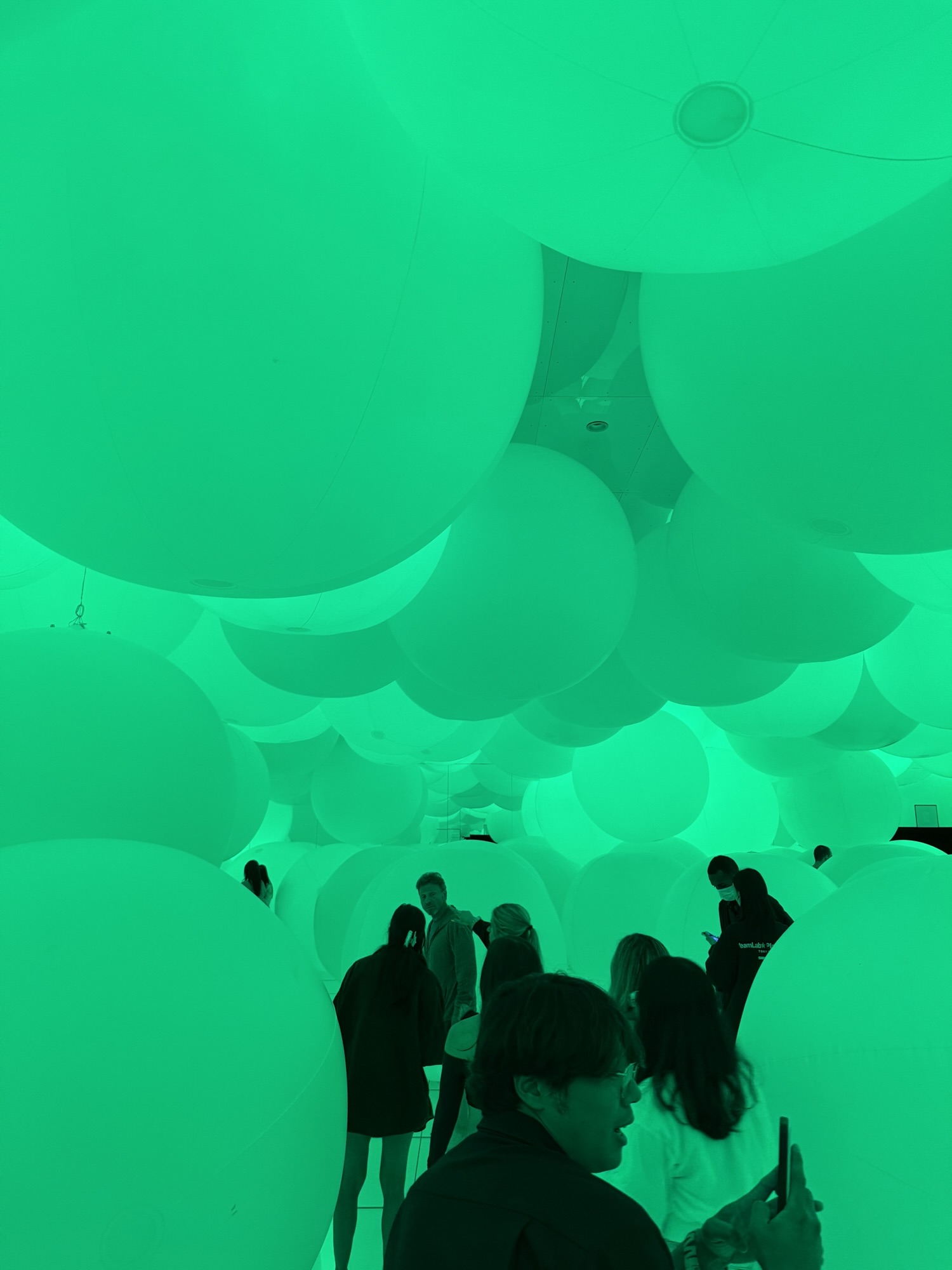
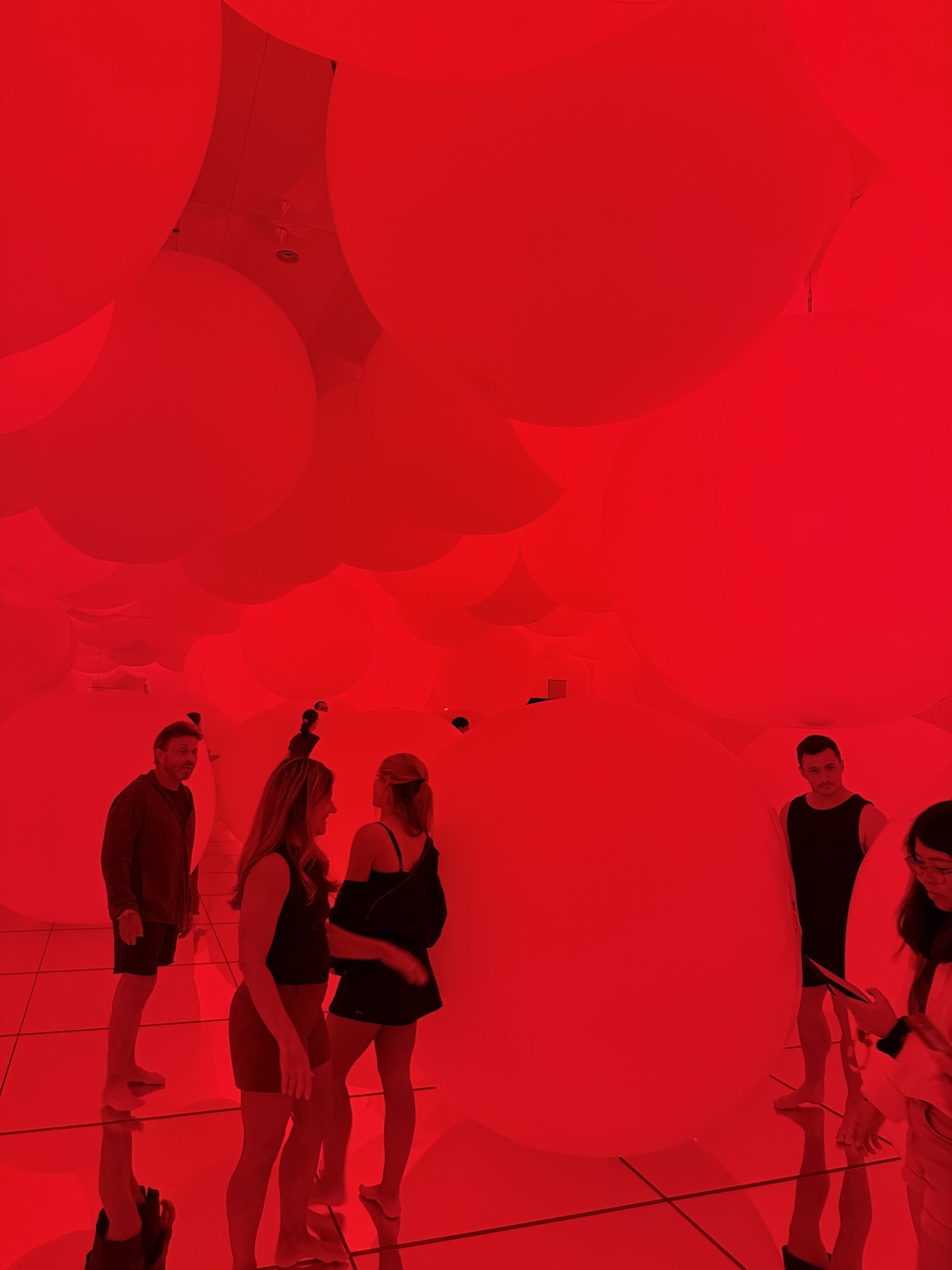
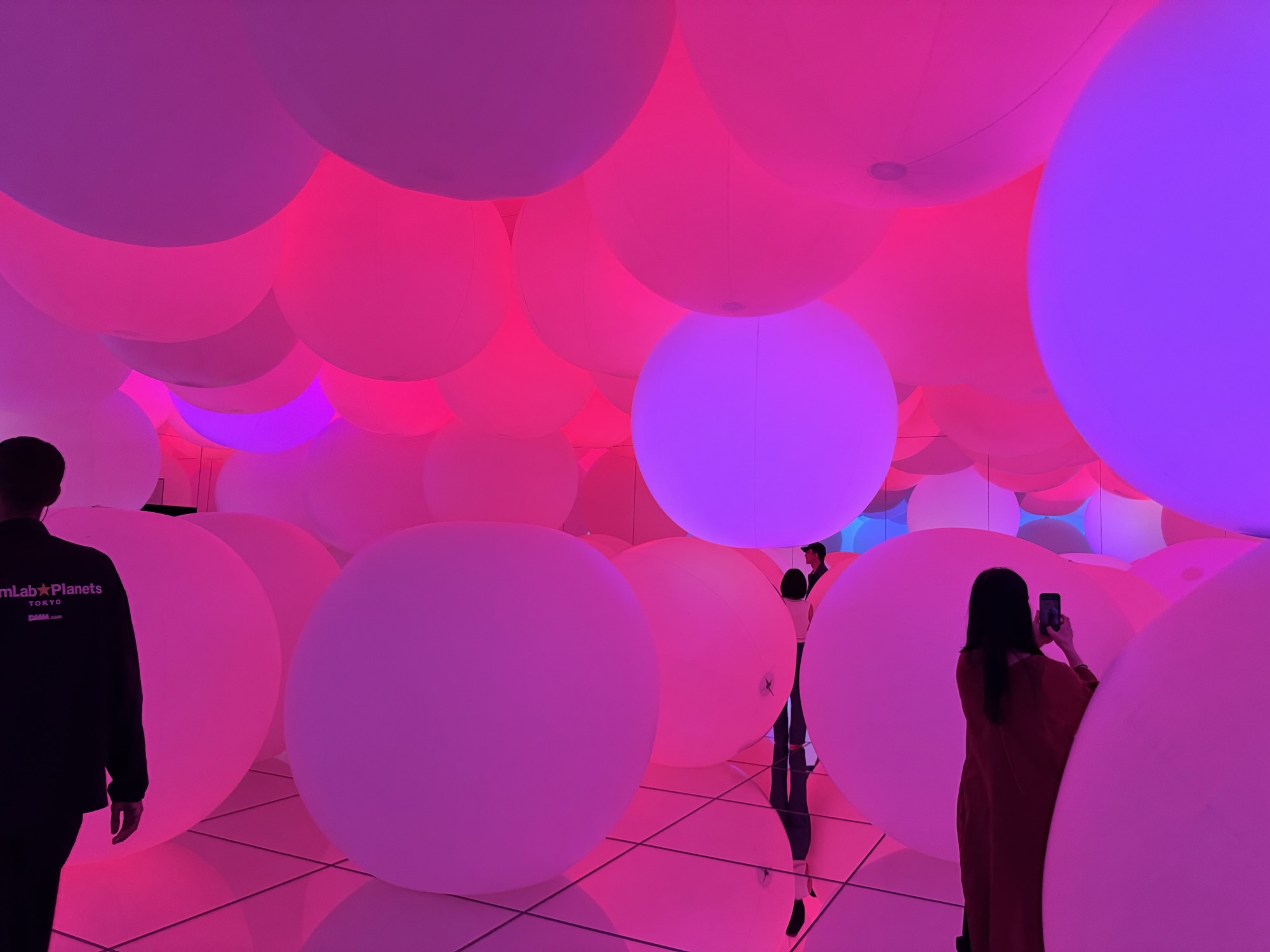
One of the most memorable spaces was a room filled with massive glowing spheres suspended throughout the space.
The lighting constantly shifted between vibrant pinks, deep blues, and soft purples, changing the entire atmosphere of the room every few seconds. Because the floors and walls are mirrored, the reflections make the space feel infinite.
It’s one of those places where you naturally slow down and look around because something new catches your eye every few seconds.

Digital Worlds That Move Around You
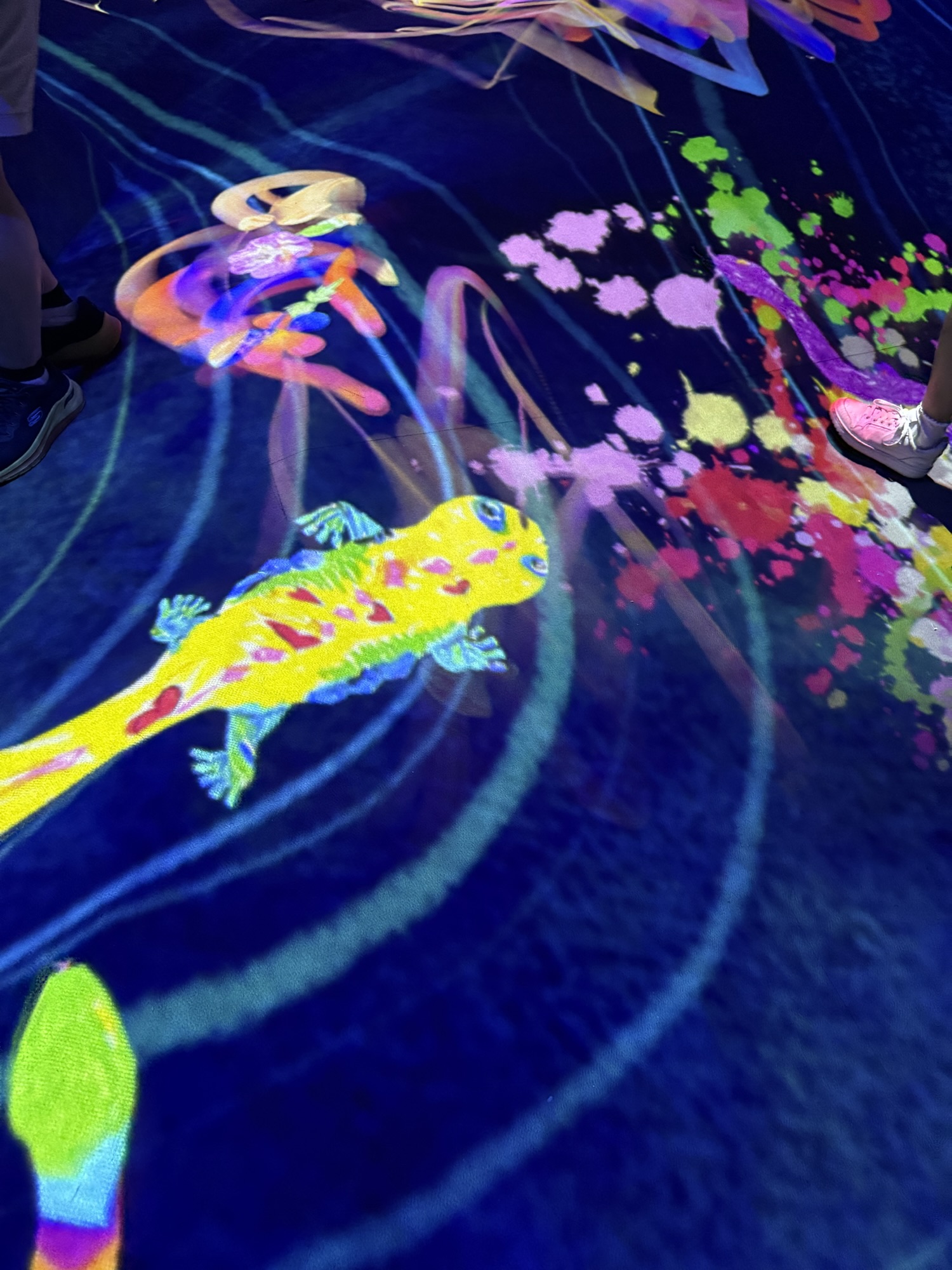
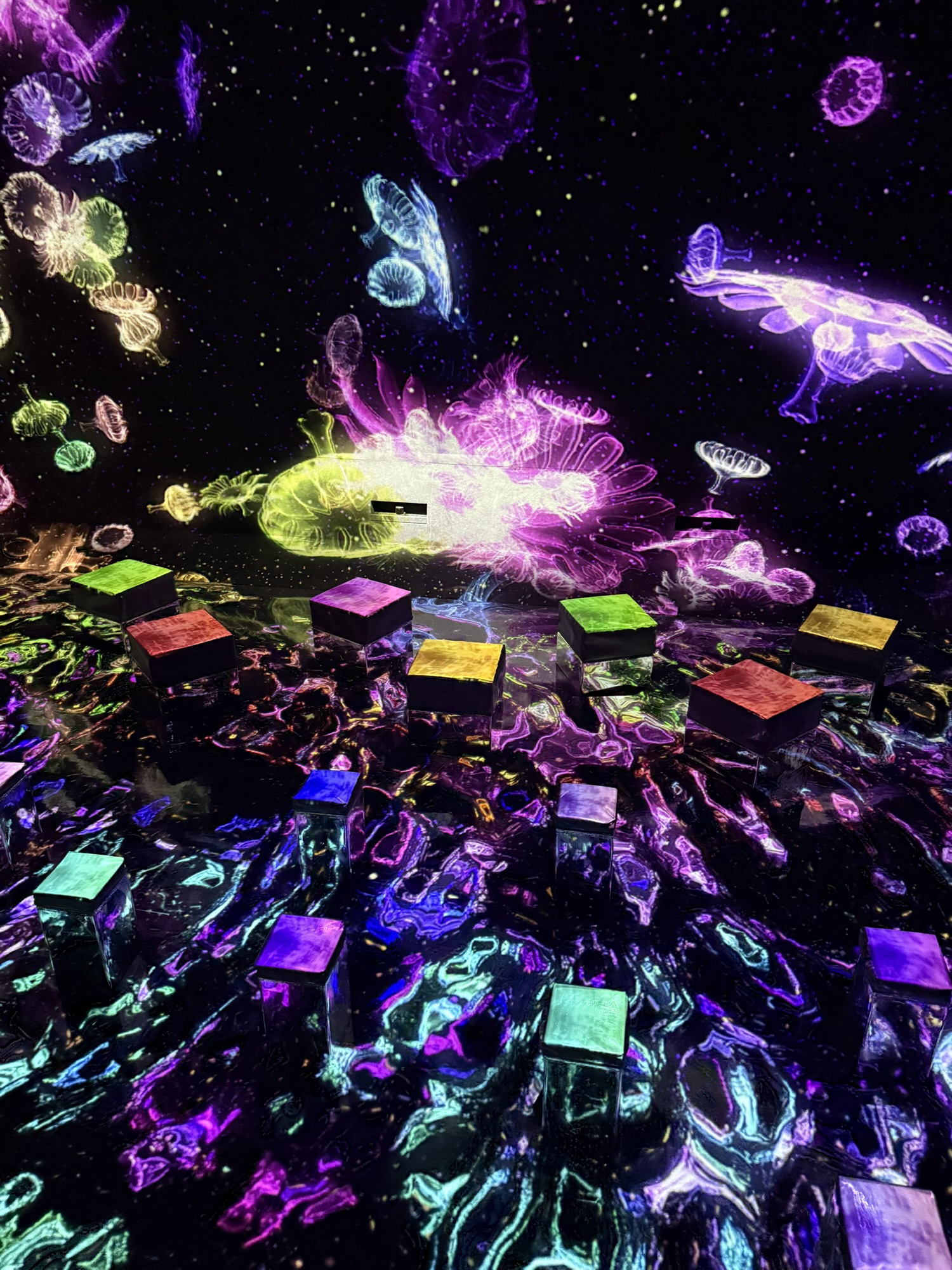
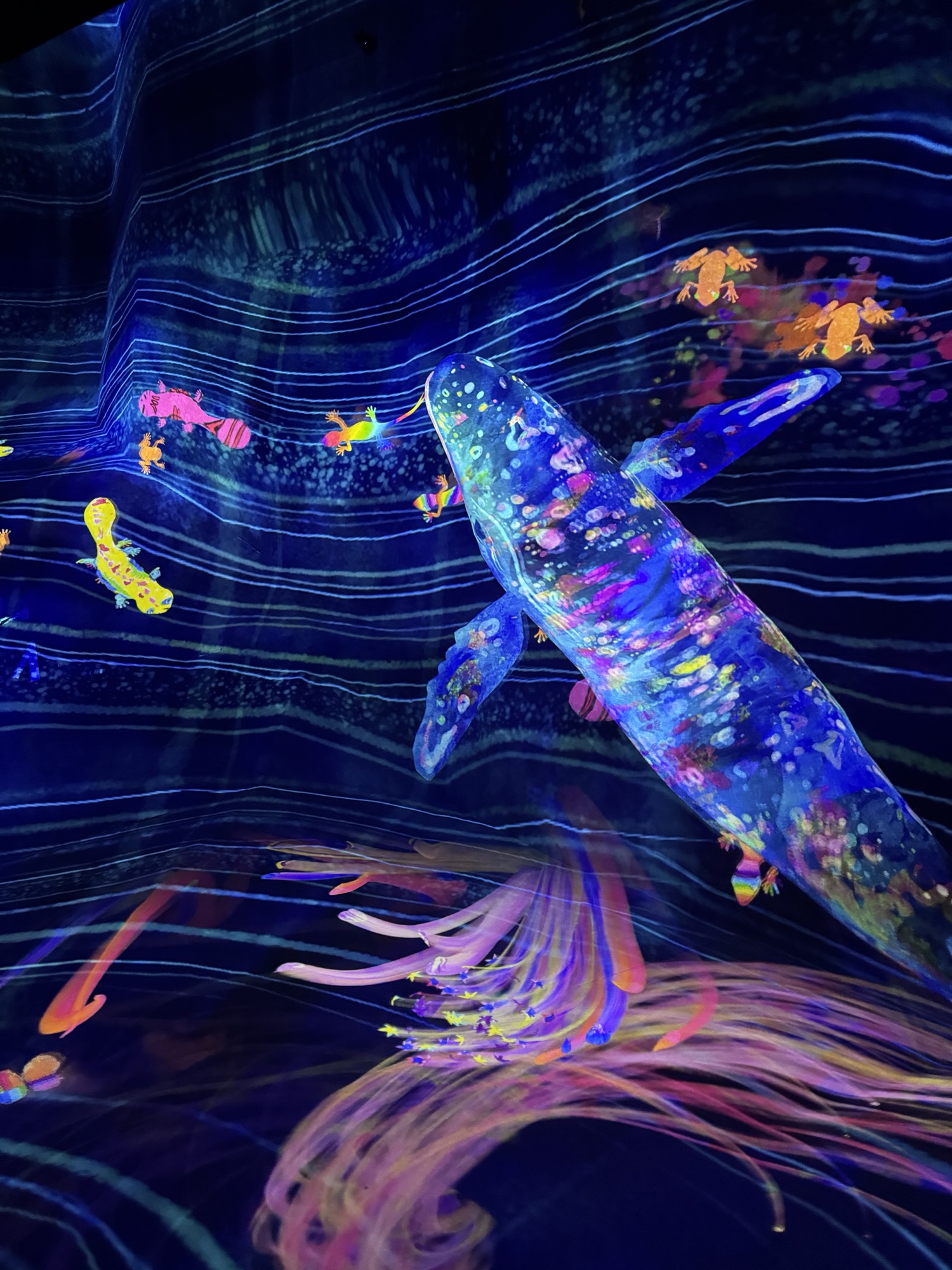
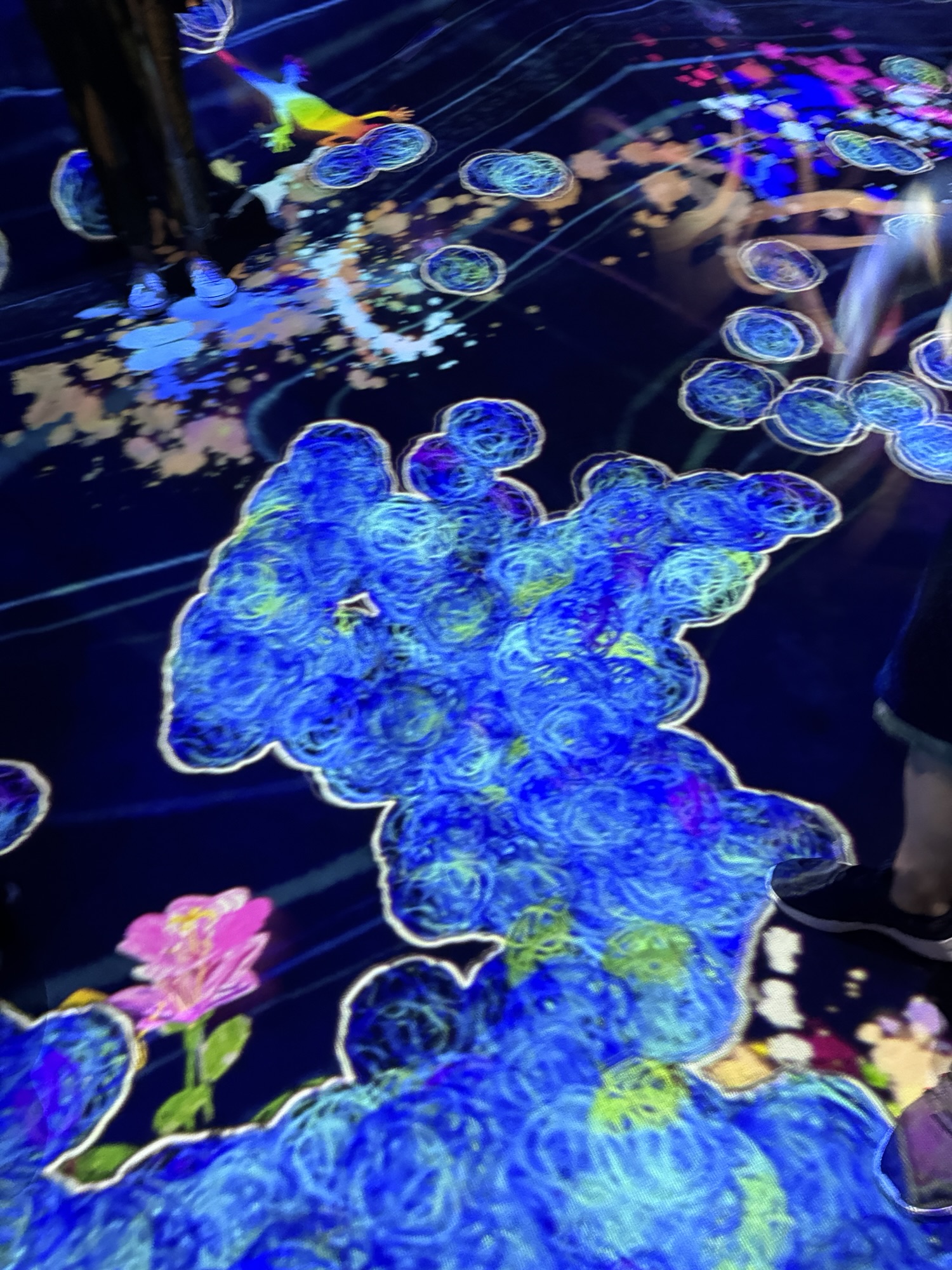
Another area projected animated environments across the walls and floor. Colorful sea creatures, abstract shapes, and flowing patterns moved throughout the room like living paintings.
As people walked through the space, the projections reacted and shifted around them, making the artwork feel alive.
Instead of watching art, you’re walking through it.
Walking Through the Koi Fish Water Room
Walking Through the Koi Fish Water Room
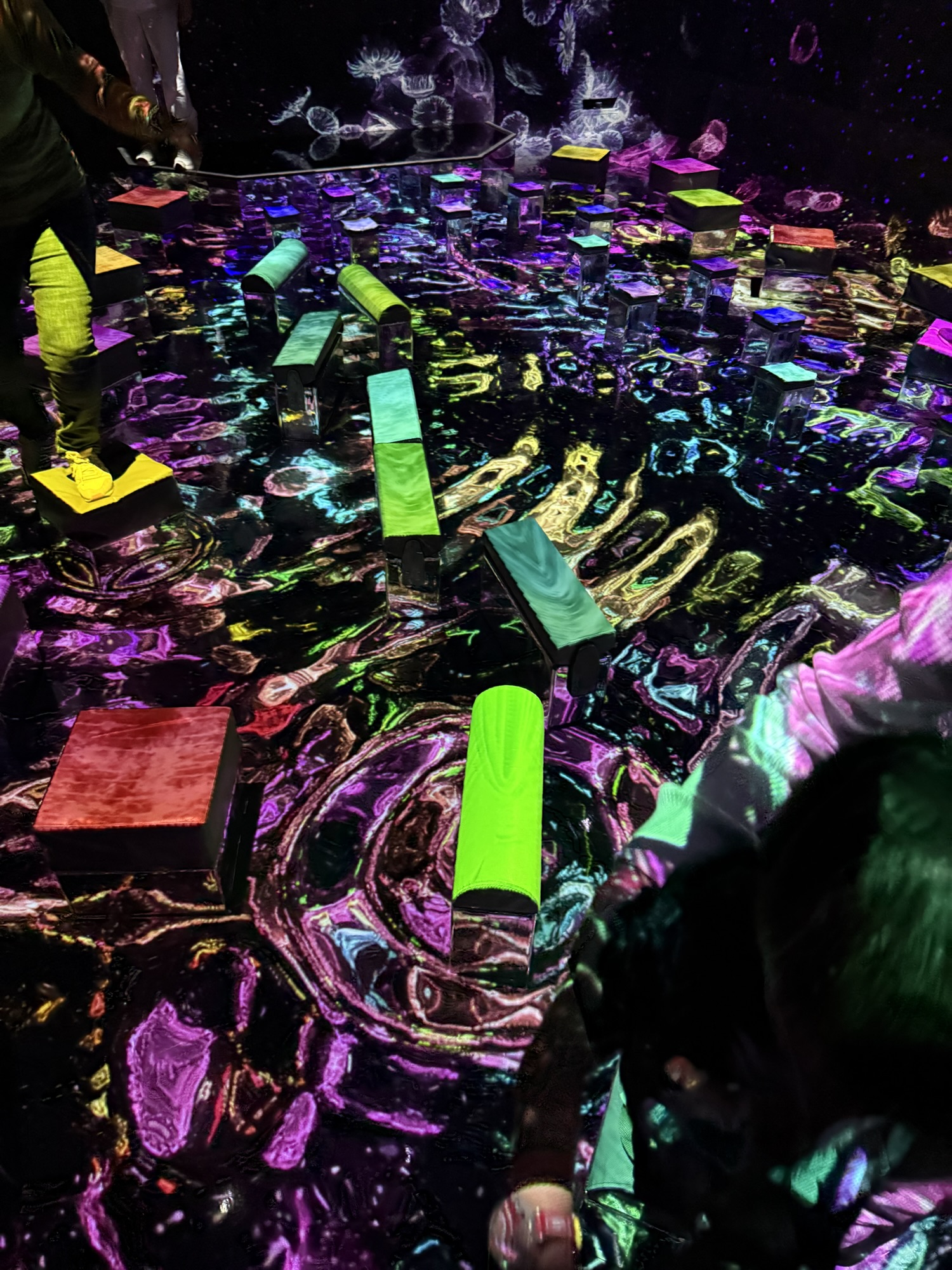
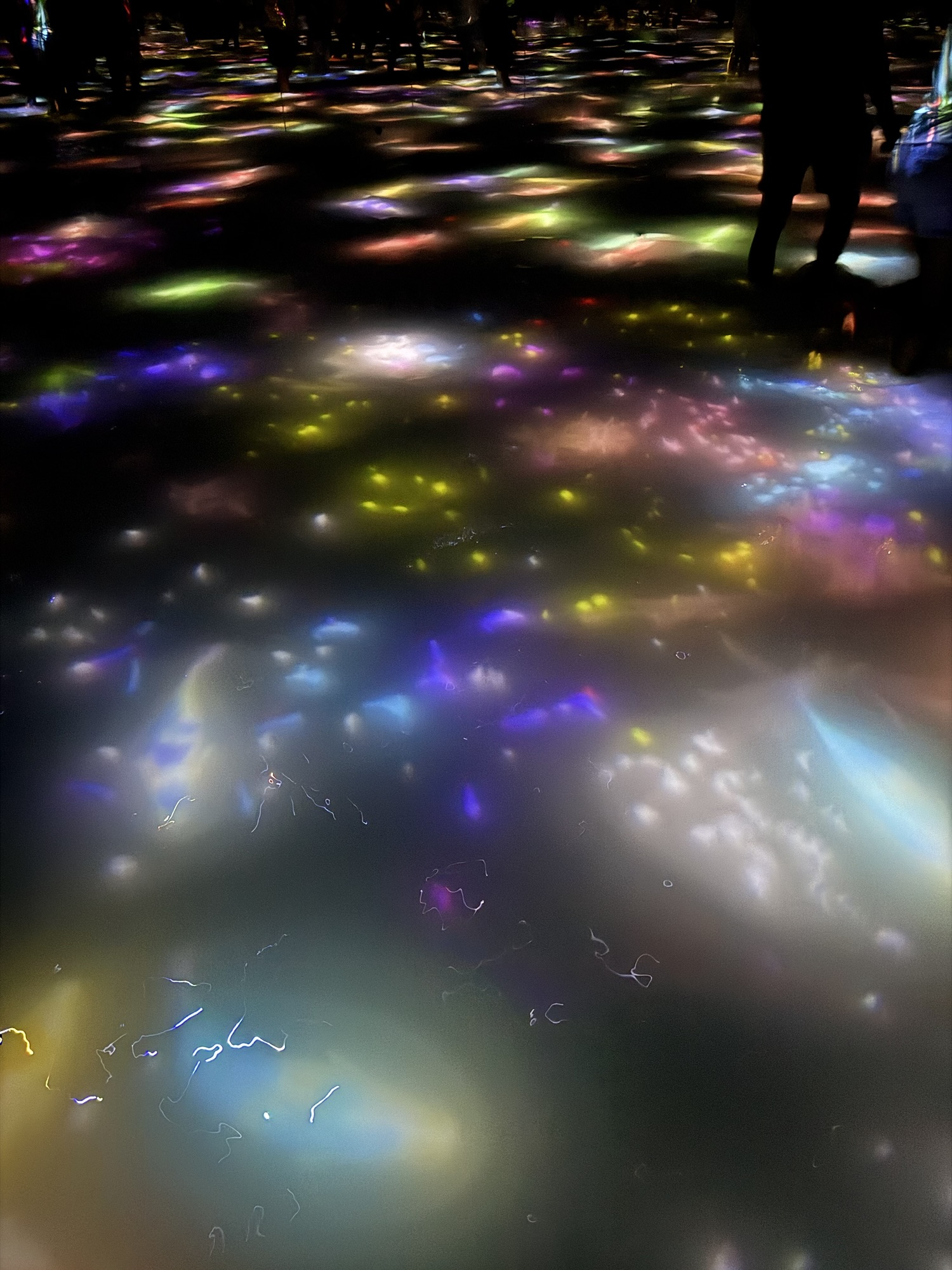
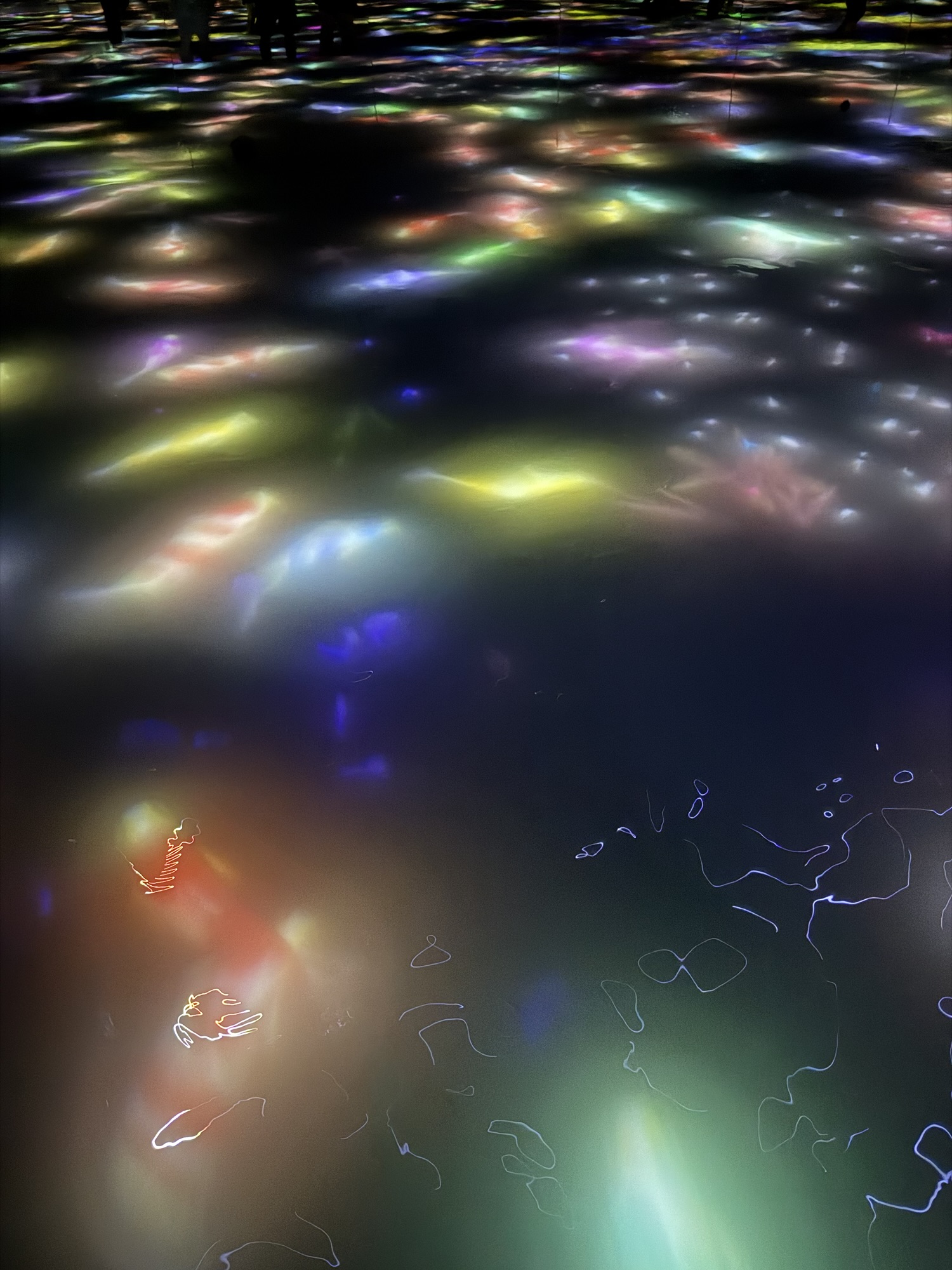
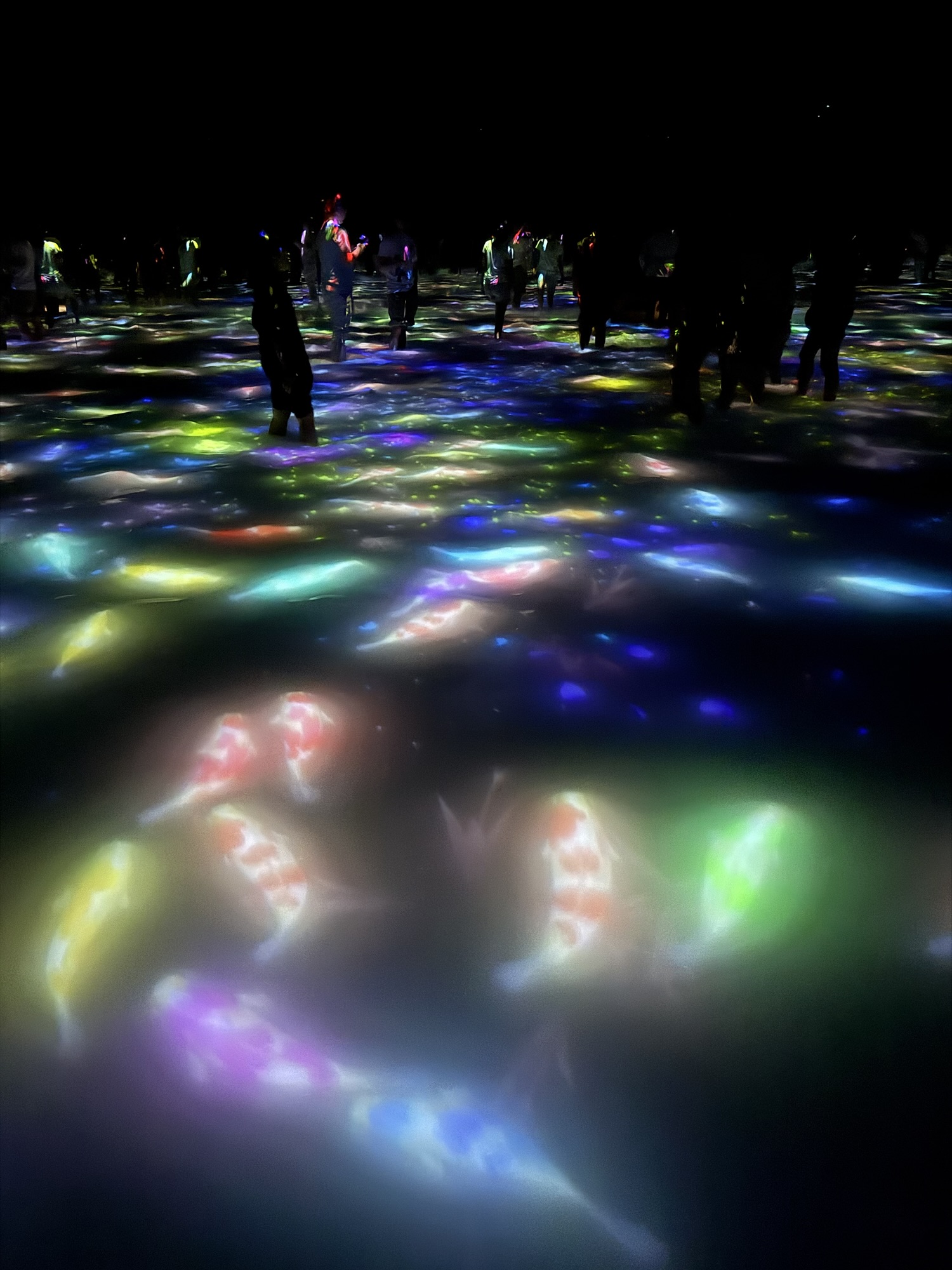
One of the most surreal installations at TeamLab Planets is the water room filled with glowing digital koi fish.
Visitors actually walk through shallow water while colorful koi swim across the floor beneath your feet. As people move through the space, the fish react and scatter, transforming into bursts of flowers when they collide with each other or the walls.
The entire room feels alive.
Soft ripples move across the water while hundreds of glowing fish drift through the space in shifting colors of blue, gold, red, and purple. With the mirrored walls reflecting the projections, the room feels almost endless.
It’s one of the most immersive parts of the experience—and easily one of the most photographed rooms inside TeamLab.
Nature Reimagined Through Technology
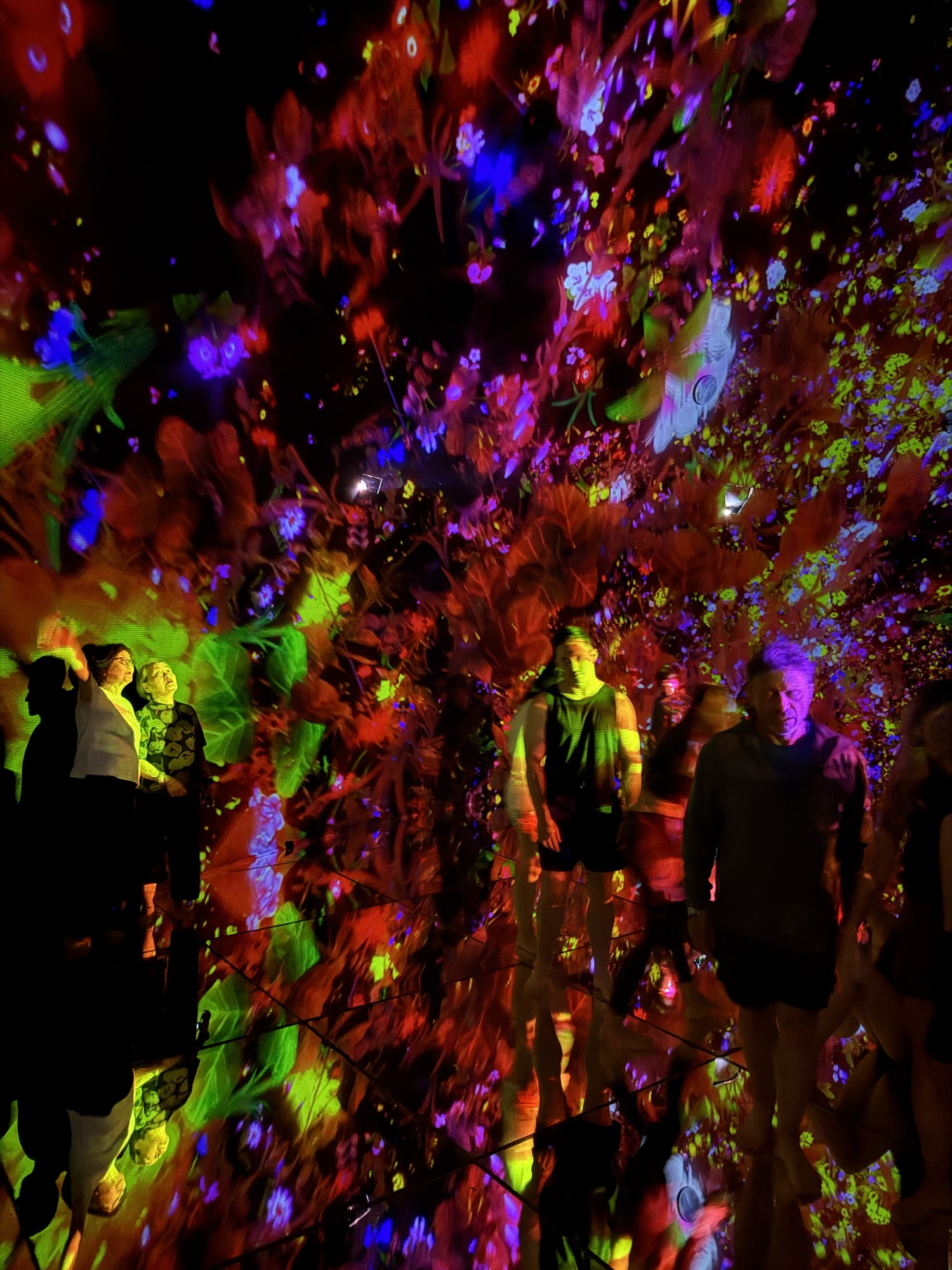
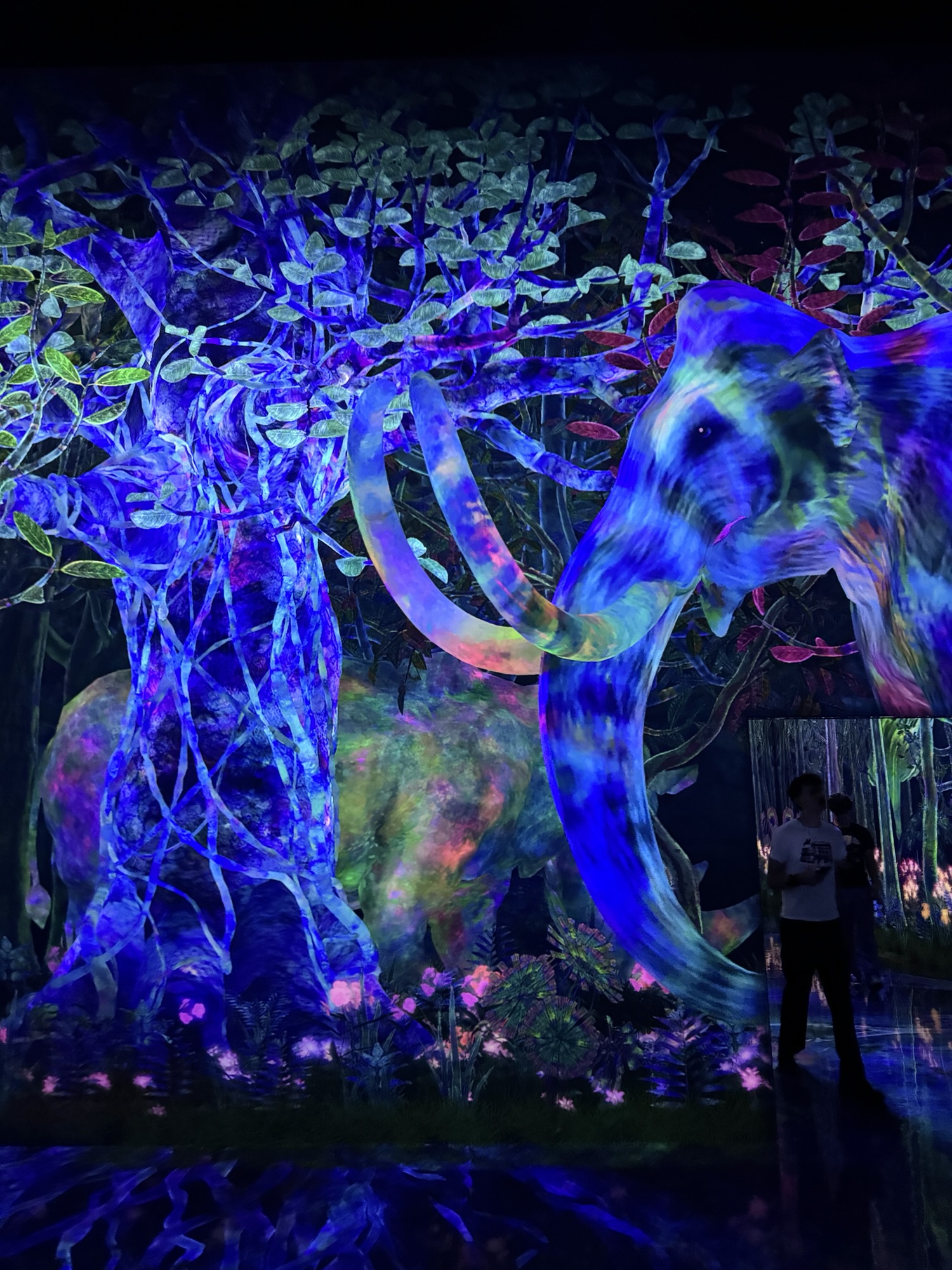
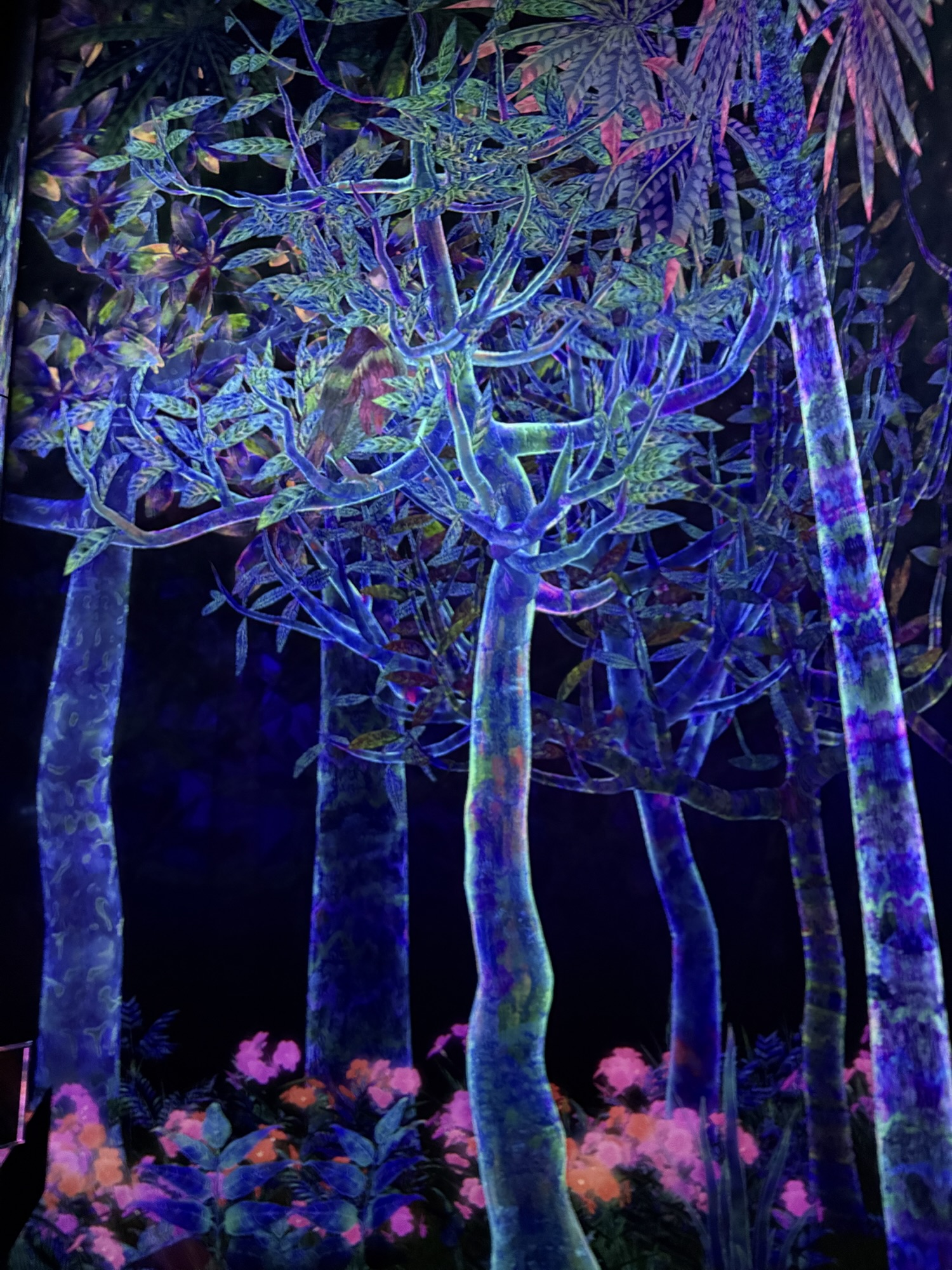
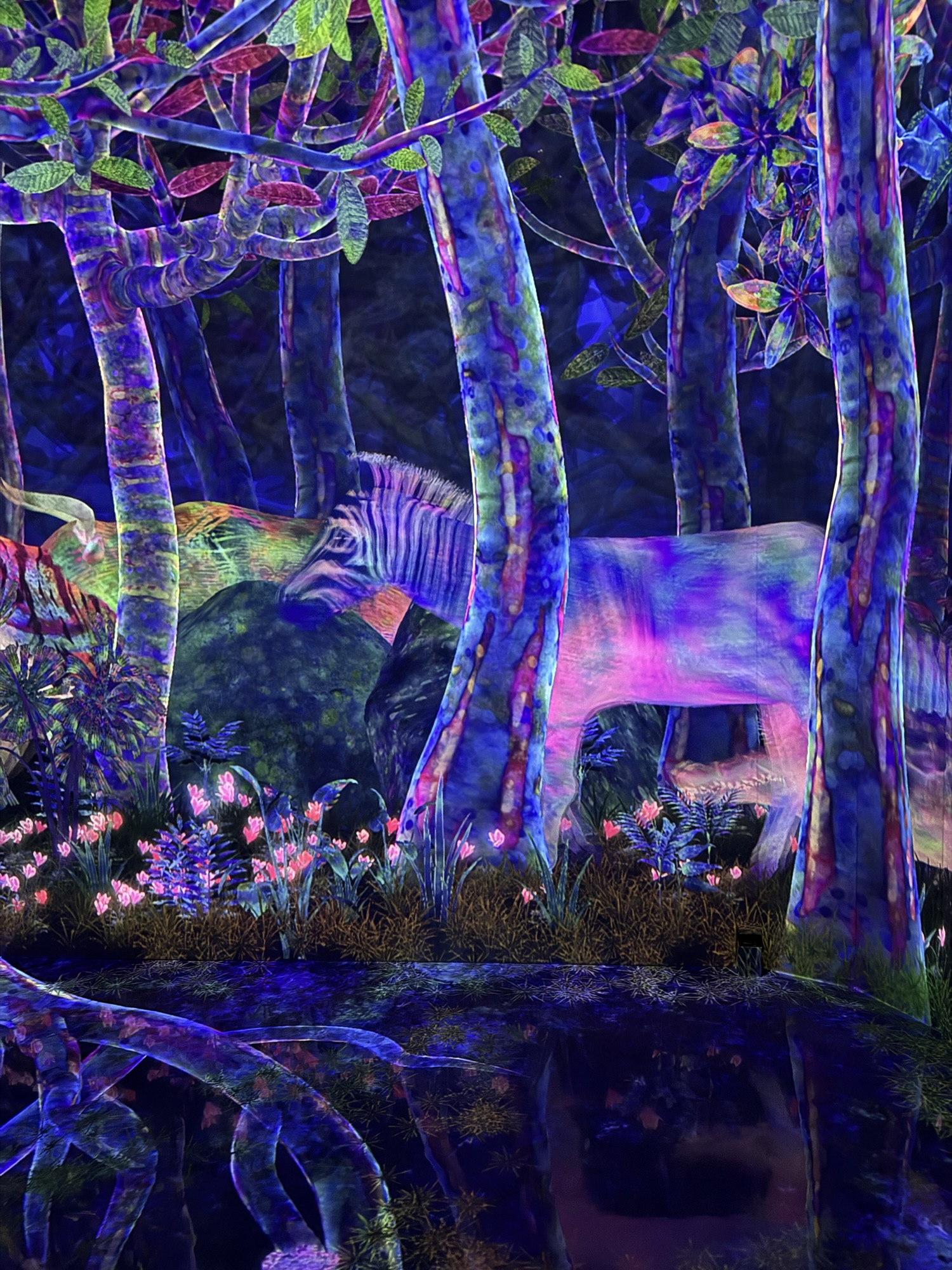
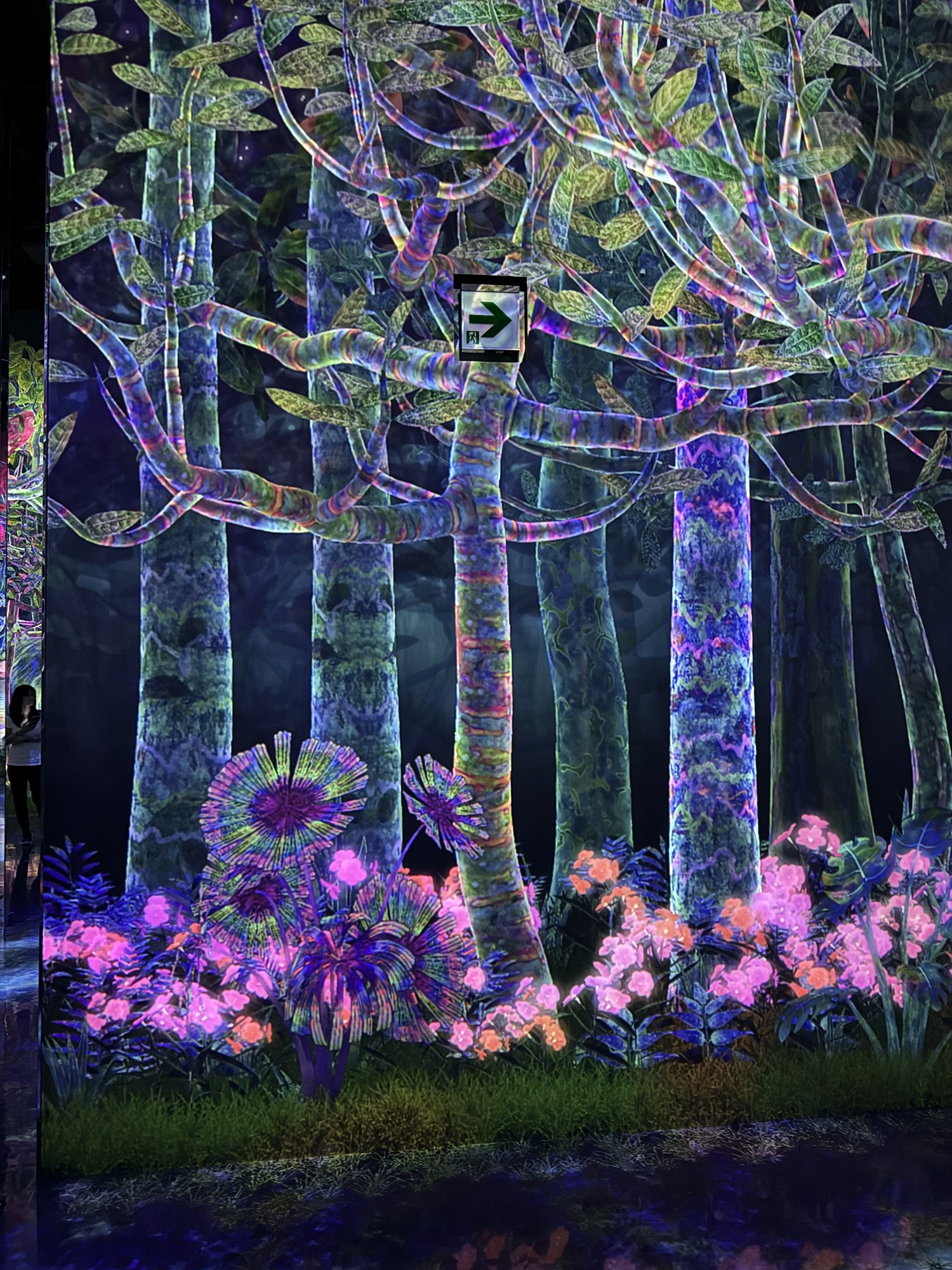
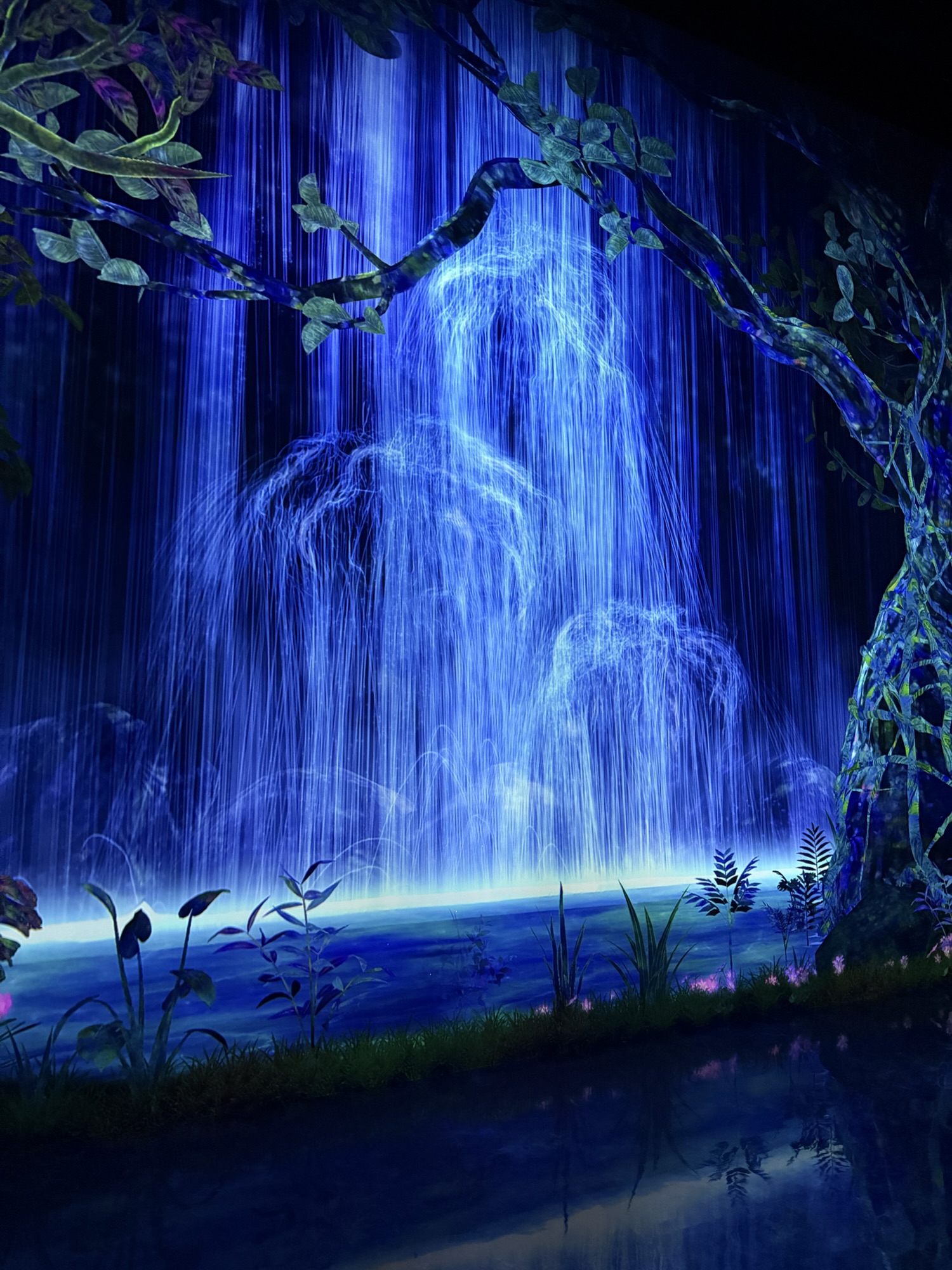
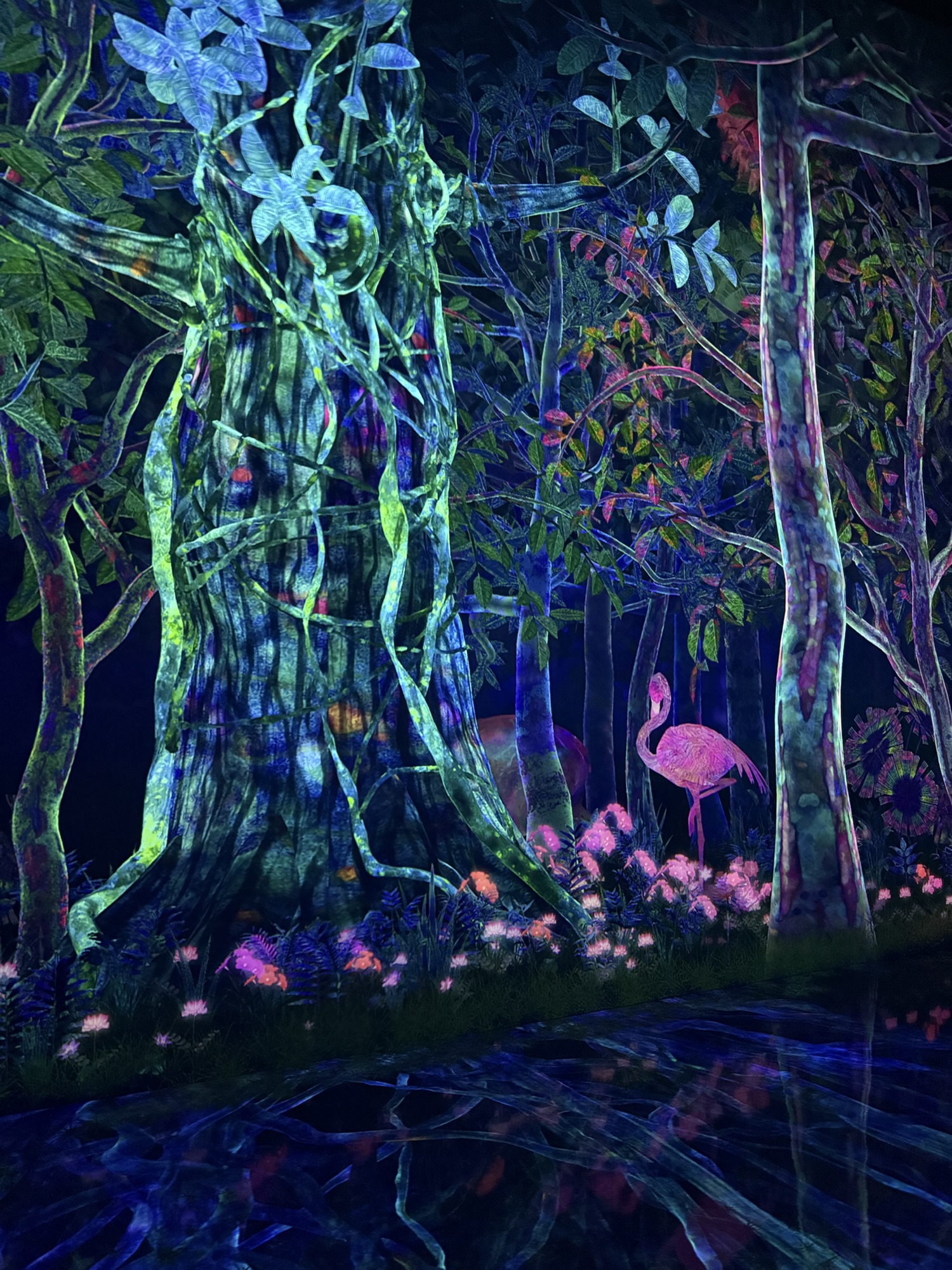
This beautiful installation featured glowing, animated nature scenes surrounding you at every corner where everywhere you looked was a scavenger hunt for new animals and plants.
The entire scene slowly changed colors, shifting between blues, greens, and purples while the digital forest around it moved and shimmered.
It felt surreal—like stepping into a prehistoric world that had been reimagined through digital art.
The Infinite Crystal Light Room
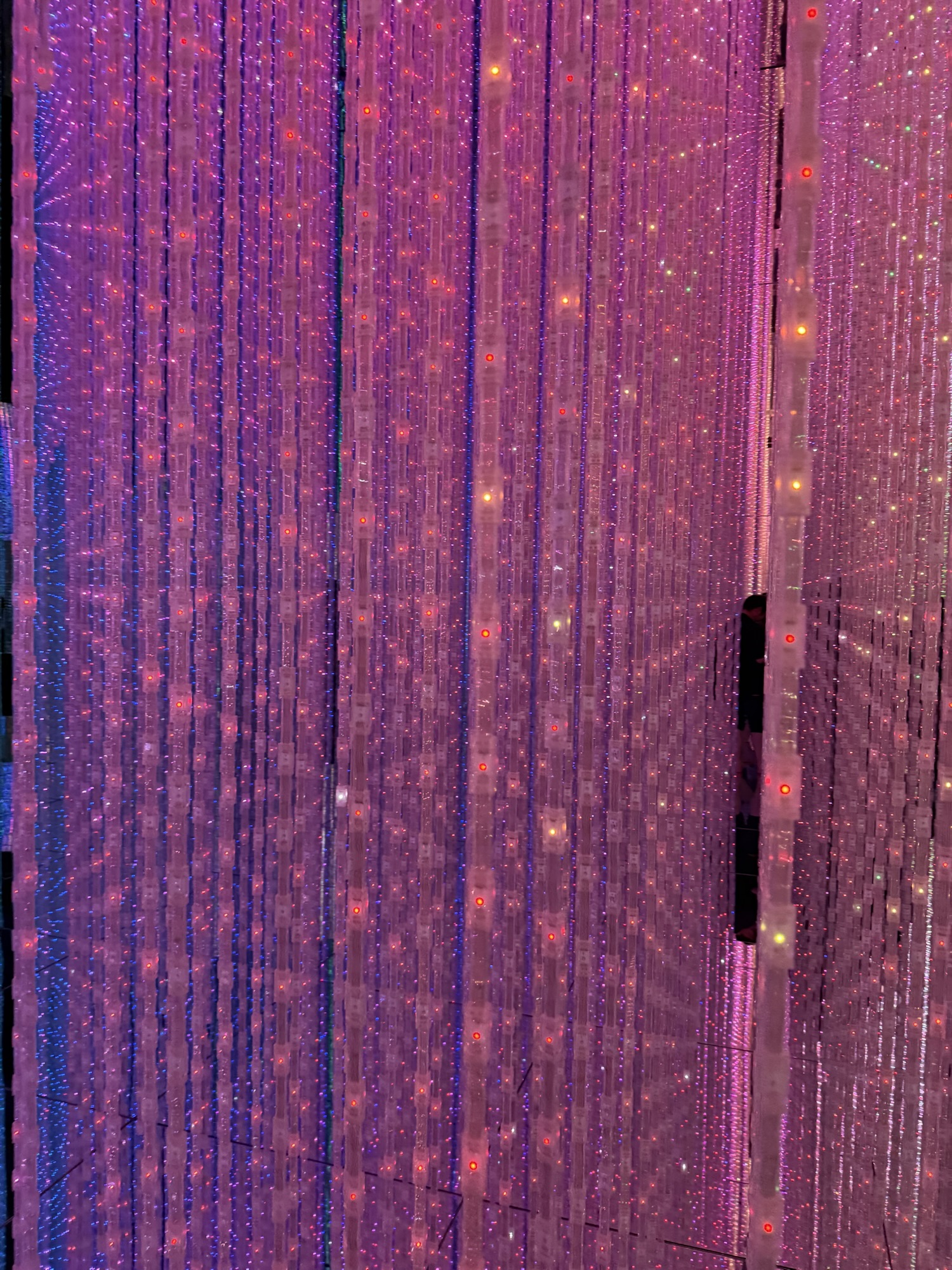
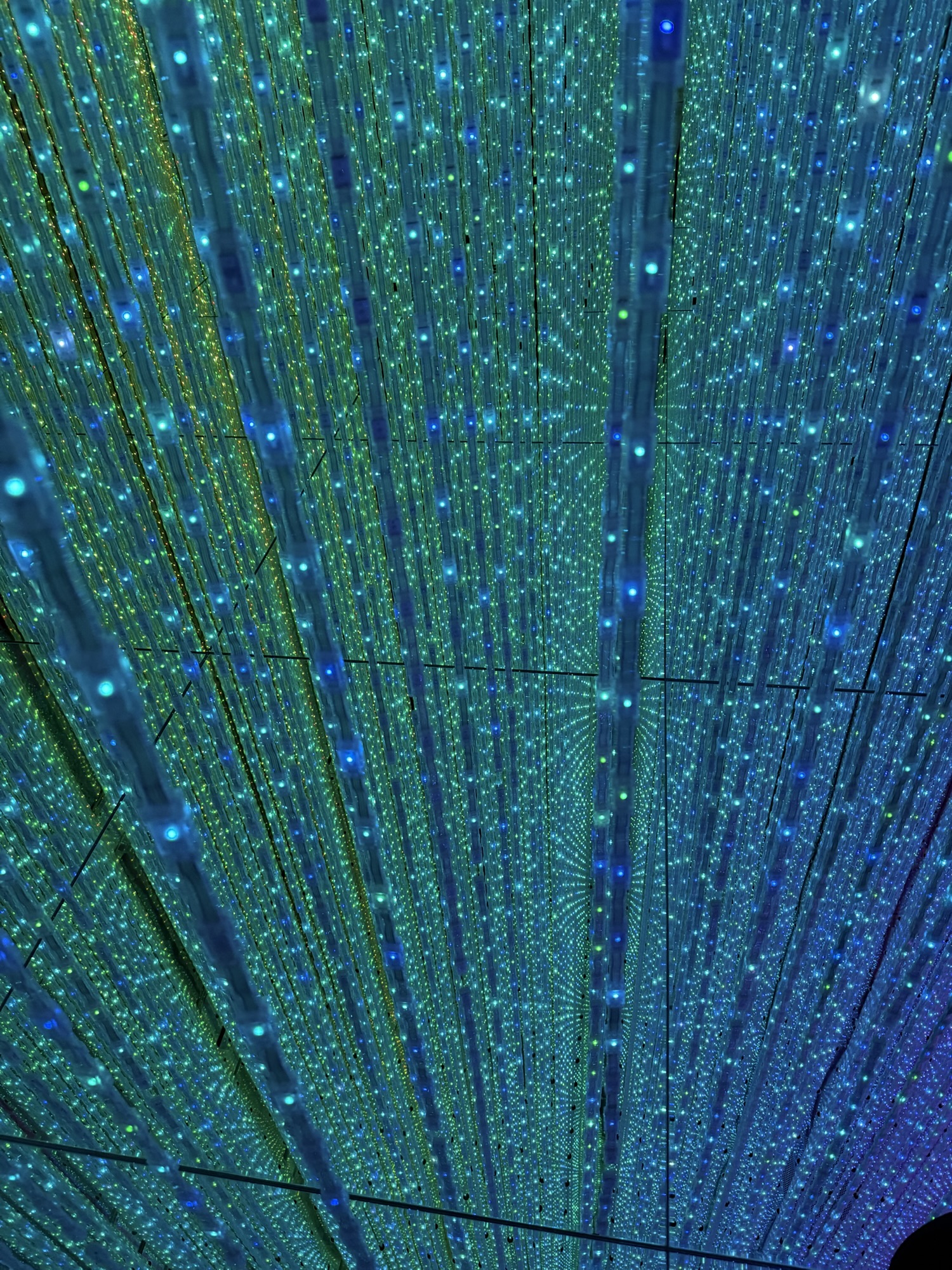
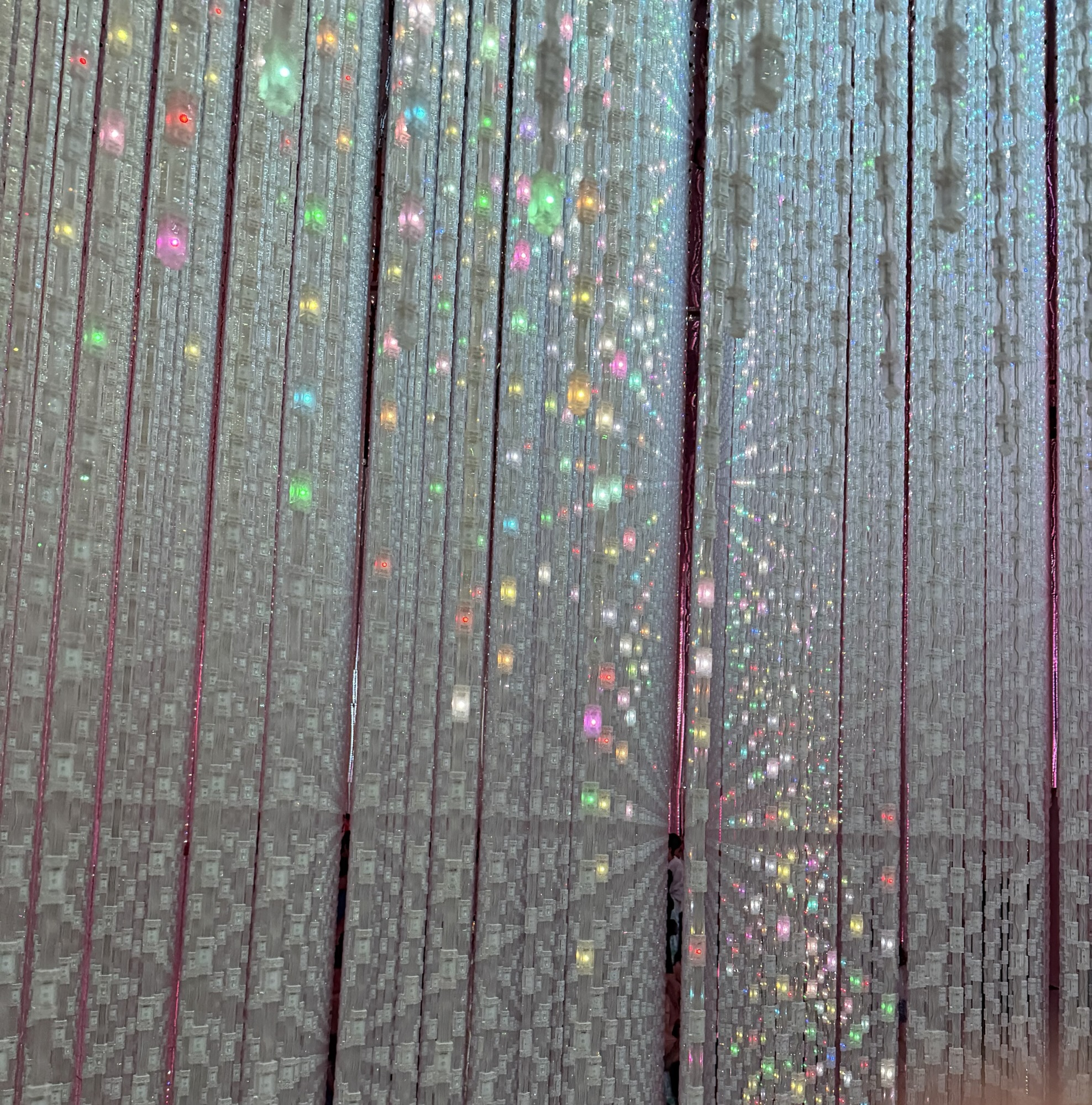
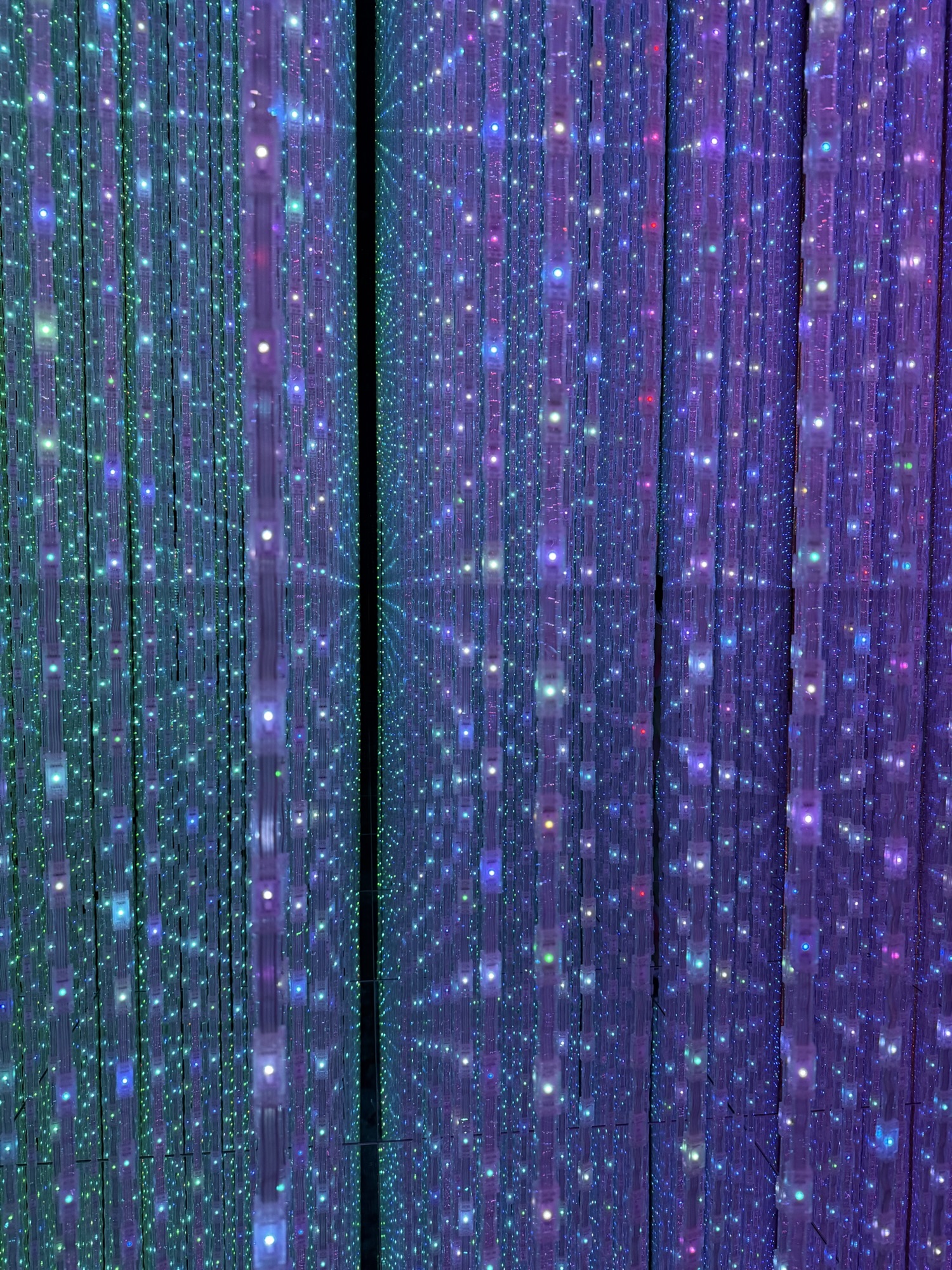
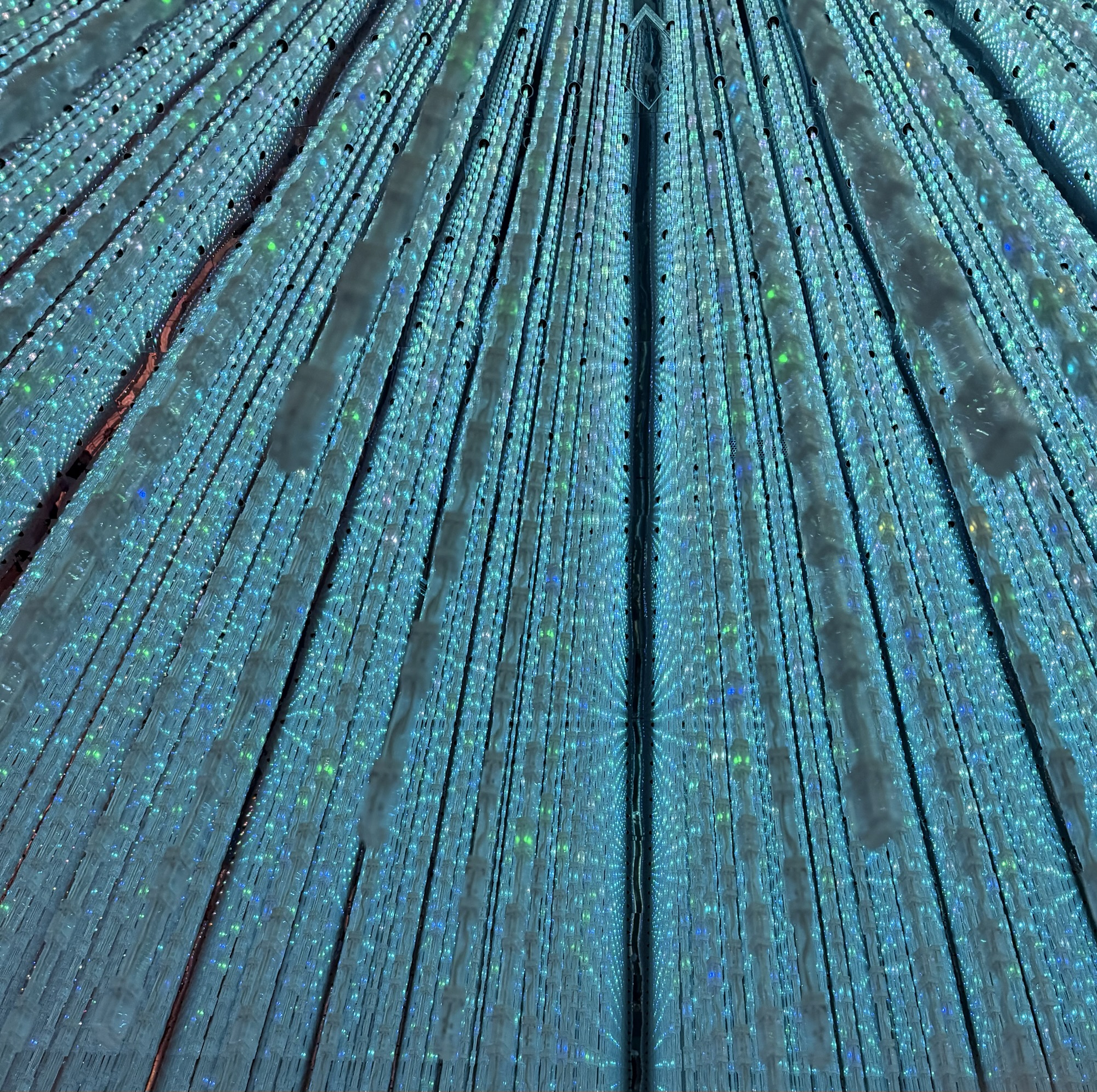
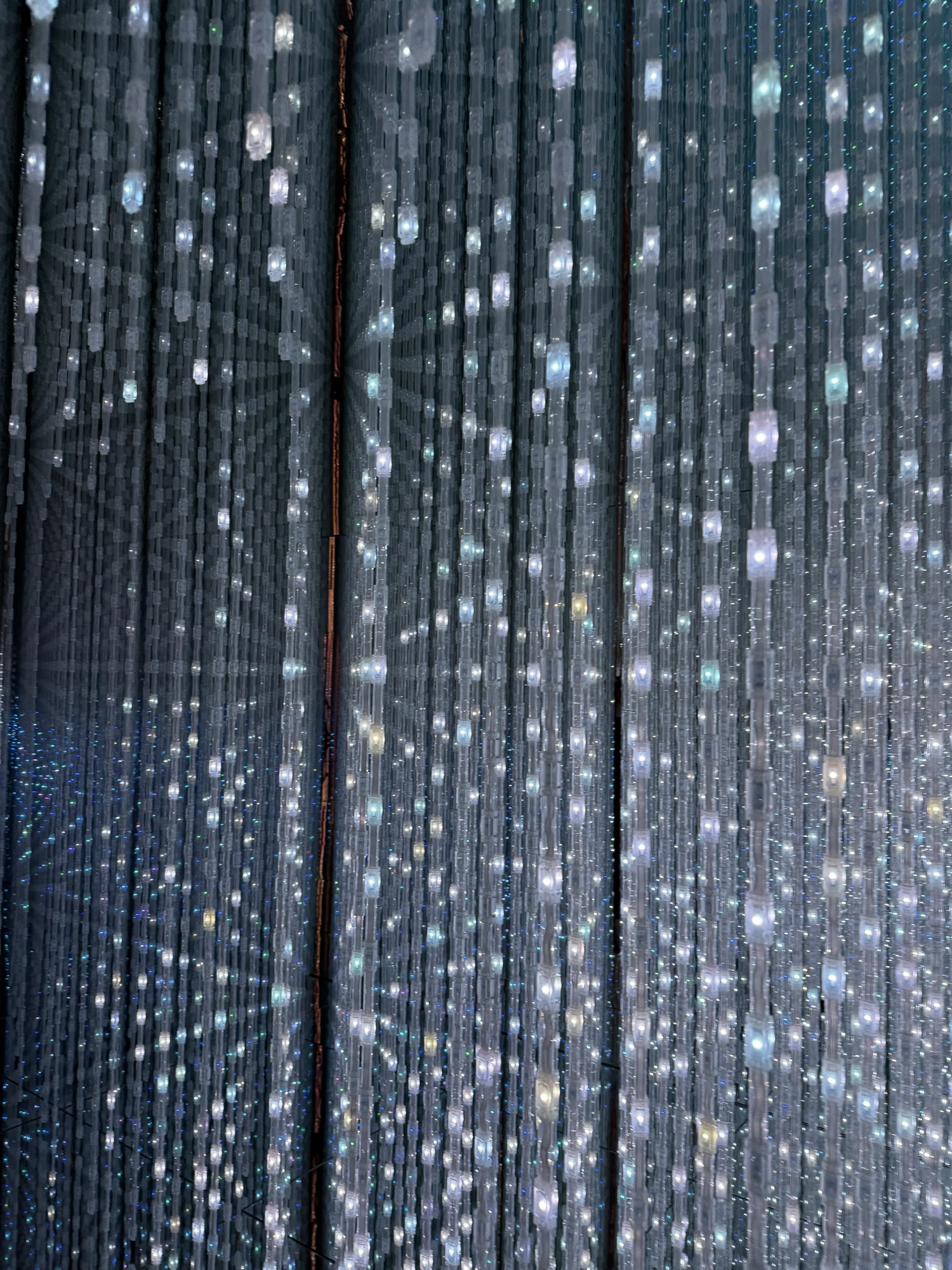
Another unforgettable part of TeamLab Planets is the series of rooms filled with hanging LED crystal strands.
Thousands of tiny lights hang from the ceiling like glowing rain, stretching from floor to ceiling and reflecting endlessly in mirrored walls. As the colors slowly change between cool blues, warm pinks, and deep purples, the entire room transforms around you.
Walking through these spaces feels like stepping inside a galaxy made of light.
The reflections create the illusion that the lights extend infinitely in every direction, making it difficult to tell where the room actually ends.
It’s one of the most visually striking installations in the entire museum.

Outdoor Installations
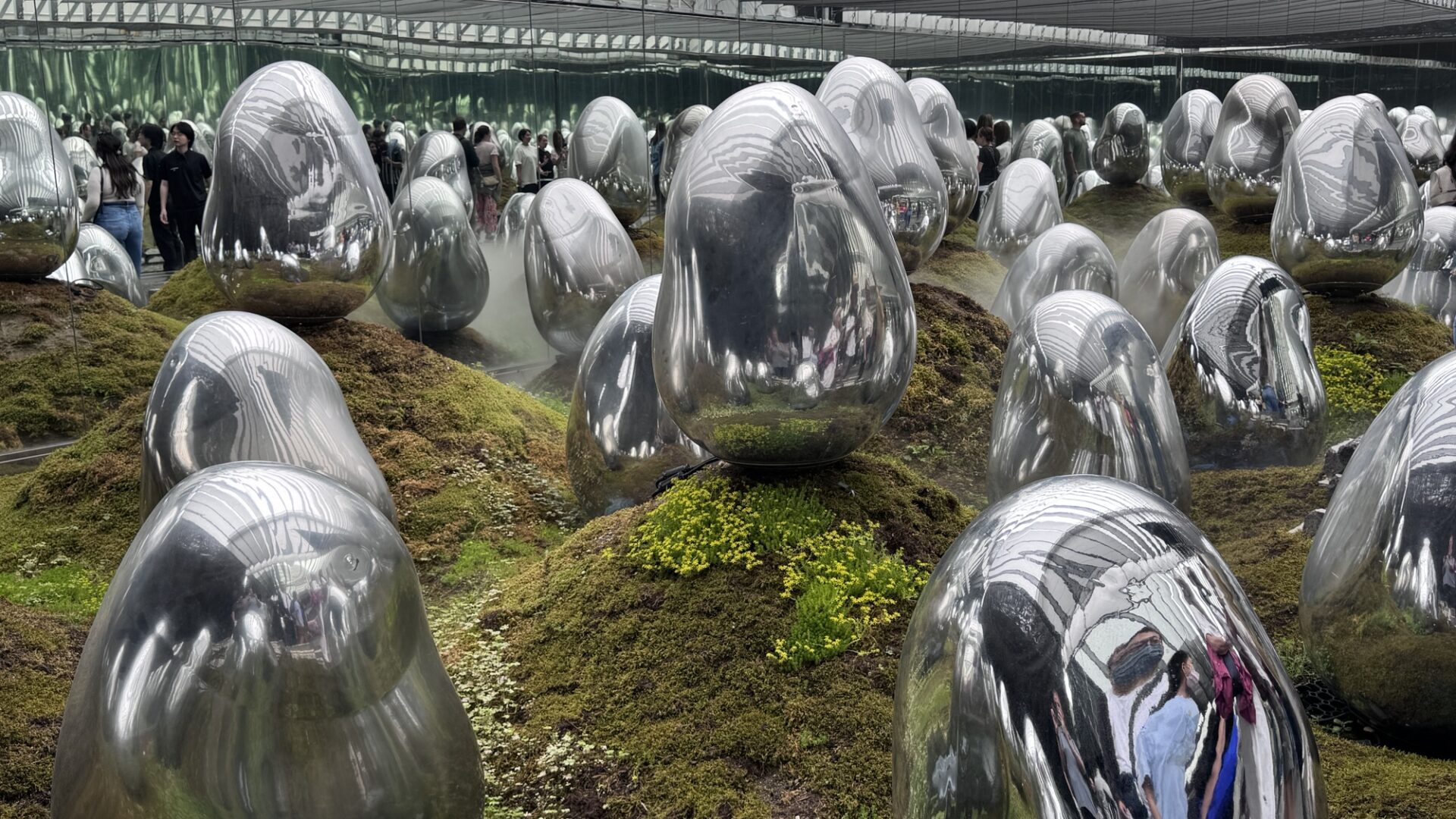
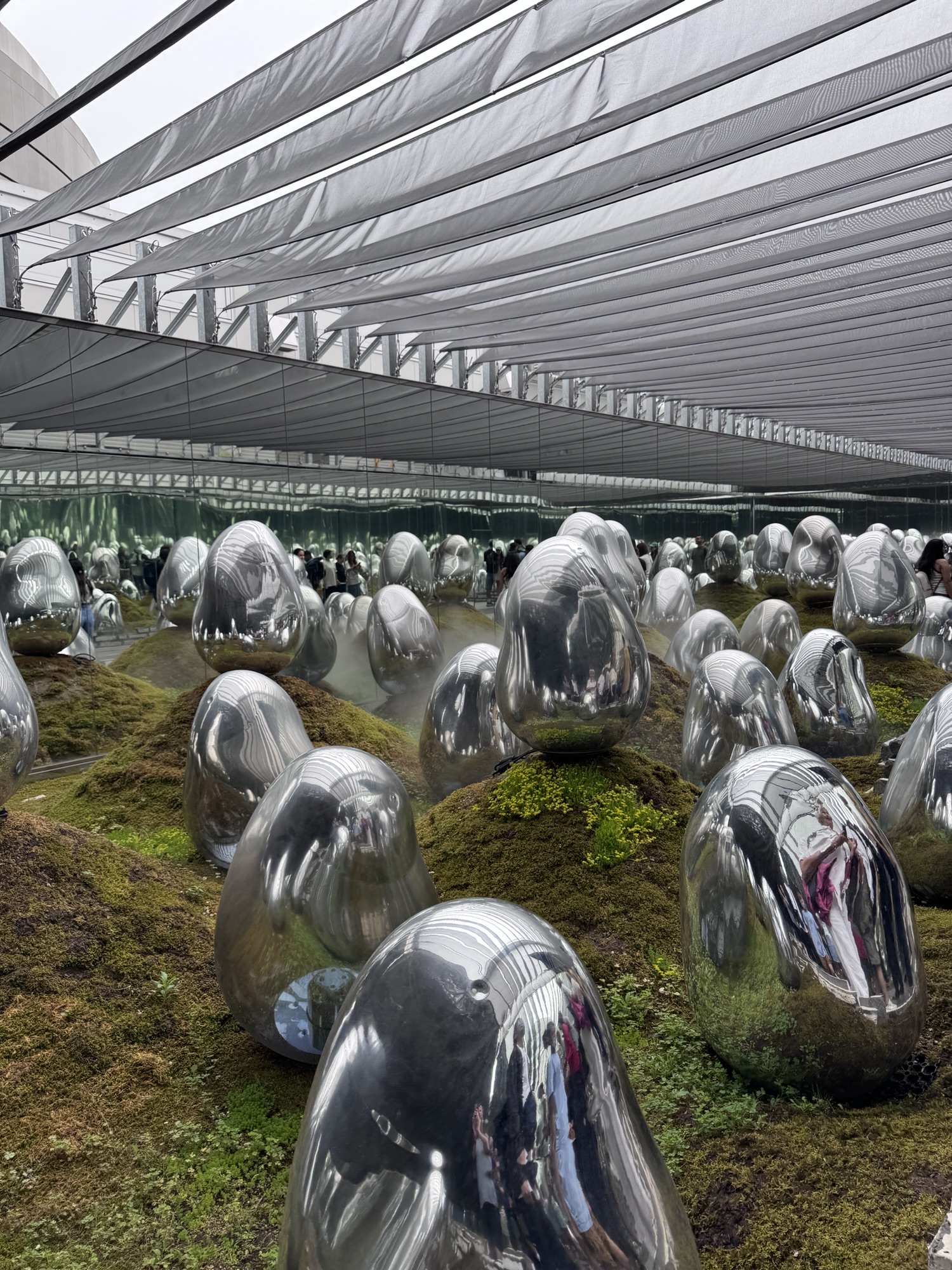
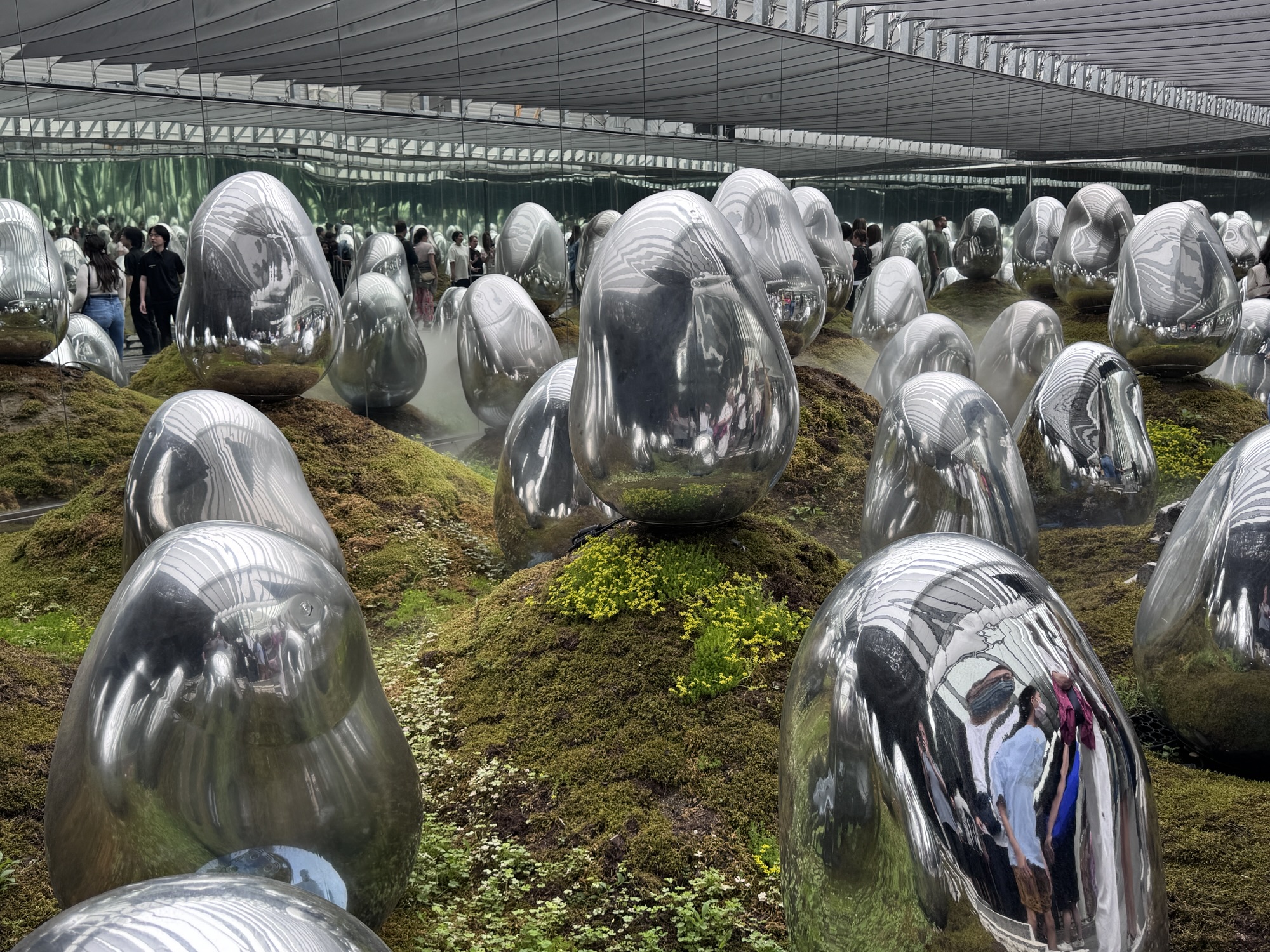
TeamLab also includes outdoor exhibits where polished metallic sculptures sit among moss-covered landscapes.
The mirrored surfaces reflect everything around them—plants, sky, visitors, and the surrounding architecture—creating constantly changing reflections depending on where you stand.
Compared to the immersive indoor rooms, this area felt calmer but just as visually fascinating.
The Floating Flower Garden
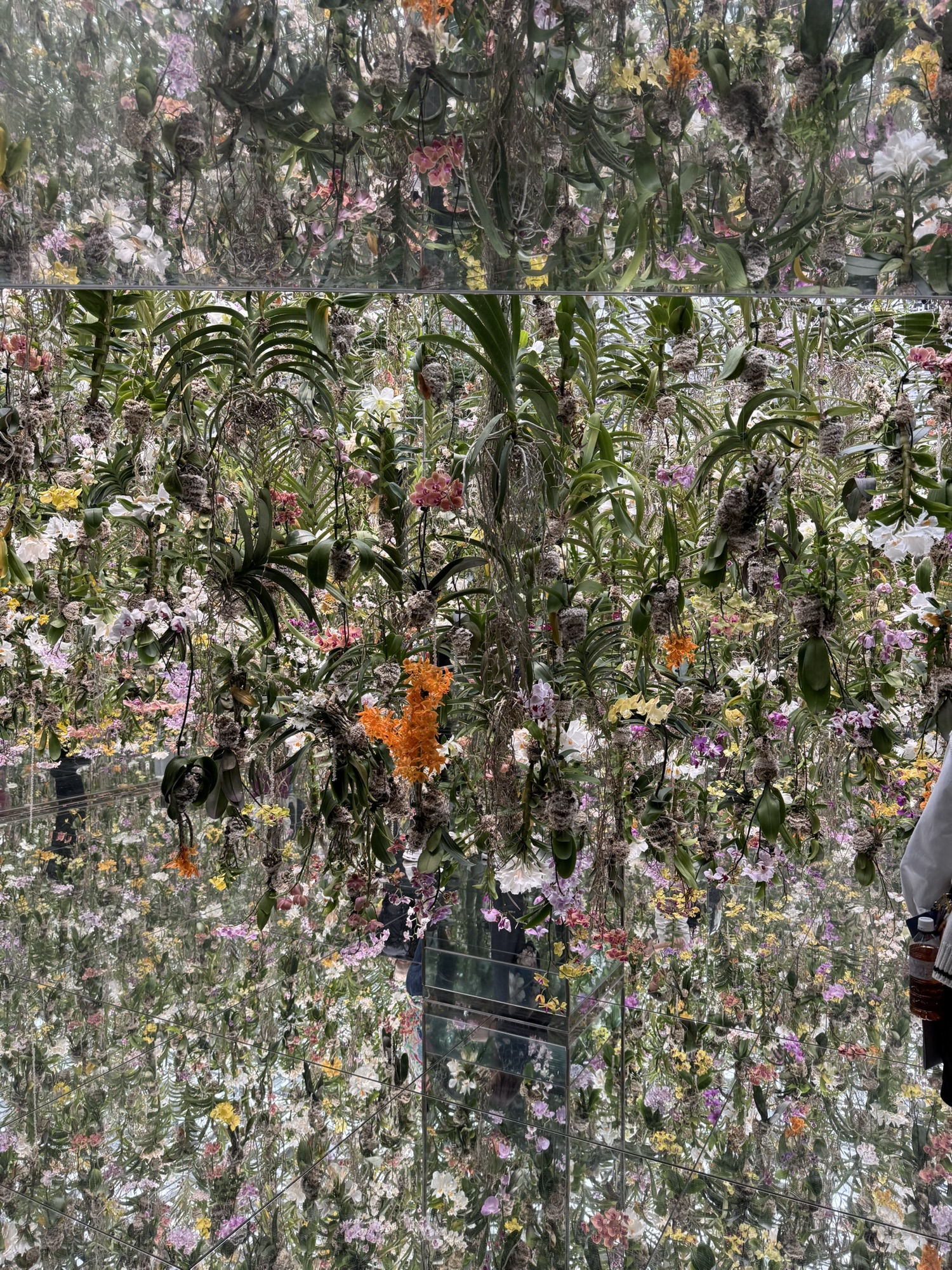
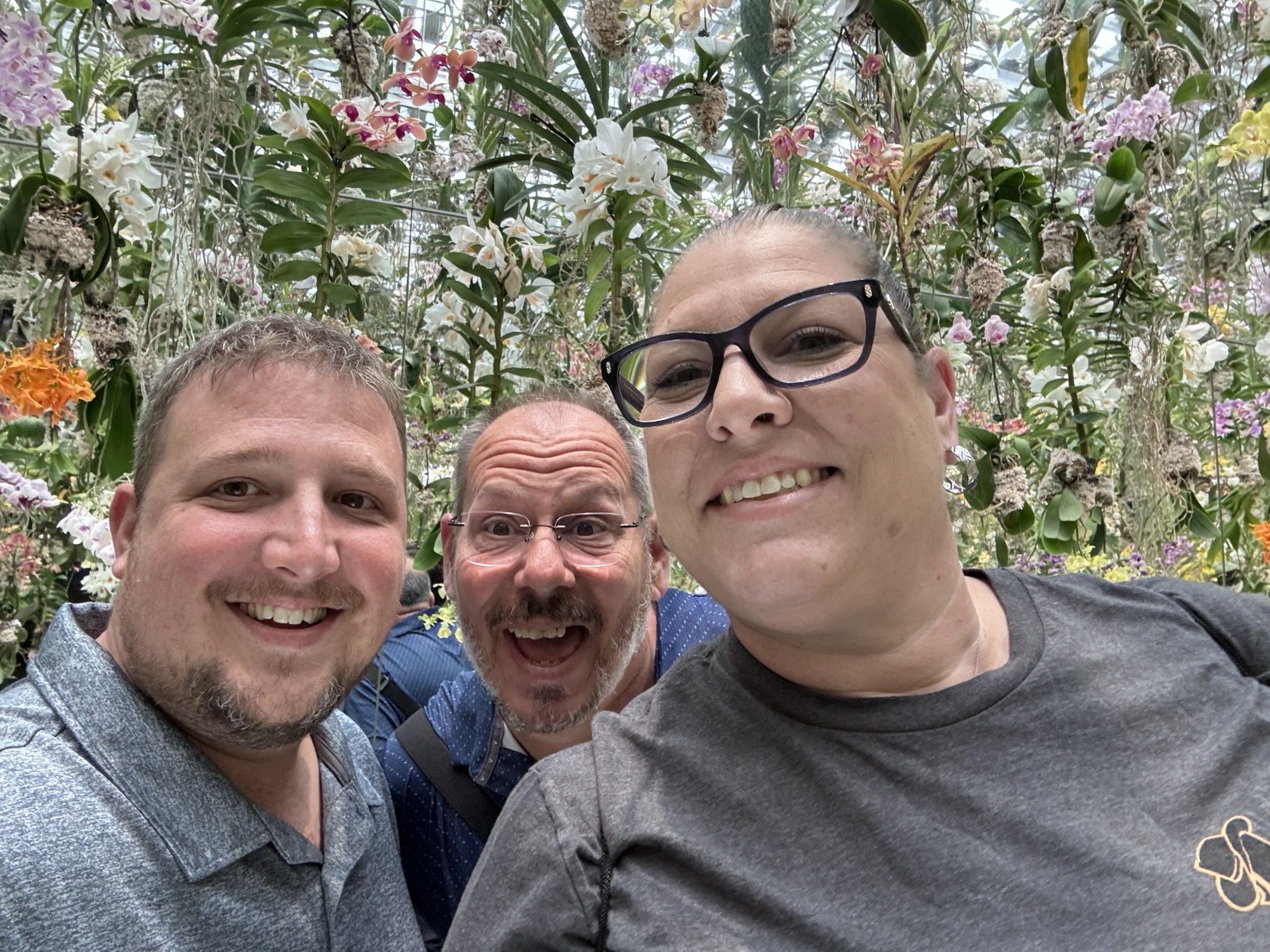
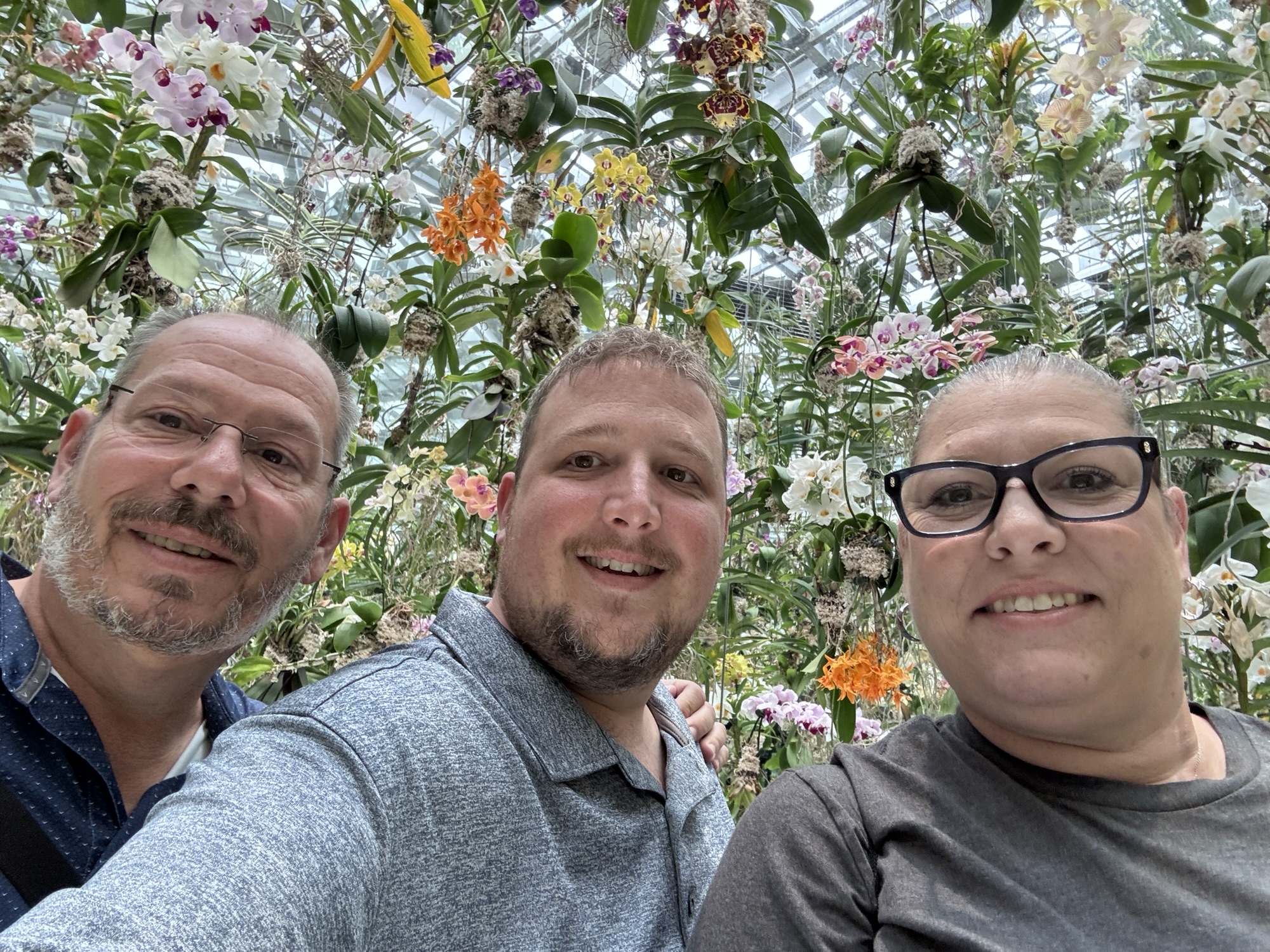
One of the final spaces we visited was the floating flower garden.
Hundreds of real orchids hang from the ceiling, creating a living canopy of flowers that slowly moves throughout the room. As visitors walk through the space, the flowers gently rise and shift to create pathways.
Mirrors surrounding the installation multiply the flowers in every direction, making the garden feel almost endless.
Compared to the darker digital installations earlier in the museum, this room feels peaceful and almost dreamlike. It’s a beautiful contrast that closes out the experience perfectly.
Tips for Visiting TeamLab
Buy tickets in advance. Time slots can sell out quickly.
Plan to spend at least 1–2 hours exploring the exhibits.
Wear comfortable shoes since you’ll be walking through a lot of spaces.
Bring a phone or camera with a good low-light mode because the lighting creates incredible photo opportunities.
Is TeamLab Worth It?
Absolutely.
TeamLab isn’t something you simply look at—it’s something you experience.
Every room feels completely different, and the combination of technology, art, and storytelling makes it one of the most unique attractions in Tokyo.
If you’re visiting Japan and want something visually stunning and memorable, TeamLab should definitely be on your itinerary.
Our Takeaway
Tokyo is filled with incredible sights—historic temples, amazing food, bustling neighborhoods—but TeamLab stands out because it feels unlike anything else.
For a few hours, it feels like stepping into a living piece of art.
And honestly, it’s one of those places that photos don’t fully capture—you really have to see it for yourself.