

Hiroshima was one of the stops on our trip through Japan that felt different before we even arrived.
The name alone carries weight. For most people, Hiroshima is associated with one moment in history. But when you visit the city today, you quickly realize it is much more than that. It is a vibrant, modern place that has rebuilt itself while making sure its history is never forgotten.
Our time in Hiroshima turned out to be both meaningful and memorable for another reason we did not expect.
Arriving in Hiroshima
We arrived in Hiroshima by Shinkansen, Japan’s famous bullet train. Traveling between cities in Japan is incredibly easy thanks to the rail system. Within a few hours we had gone from Osaka to Hiroshima, watching the scenery shift between cities, mountains, and countryside along the way.
Before our trip, we had read that traveling in Japan with large luggage on trains can sometimes be tricky, especially when moving between cities. Many travelers use a service called Takkyubin, which is a luggage forwarding service that transfers your bags directly between hotels.
Since we were only staying in Hiroshima for one night, we decided to try it. Instead of bringing all of our luggage on the train, we packed small overnight bags and arranged for our larger suitcases to be forwarded to our next hotel.
It ended up being one of the best travel decisions we made on the trip. Our bags were waiting for us when we arrived at the next hotel, and traveling with just small bags made the train journey much easier.
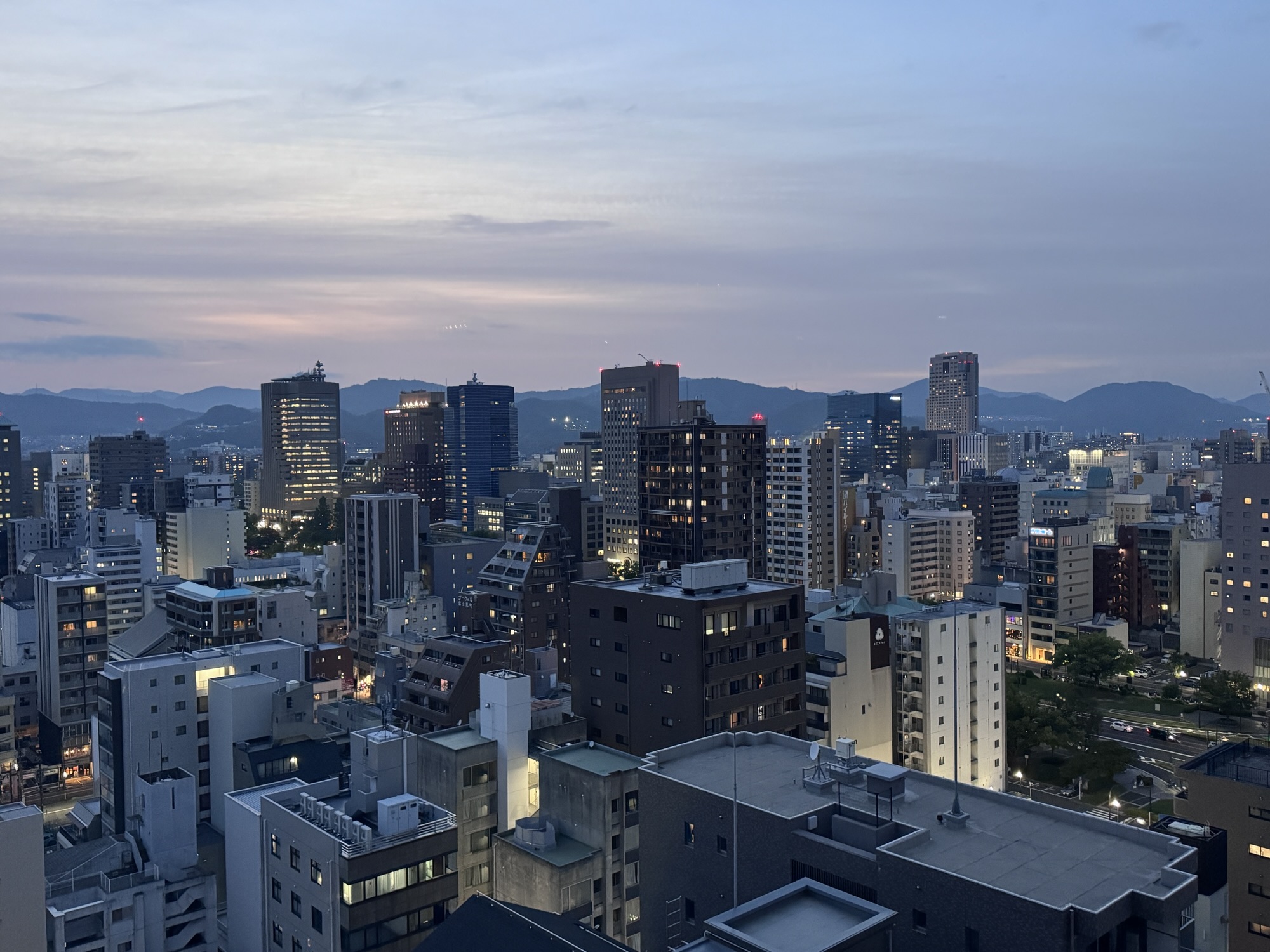
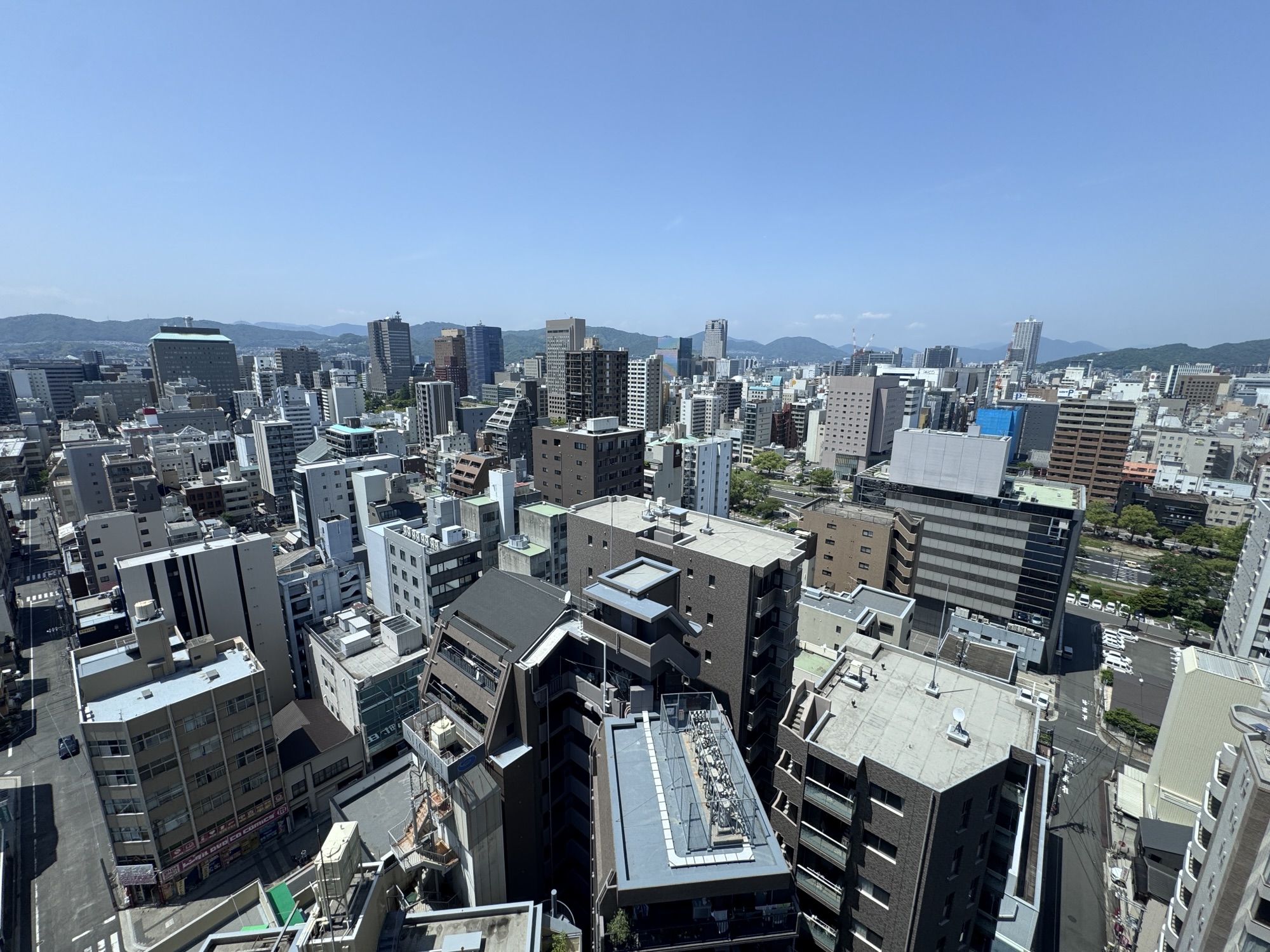
When we arrived and checked into our hotel, the view from the room immediately gave us a sense of the city. Hiroshima stretches out toward the surrounding mountains with a skyline that looks like many other modern Japanese cities. Tall buildings, busy streets, and streetcars moving through the city.
At first glance, it feels like a place that has always looked this way.
Our Stay at the Hilton Hiroshima
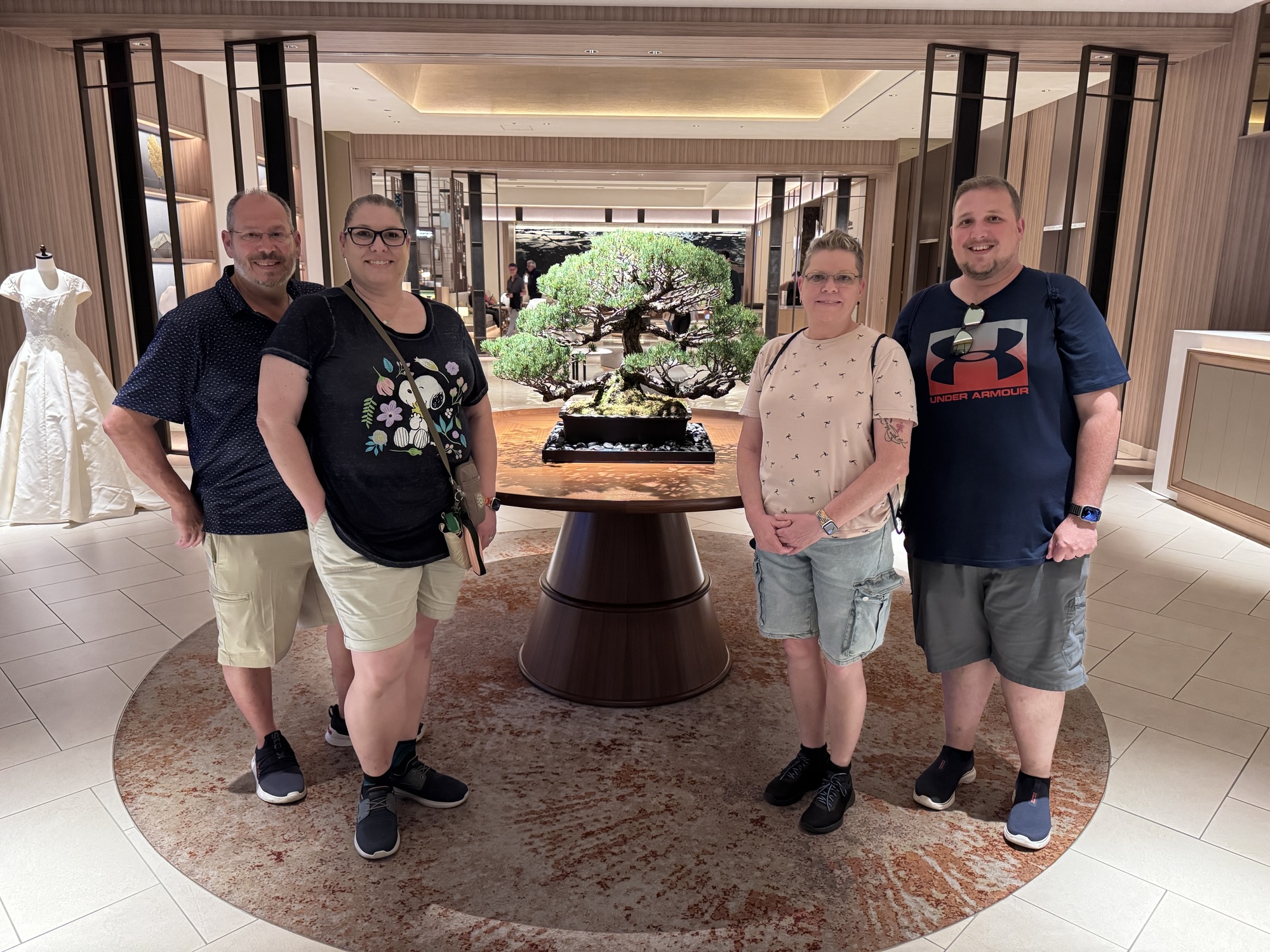
For our stay in Hiroshima, we used Lori’s Hilton reward points to book a room at the Hilton Hiroshima.
It ended up being one of the best hotel stays of our entire trip.
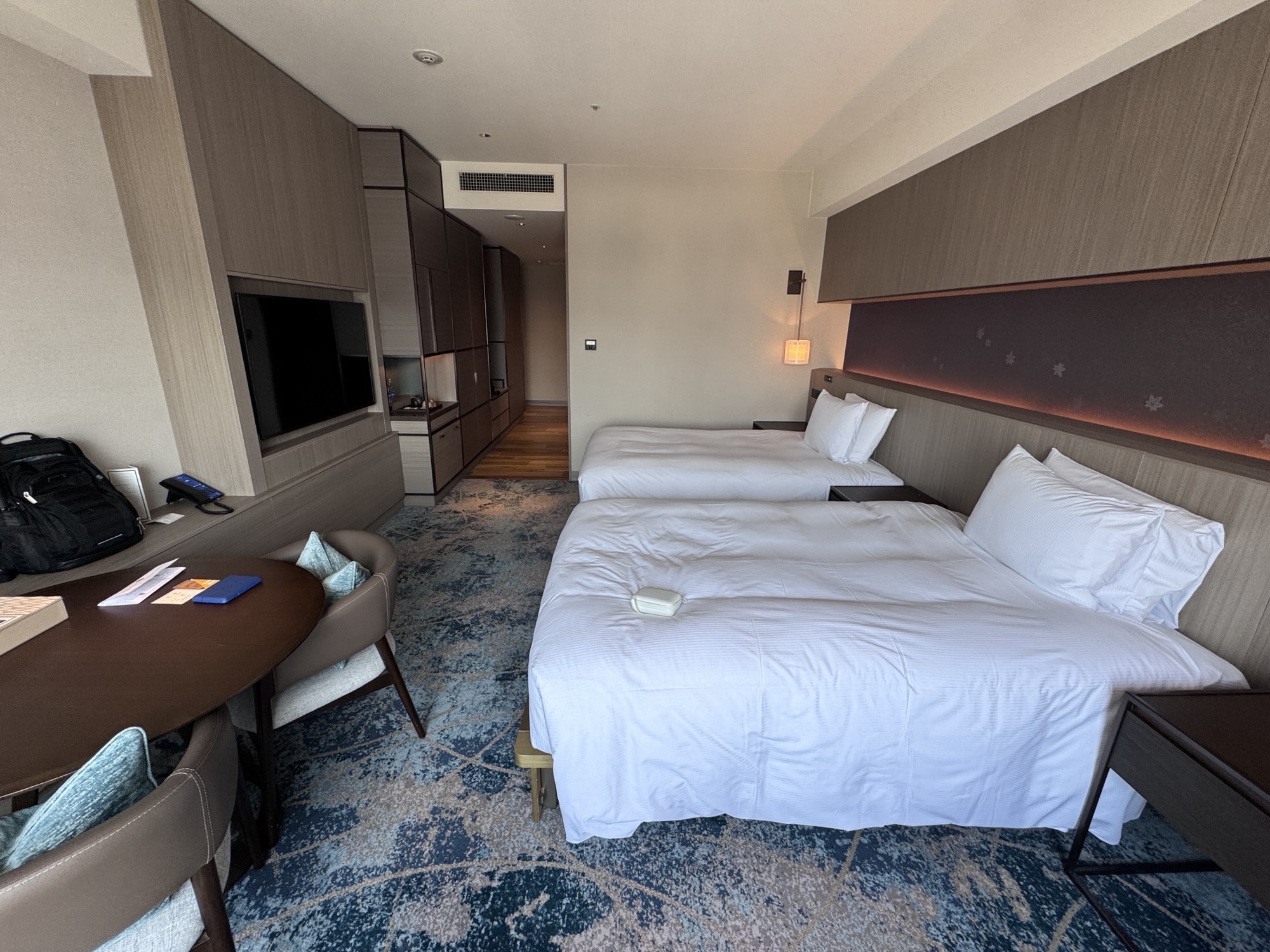
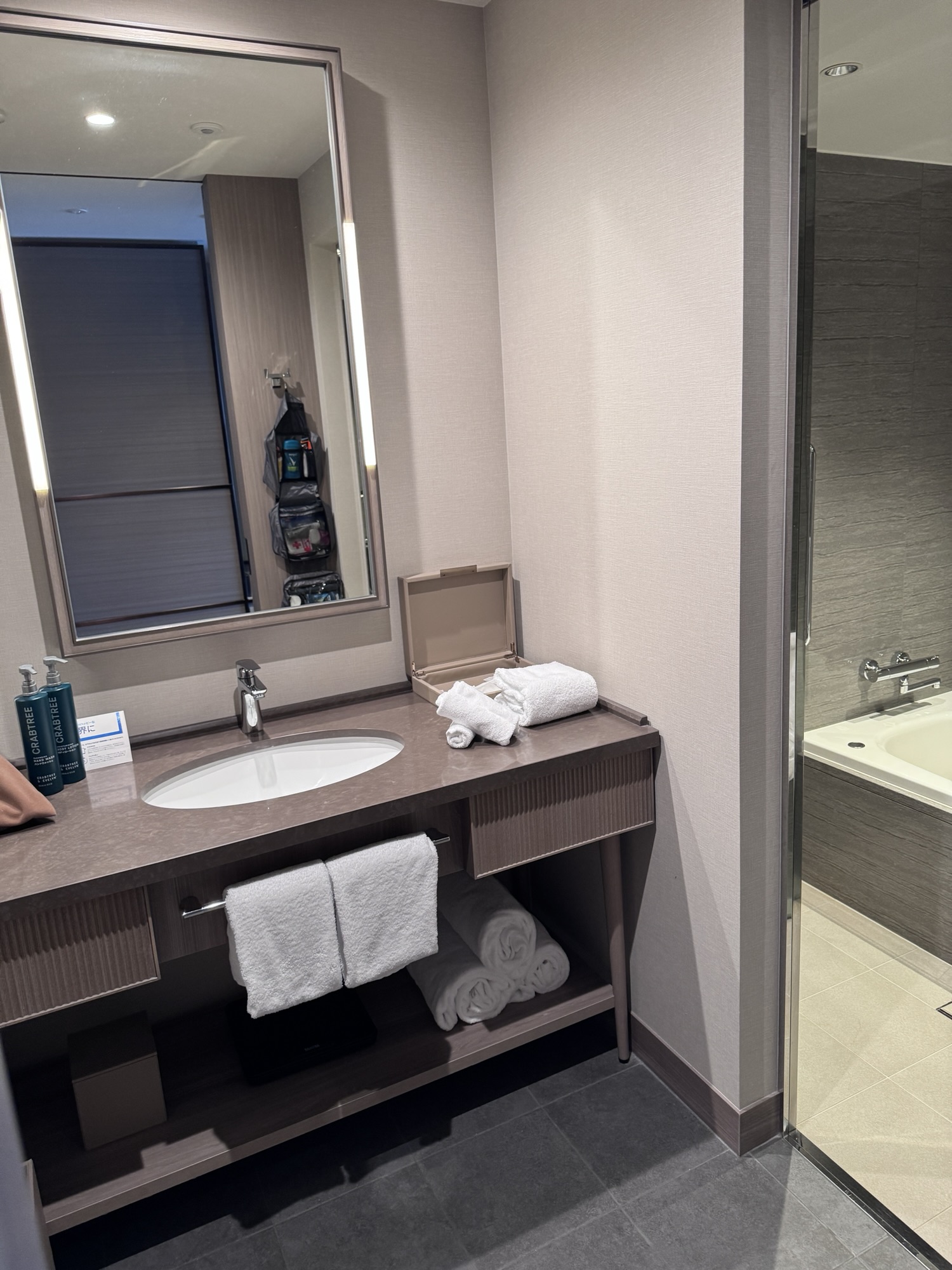
The hotel itself is beautiful. Modern, calm, and thoughtfully designed in the way many Japanese hotels are. But what stood out most was the size of the room. Compared to several of the other hotels we stayed in throughout Japan, this one felt huge.
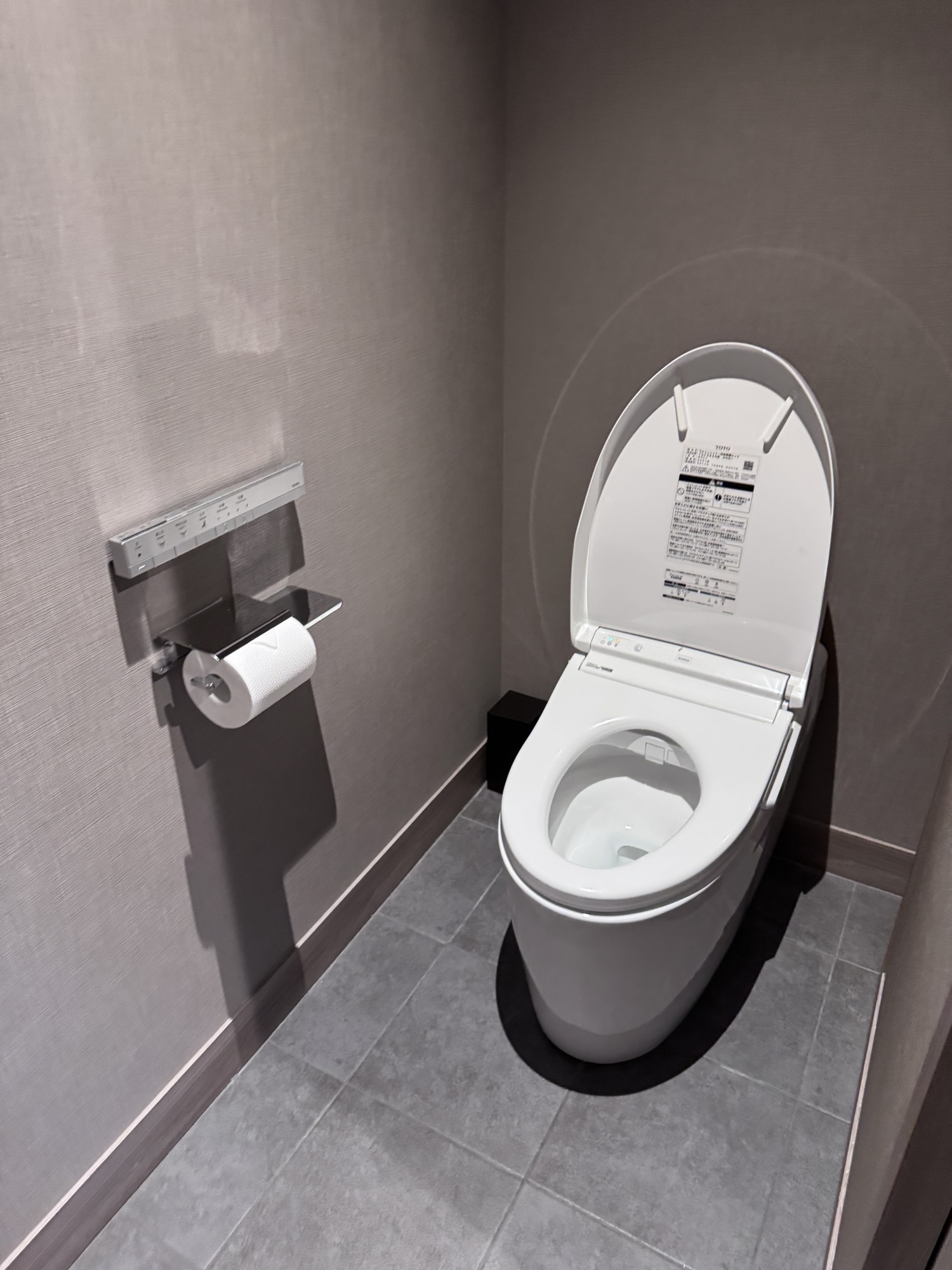
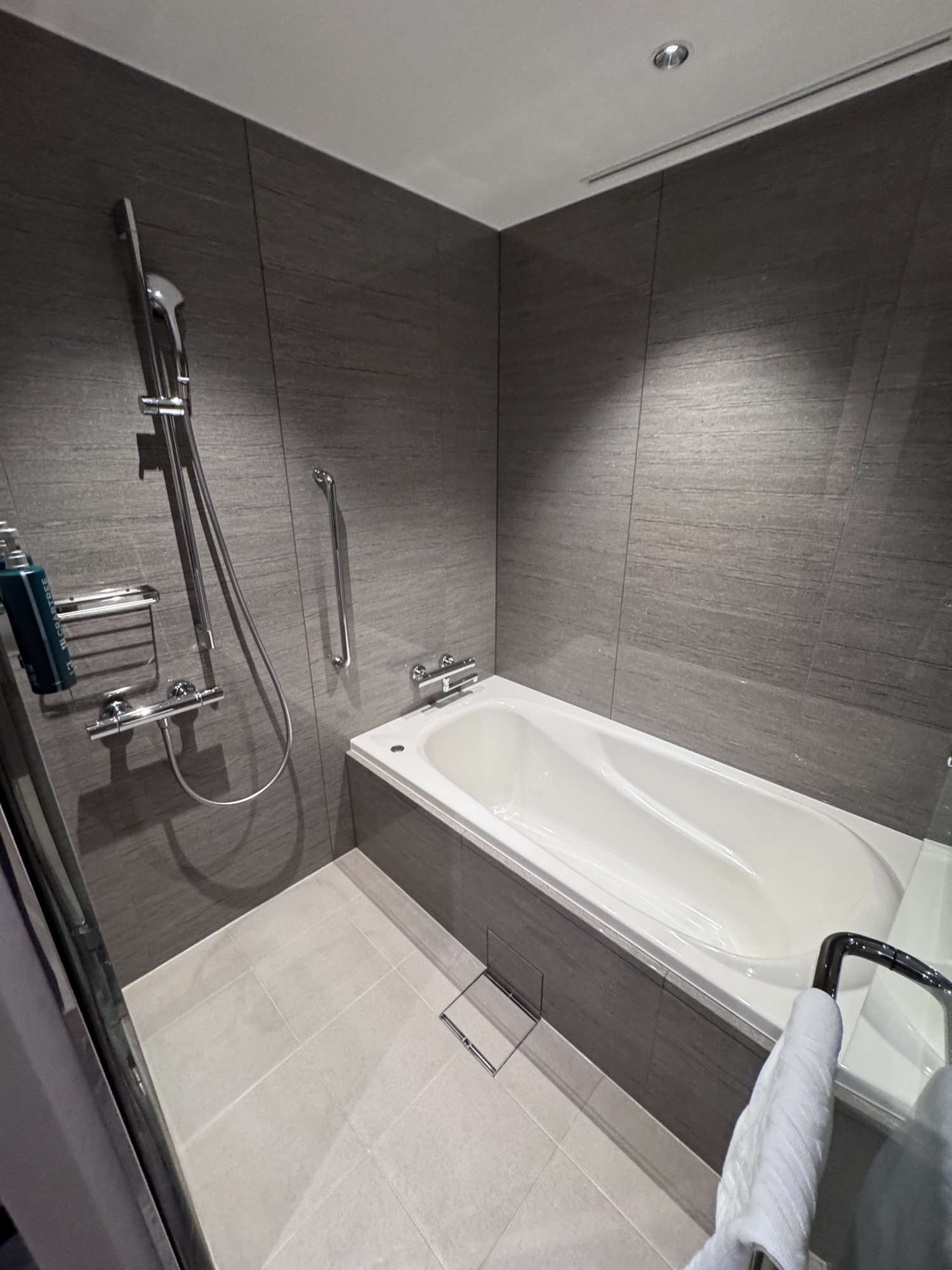
The bathroom was also one of the nicest we experienced on the trip. It had a large soaking tub and a separate shower area. Japan does bathrooms really well. And of course there was the famous high tech Japanese toilet, which always seems to have more buttons than expected.
Between the comfort of the room and the view over the city, the Hilton Hiroshima was the perfect place to recharge before heading out to explore.

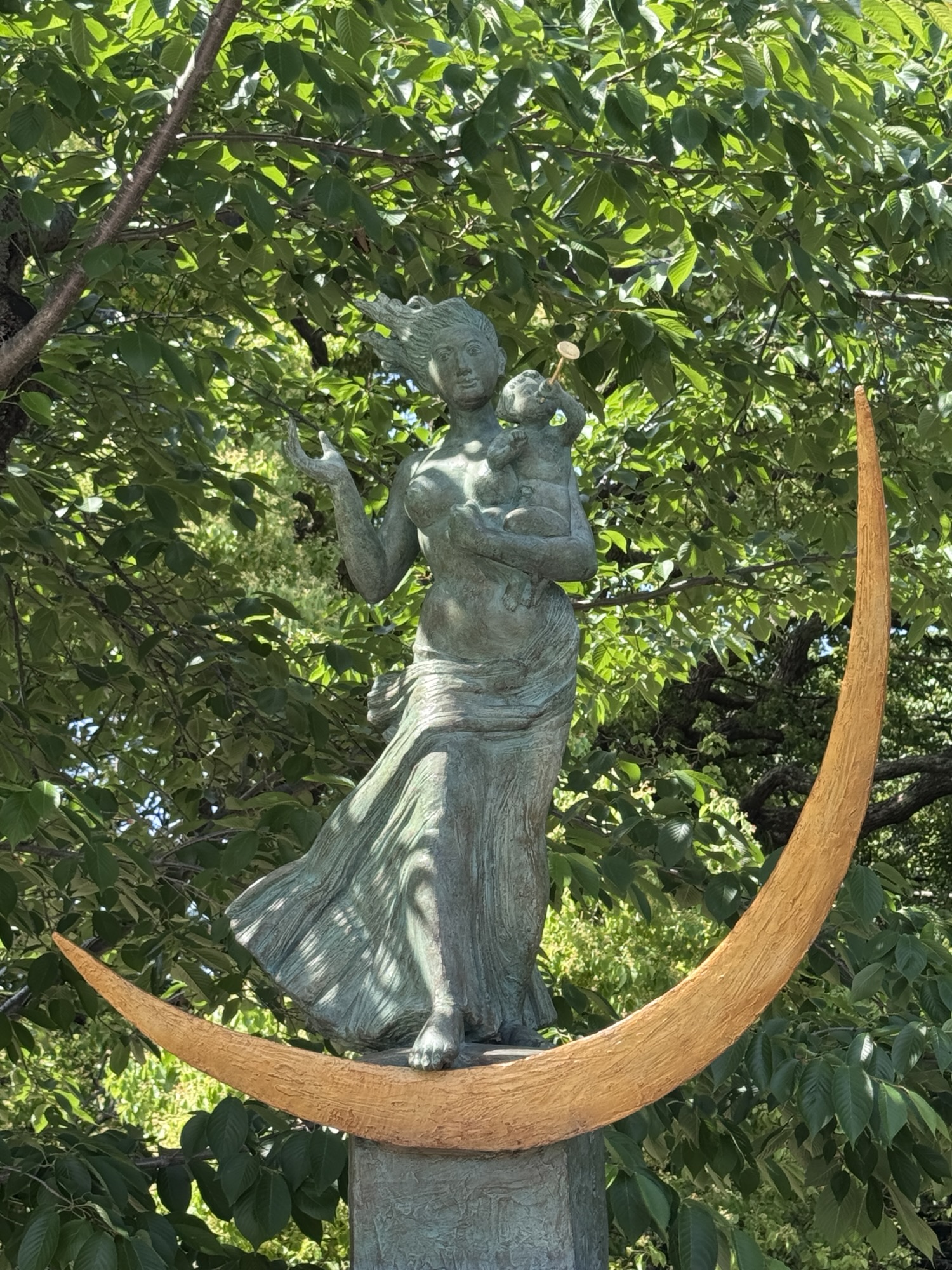
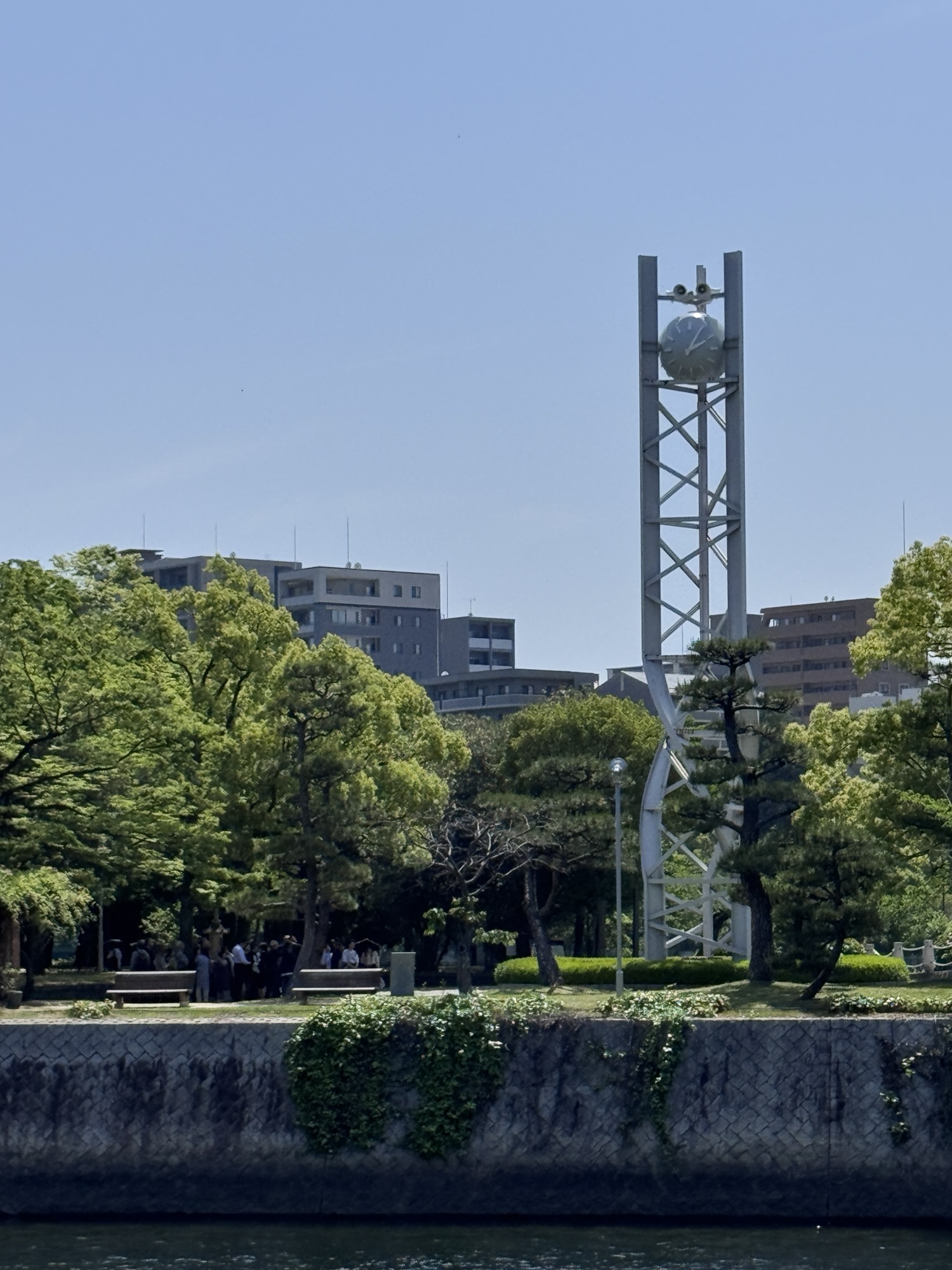
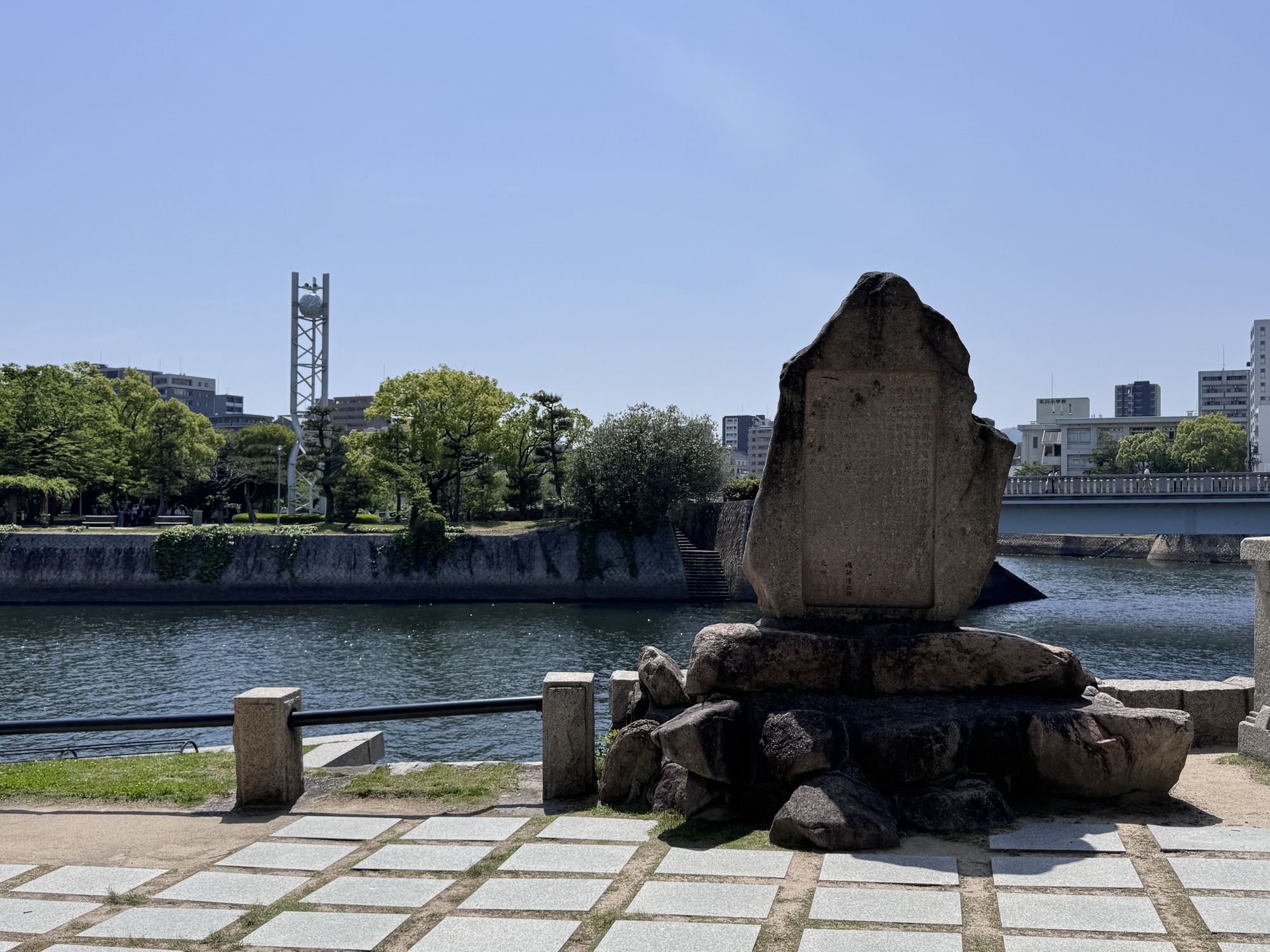
Hiroshima Peace Memorial Park
The most important place to visit in Hiroshima is Peace Memorial Park.
The park sits near the hypocenter of the atomic bomb explosion in 1945. Today it has been transformed into a large green space dedicated to remembrance and peace.
Walking through the park feels different than walking through the rest of the city. It is quieter. People move slowly and respectfully through the monuments and memorials.
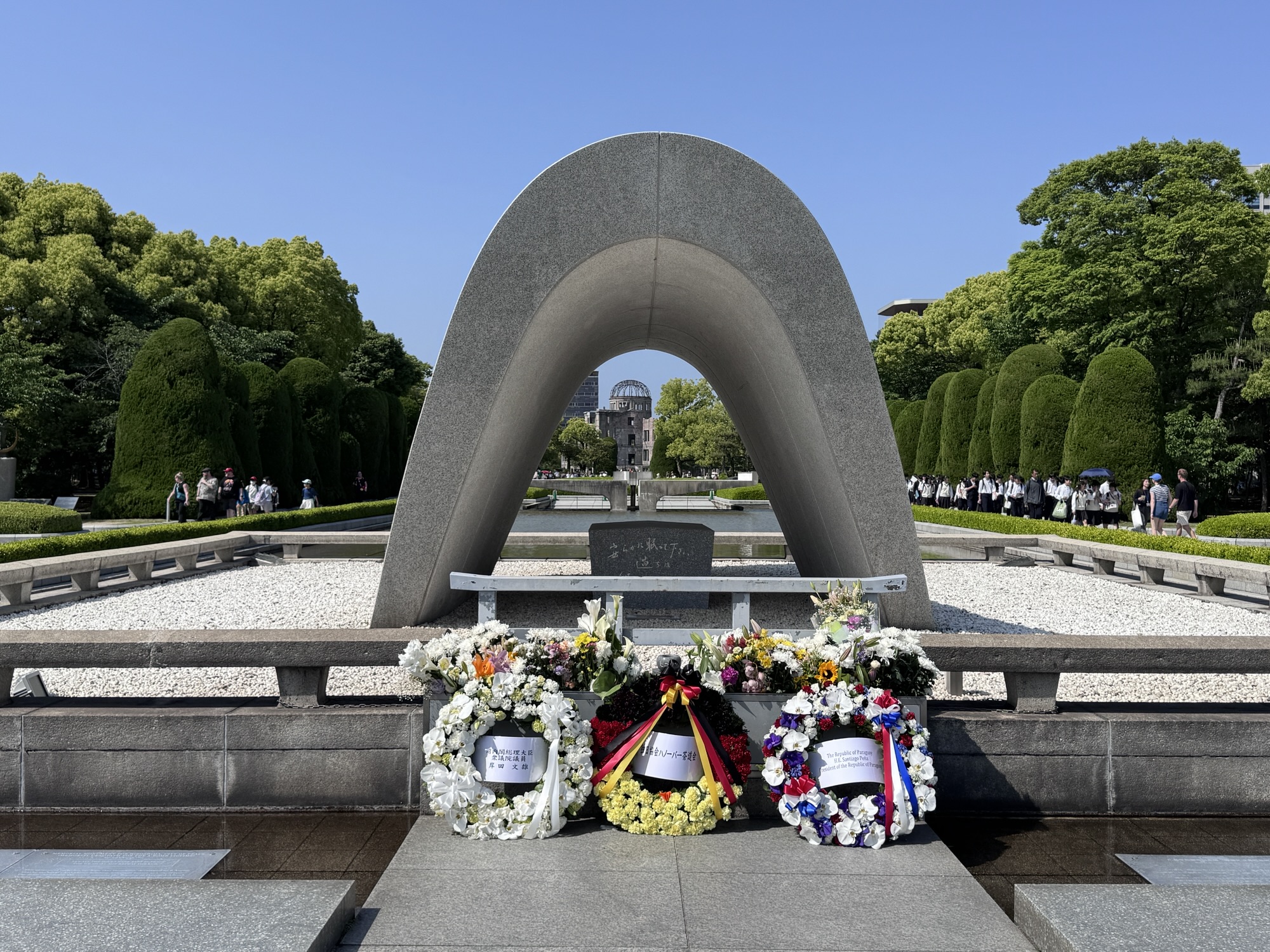
One of the most recognizable structures in the park is the Memorial Cenotaph, which frames a direct view toward the Atomic Bomb Dome in the distance.
Around the memorial are flowers and wreaths placed by visitors and governments from around the world. It is a reminder that what happened here affected far more than just one city.
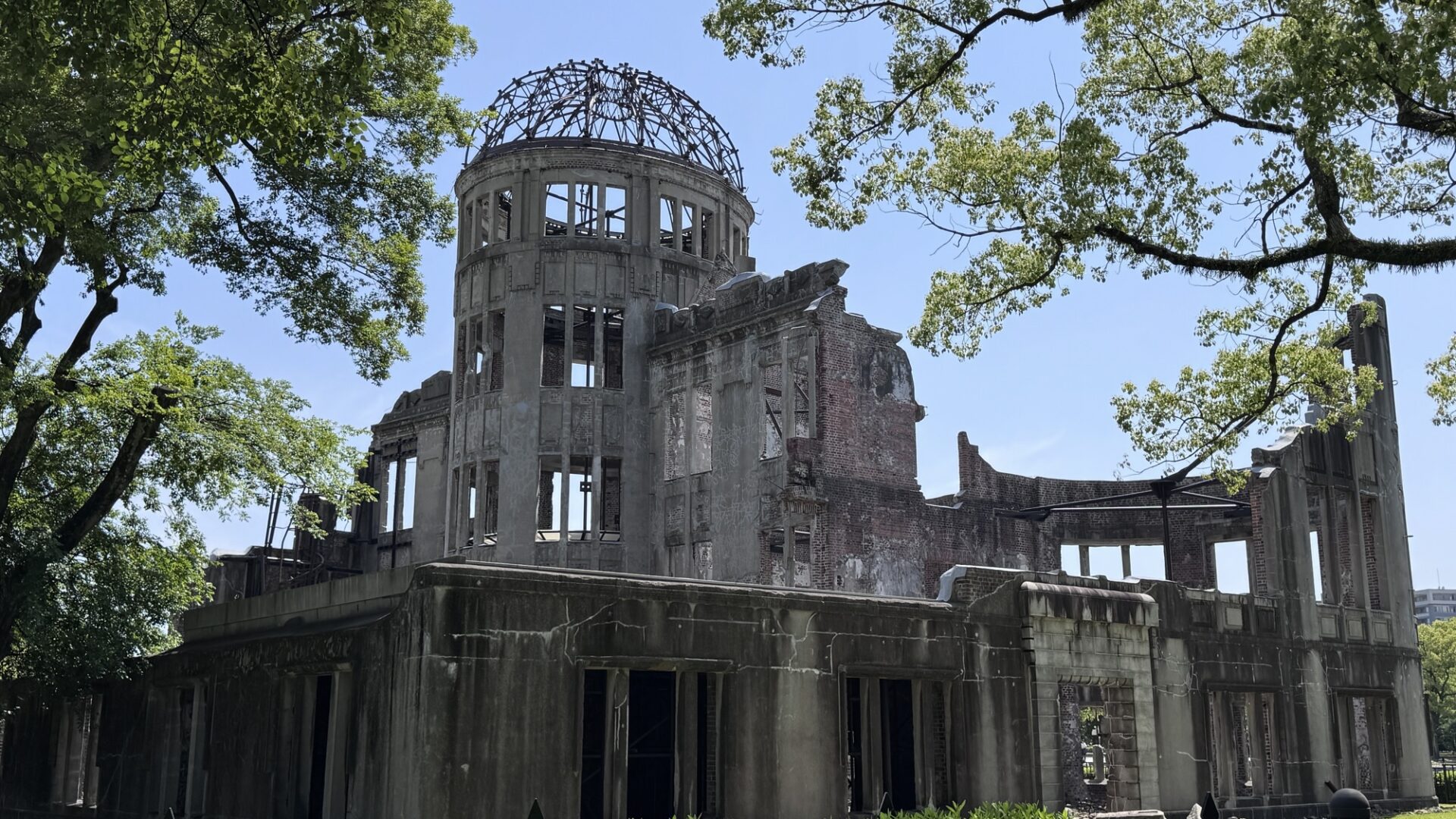
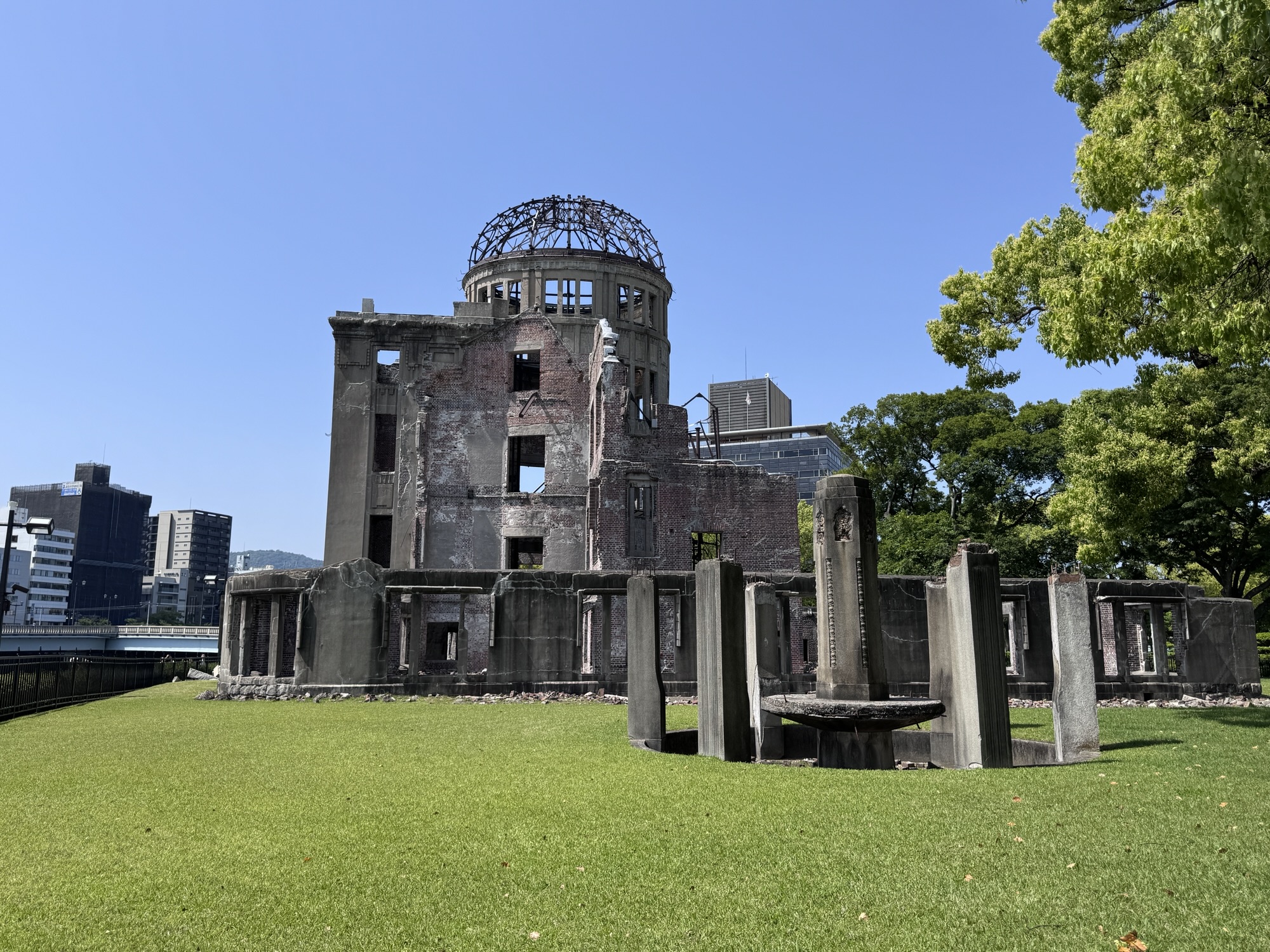
The Atomic Bomb Dome
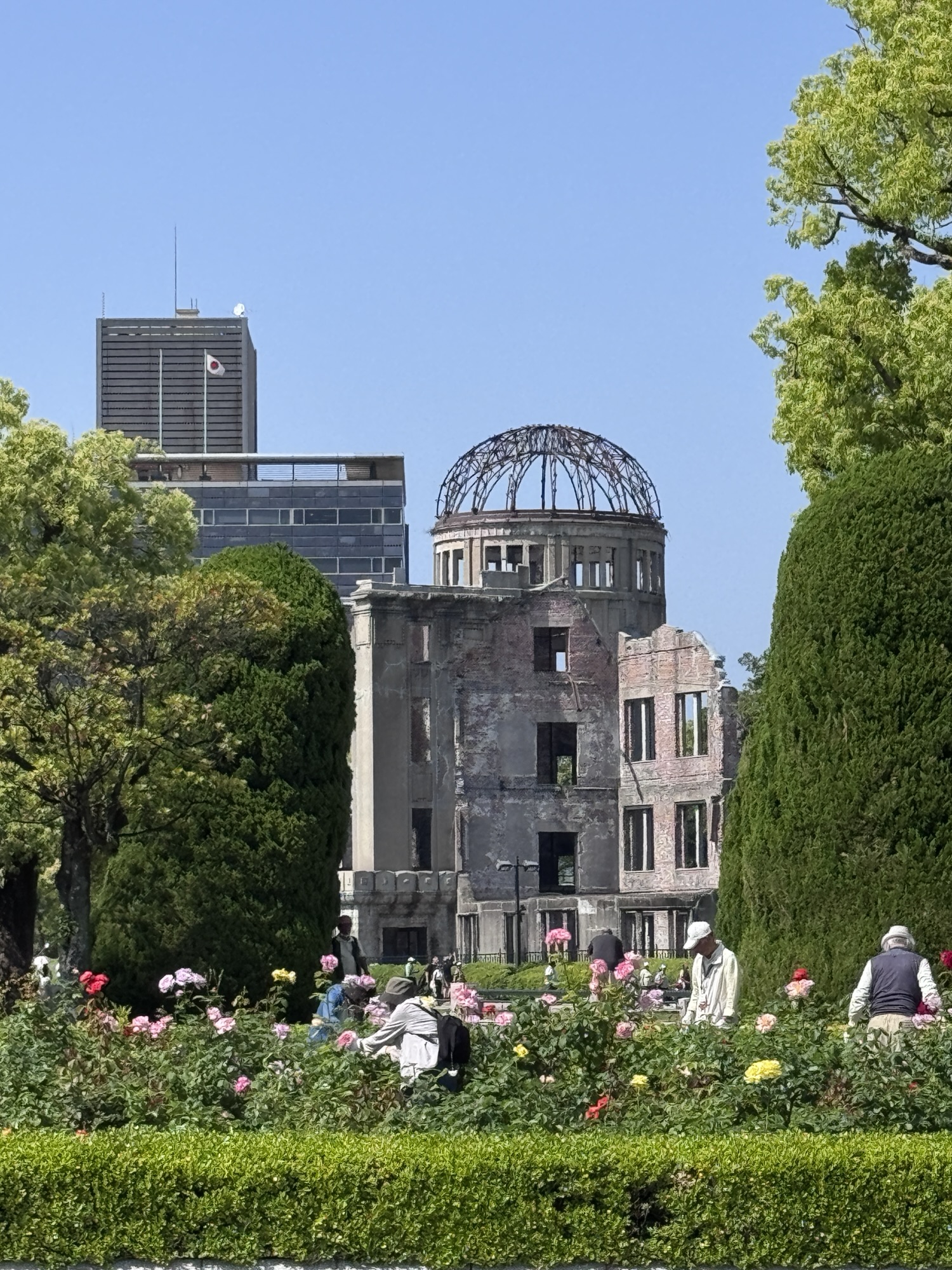
Across the river from the park stands one of the most powerful landmarks in Hiroshima.
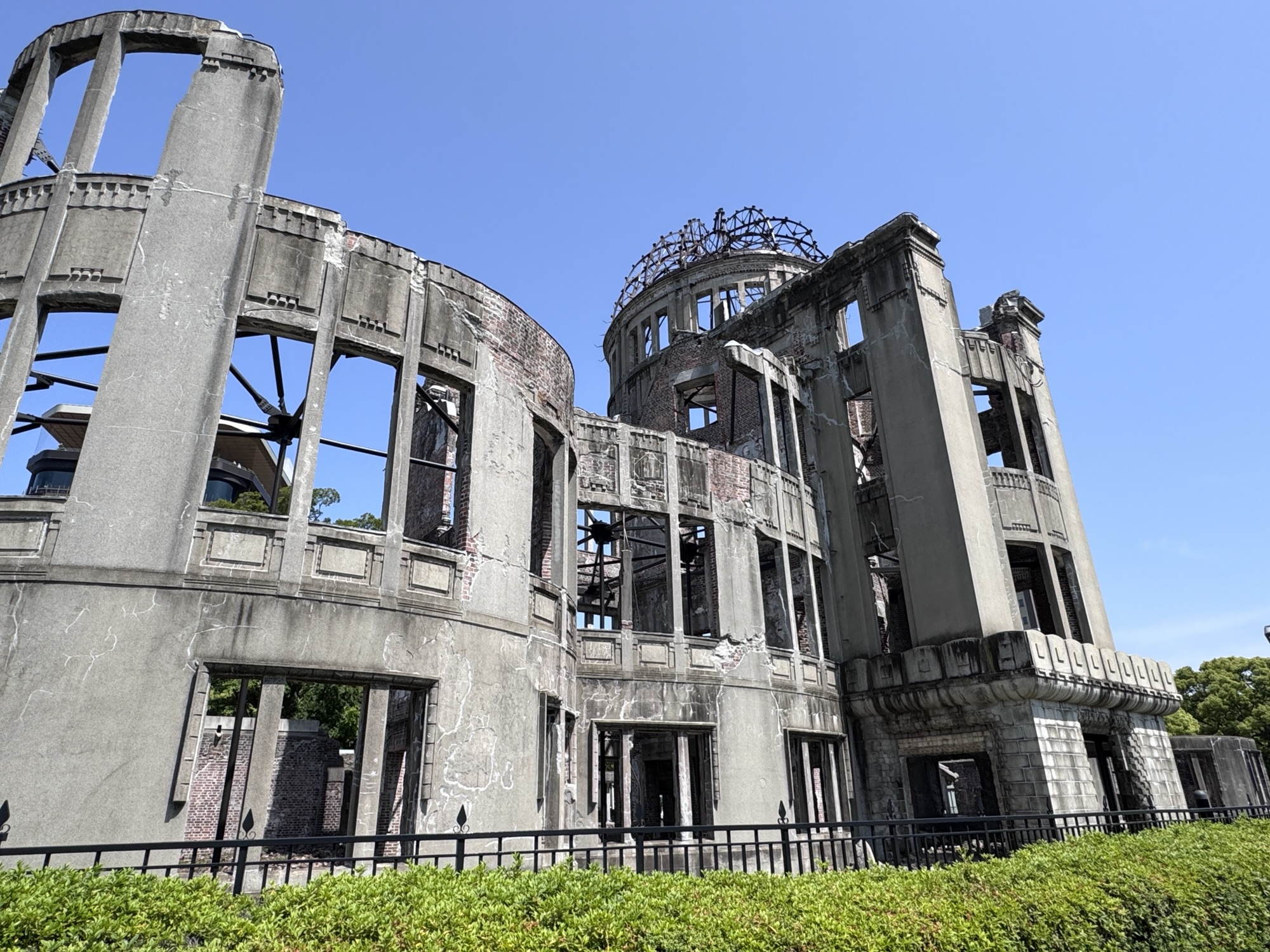
The Atomic Bomb Dome.
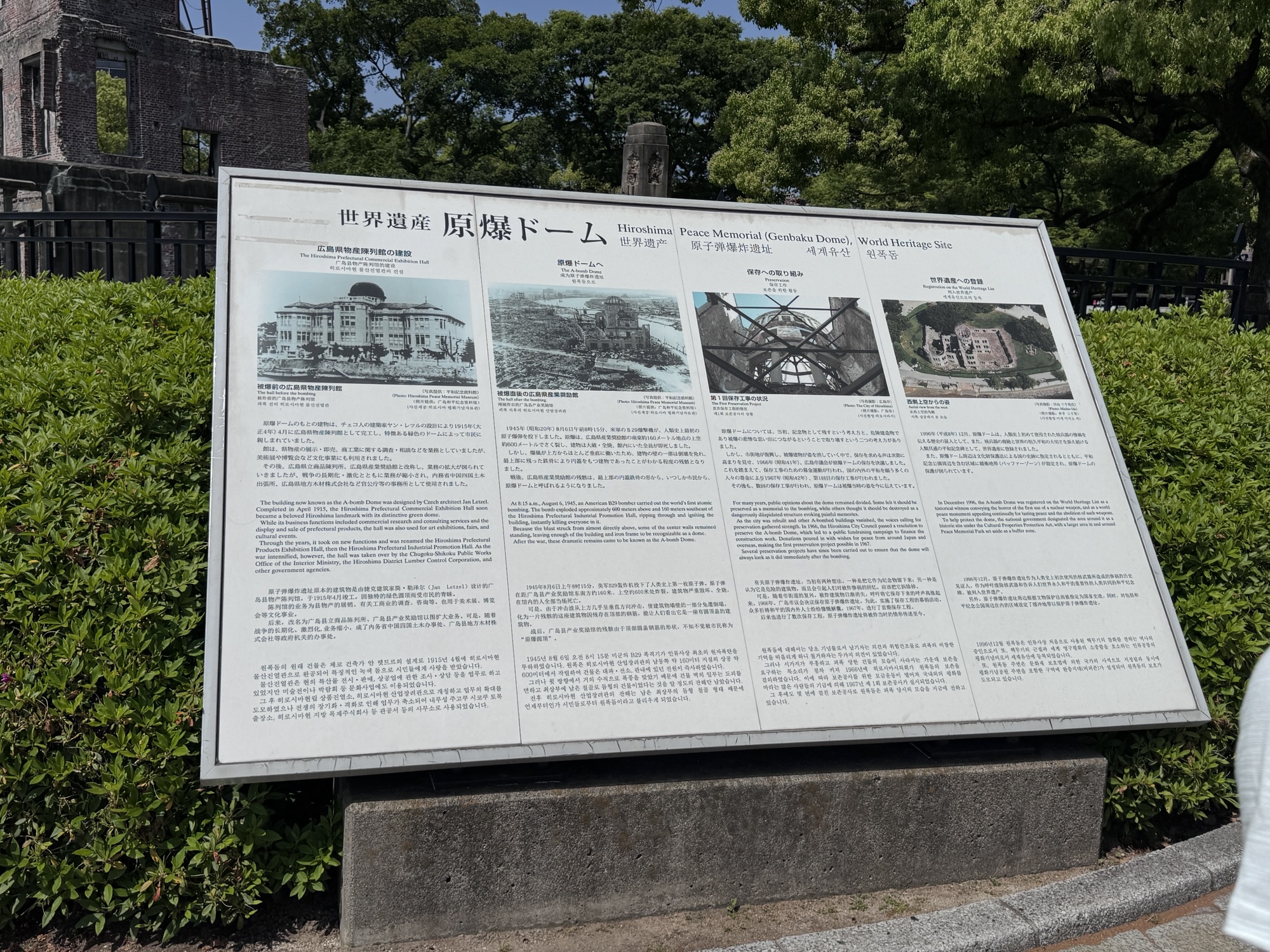
Originally known as the Hiroshima Prefectural Industrial Promotion Hall, the building was almost directly beneath the explosion when the bomb detonated in 1945.
The structure was partially destroyed but remained standing.
Today it has been preserved exactly as it was left after the bombing and has become a UNESCO World Heritage Site.
Standing in front of it is a quiet and sobering experience. Photos do not fully capture the feeling of being there and seeing the remains of the building that survived such a devastating event.

A City That Rebuilt
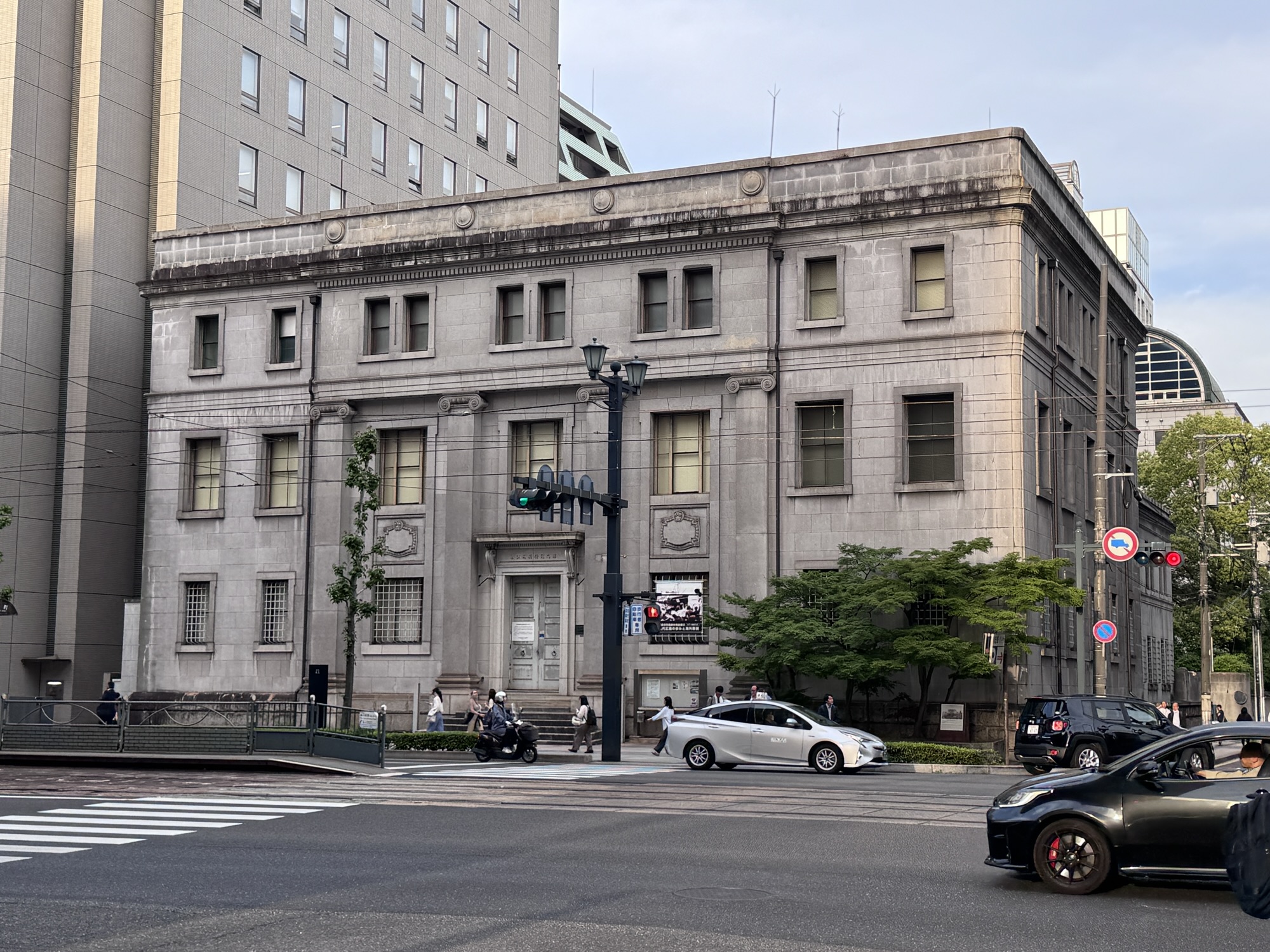
After spending time at the memorial park, we walked through more of Hiroshima.
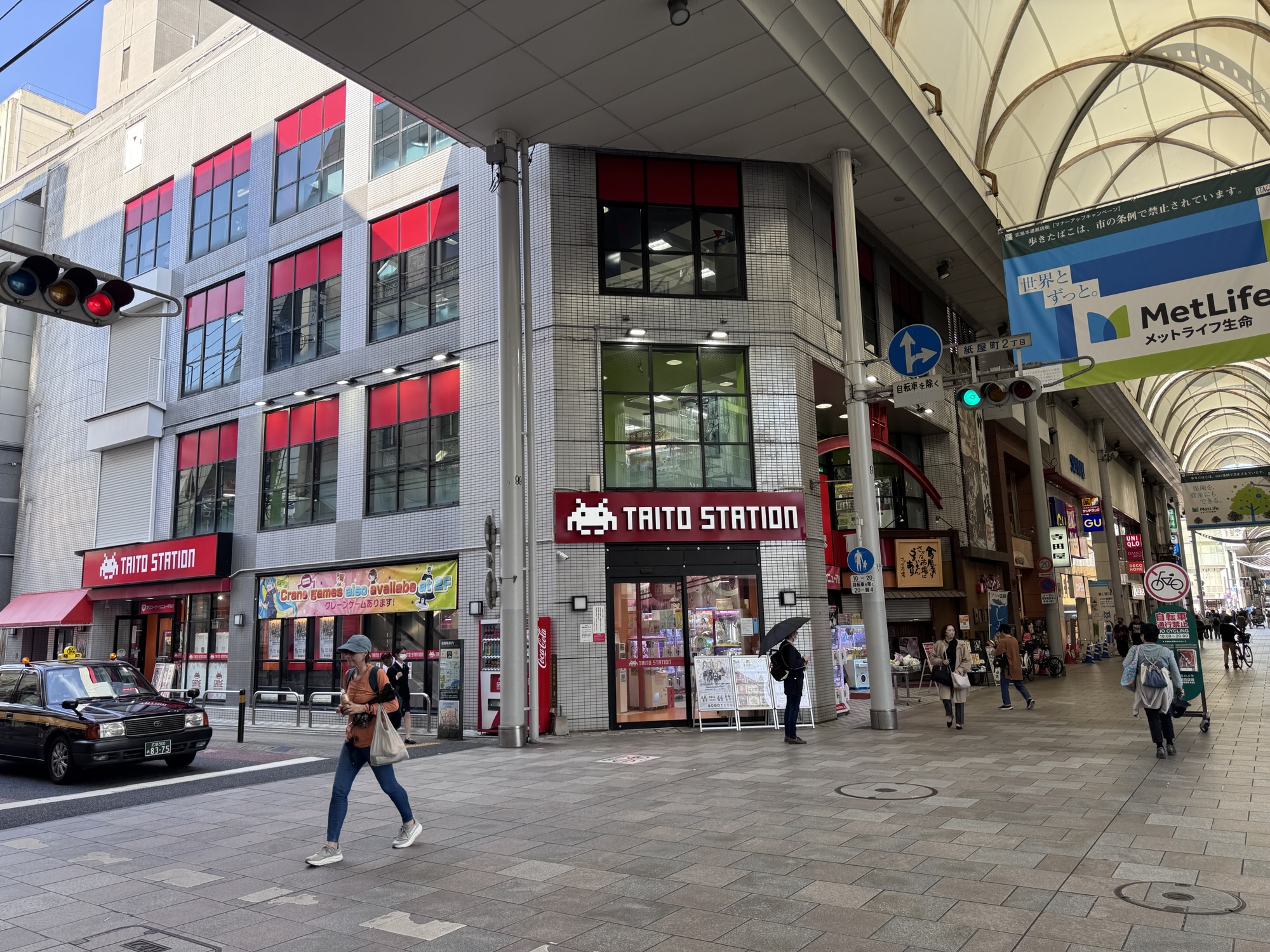
The city surrounding the park is lively. Restaurants, shopping streets, arcades, and everyday life fill the area. It does not feel like a place stuck in the past.
Instead it feels like a city that rebuilt itself with purpose.
Seeing that contrast between the memorial park and the vibrant city around it is one of the things that makes visiting Hiroshima so powerful.

Solving World Problems for a Minute
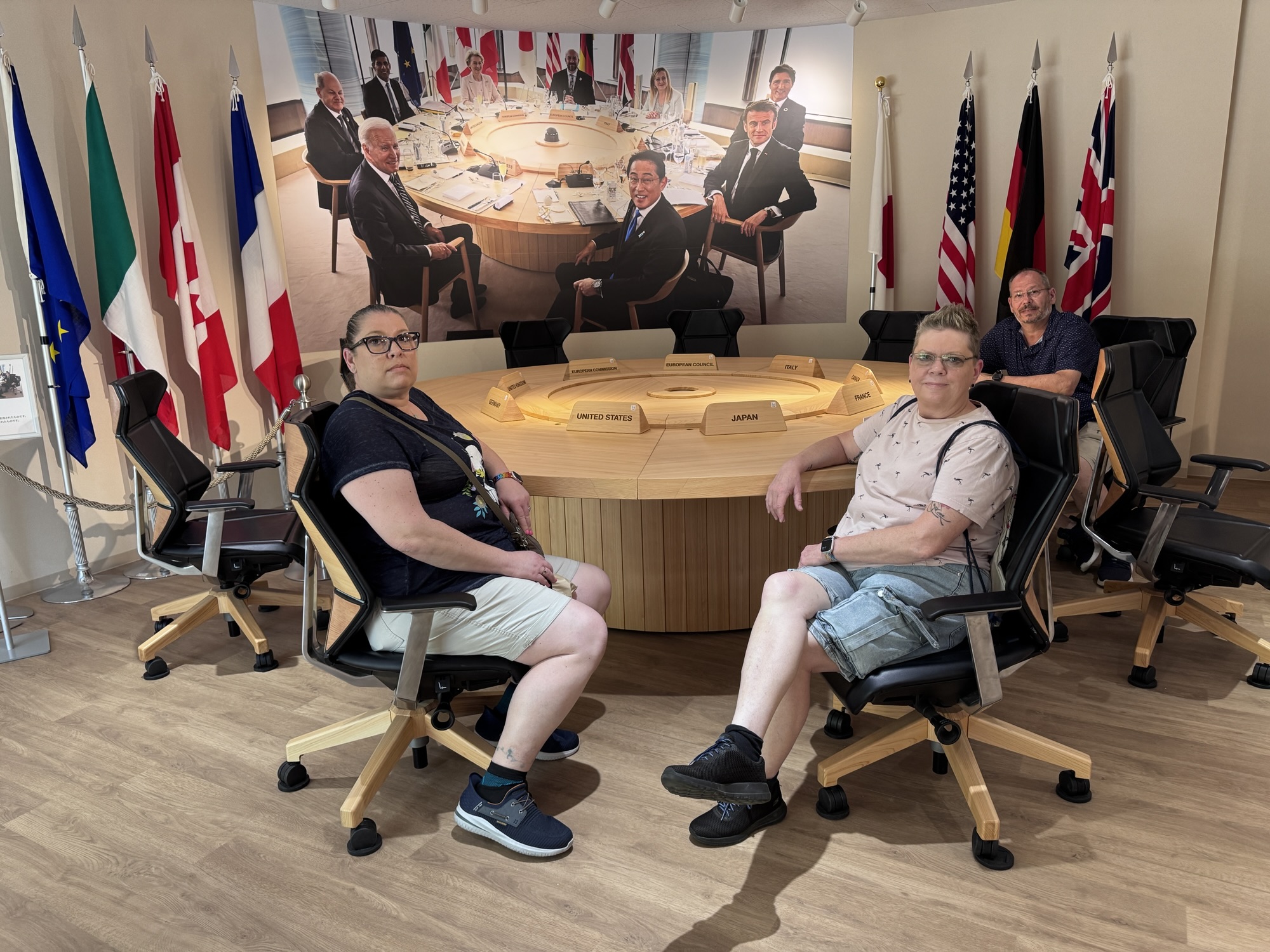
Inside one of the galleries near Peace Memorial Park, we came across a room displaying the actual table used during the 2023 G7 Summit, which was held in Hiroshima.
Seeing it there was unexpected, and it was hard not to imagine the world leaders who had sat around it just a short time earlier.
Naturally, we had to sit down for a minute and pretend we were making important international decisions ourselves.
It turns out none of us solved any global conflicts during that brief meeting, but at least we documented the attempt.
The Next Morning: Our Miyajima Plan
The next morning we had planned to visit Miyajima Island before catching our bullet train to Kyoto.
Miyajima is famous for the floating torii gate at Itsukushima Shrine and is one of the most iconic sights in Japan. The plan was simple. Take a taxi to the ferry terminal, spend the morning exploring the island, then return to Hiroshima Station for our train.
What actually happened was slightly different.
When Travel Does Not Go According to Plan
Somewhere between our destination, our pronunciation, and the taxi driver’s understanding, we ended up heading in the completely wrong direction.
And not just a little wrong.
Very wrong.
At some point we realized we were nowhere near the ferry terminal. While sitting in the back seat of the taxi we started searching Google Maps for nearby train stations and trying to explain where we actually needed to go.
This is where Google Translate saved the day.
Without it, we would not have been able to communicate with the driver at all. Between translation apps, maps, and a lot of laughter, we eventually managed to find the nearest train station where the taxi could drop us off.
From there we jumped into Japan’s train system and worked our way back toward Hiroshima Station as quickly as possible.
It felt like a race against the clock.
We made the train.
But Miyajima did not happen.
The Travel Lesson
Missing Miyajima ended up becoming one of the most memorable moments of the trip.
Travel rarely goes exactly the way you plan it. Sometimes the best thing you can do is laugh and treat the mistake as part of the adventure.
We also learned two useful lessons that morning.
First, location names matter. In Japan many stations and neighborhoods have very similar sounding names. The difference between the correct destination and a similar one can send you miles away.
Second, translation apps are essential. Google Translate turned what could have been a frustrating situation into something we could actually solve.
In the end it became a funny story instead of a stressful one.
Final Thoughts
Hiroshima ended up being one of the most meaningful stops of our trip through Japan.
It is a place that encourages reflection and remembrance, but it is also a city full of life, resilience, and optimism.
Even though we missed Miyajima, we left Hiroshima with something just as valuable.
A reminder that travel does not have to go perfectly to be memorable.
Sometimes the wrong turn becomes part of the story.